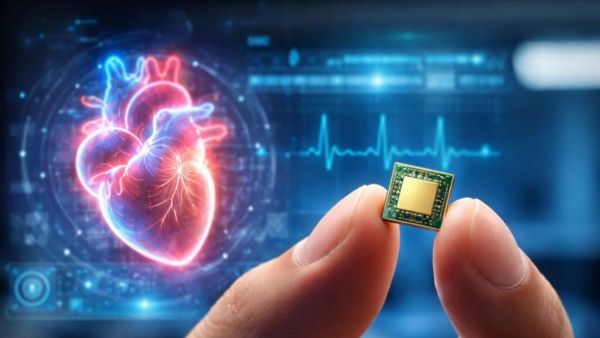
Miranda House College, Delhi in collaboration with Defense Research and Development Organization (DRDO) has ‘Made in India’ A biological chip has been developed, which can warn soldiers about the possible danger of a heart attack. This device has been named BioFET and it analyzes the blood serum and detects dangerous changes in important biomarkers and gives timely alerts.
Professor Monica Tomar, who led this research, says, ‘The device we have developed is BioFET, which can detect three biomolecules from a blood sample at the same time.’ He further said that these biomolecules are directly linked to cardiac arrest and if they exceed the prescribed level, they indicate a serious risk.
Why is it important for soldiers
According to experts, soldiers posted in Himalayan regions are at higher risk of blood thickening and sudden clot formation in sub-zero temperatures, which increases the risk of heart attack. Professor Tomar says, ‘We know that our soldiers work in such difficult conditions. By getting timely warning, they can be quickly taken to the base camp or military hospital, which can save lives.
Main benefits-
- Effect of extreme cold on the circulatory system of the body.
- A life-threatening condition caused by sudden clotting of blood.
- Sensor warns when clotting is reaching dangerous levels.
- Timely treatment and medical intervention possible.
- Point-of-care and field use
BioFET supports on-the-spot testing, eliminating the need for large lab equipment. Professor Tomar explains, ‘Blood serum is applied to the chip like in a glucometer, and the screen of the device shows the level of the biomarker with safety limits. This device is completely portable. However, citing technical limitations, he said that the sensor works in normal environments and controlled conditions would be required for reliable results.
Development, team and in-house manufacturing
It took about five years to prepare BioFET. Professor Tomar said, ‘Two to three years of continuous research and then two years of hard work with DRDO.’ The prototype has already been handed over to DRDO for trials. The team developed manufacturing capacity within the college campus itself. Professor Tomar says, ‘We have made such equipment in India and its cost has reduced by 50–60 percent.’ A small number of students and faculty teams from various colleges of Delhi University worked in this project.
Revolution in safety and health in the future
If field trials are successful and the Army adopts it, BioFET could prove to be an important tool in protecting soldiers and making quick medical decisions in extreme situations. Professor Tomar says, ‘This task was challenging, but it can make a big difference in the lives of soldiers.
-
Sunetra Pawar took oath without Sharad Pawar’s knowledge: NCP (SP)
-
Union Budget 2026: Revisiting India’s Longest And Shortest Budget Speeches
-
Why India's cities must receive a share of GST funds

-
Yorkshire puddings will never collapse if you do one thing before putting them in oven

-
Scientists find free way to cut energy bills by 12% after 18-month test