
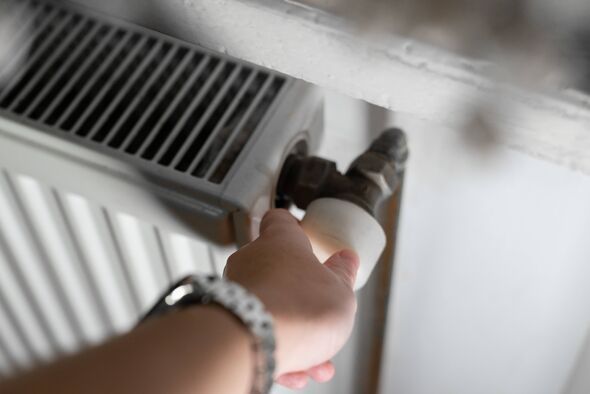
With the British winter continuing to deliver freezing conditions across the nation, millions are anxious about switching on their heating. A study by Barratt Homes has revealed that nine in 10 people are worried about affording their energy bills throughout winter.
The housebuilder discovered that two-thirds of households are implementing extreme cost-cutting measures, including heating just a single room. Oliver Novakovic, innovation lead at Barratt Redrow - who collaborates with scientists at Energy House 2.0, the UK's largest energy research initiative at the University of Salford - offers advice on reducing costs, from quick wins to more substantial investments.
Experts at Energy House 2.0 have dedicated the last 18 months to testing various heating systems to determine which ones provide optimal warmth at minimal expense, whilst also investigating methods to construct airtight yet breathable properties.
Research-backed strategies to reduce energy expensesReduce the flow temperature
Your boiler's heating flow relates to the temperature at which water exits the boiler and enters your radiators. The majority of boilers typically have a default flow temperature ranging between 70°C and 80°C.
The Energy House 2.0 researchers assessed the effect of reducing your boiler's flow temperature and discovered it was the most effective method to slash energy expenditure - requiring no upfront investment whatsoever. The scientists established that decreasing boiler temperatures from 80 degrees to 60 degrees resulted in a 12% reduction in gas consumption for household heating.
Combi-boilers in particular can heat homes effectively and maintain a cosy temperature at just 60 degrees. A reduced flow temperature means radiators won't feel as hot and rooms might take marginally longer to warm up.
However, if your property is properly insulated, you're unlikely to detect much of a difference and could achieve substantial savings on energy costs. On a combi boiler, locate a dial or buttons displaying a radiator symbol, which typically indicates the flow temperature.
Reduce the dial setting or select a lower temperature. For guidance, consult your boiler's instruction manual beforehand.
Show your boiler some care
The boiler ranks among the most crucial appliances in any household, supplying hot water and central heating. Given its daily use, it should receive servicing at least annually for safety reasons and to maintain warranty coverage.
It's generally preferable to arrange this during summer, when heating engineers have lighter workloads and any problems can be resolved before winter arrives.
That said, if you're encountering any difficulties with your boiler, or radiators aren't heating uniformly throughout your property, then investing in a service is worthwhile. The typical cost of a combi-boiler service is approximately £90.
This typically involves a thorough examination of the internal parts, filters, and flue pipe, as well as a check for any corrosion or leaks. During a service, the engineer will conduct a series of tests to ensure your boiler is operating efficiently, as even a minor efficiency decrease of 5% can add an extra £87 to yearly energy costs. If you're unsure about adjusting your boiler's flow, the plumber can handle this too.
Take your energy savings to new heights
Home insulation helps maintain warmth in your house by preventing heat loss. In older UK properties, excessive heat can escape through the walls and roof, leading to higher energy bills.
Houses constructed before the 1920s are likely to have solid walls without any insulation. In contrast, new builds must adhere to the latest building regulations and can be up to 65% more energy-efficient than an older property.
"The large number of poorly insulated, older homes across the country can cause stress for those living in them as we approach winter," states Novakovic. ONS data shows that 60% of homes in England have a wall insulation rating of "average" or above, with this figure increasing to 69% in Scotland and dropping to 52% in Wales.
Mineral wool insulation is the optimal choice for loft insulation, typically costing approximately £1,000 for a detached property. Whilst the initial outlay may seem substantial, Which? estimates that homeowners could save around £340 annually on energy bills for a detached home and £200 for a semi-detached property.
Mind the gap
A widespread misunderstanding about draught-proofing is that it involves blocking all airflow into a property, but Novakovic clarifies that it's actually about maintaining controlled ventilation. Some air circulation remains essential to minimise condensation and dampness, which can lead to dangerous mould development, particularly in moisture-prone areas such as kitchens and bathrooms.
Novakovic advises: "Try to locate draughty areas around your home so that you can fix them before the freezing temperatures set in. The gadget that will make a world of difference, when you're trying to work out why your house is cold, is a smoke pencil draught detector. You can pick one of these up for less than £50 to easily find the places where air is leaking.
"Many older homes with hardwood front doors will experience worse draughts in the winter as they are susceptible to expanding in heat and contracting in the cold, meaning gaps around the frame will become even wider. To combat this, invest in a draught exclusion runner to go along the bottom of your door. You can also purchase lengths of gap sealer to run around the frame, preventing cold air from blowing in around the door frame."
Common problem areas include letterboxes, disused chimneys, doors and window frames, plus the loft hatch. Weather stripping comes in different materials - foam, rubber or metal - and can be straightforwardly fitted to window frames.
"If you already have UPVC windows with draught excluders, it's good to check these for wear and tear to ensure they are still working well," Novakovic adds.
Draw the curtains
The research revealed that drawing curtains or blinds can substantially cut heat loss through windows, particularly in older properties with single-glazed windows. In a full-scale test house, curtains and blinds reduced heat escaping through windows by approximately 10-30%, depending on the heating method and how snugly the coverings fitted.
This occurs because curtains and blinds create a pocket of stationary air between the window and the room, functioning like a basic additional insulation layer. Crucially, this advantage was observed using standard household curtains and blinds, rather than specialist "thermal" products.
The study also demonstrated that radiator positioning is highly significant. Rooms with radiators positioned directly beneath windows experienced greater heat loss, as warm air ascended straight up the glass and escaped outdoors.
In such instances, closing curtains or blinds proved most effective by reducing that heat loss and enhancing comfort levels. Beyond cutting energy consumption, curtains also help minimise chilly draughts and window condensation.
Given that curtains and blinds are affordable, straightforward to fit, and reversible, the research emphasises them as amongst the most accessible and economical methods for homes to prevent heat loss and maintain warmth, especially where replacing windows or adding insulation isn't feasible.
Upgrade your heating
For those with deeper pockets, researchers at Energy House 2.0 have completed the most extensive study ever conducted on electric heating systems, as Britain moves towards eliminating gas boilers. The trials examined various technologies including infrared heat panels, air source heat pumps, underfloor heating, skirting board heating and conventional radiators.
The study revealed that air source heat pumps can cost as little as £1.84 on a typical winter's day to warm a property and outperform existing gas boilers in efficiency, as they maintain a steadier temperature rather than producing bursts of warmth.
Protect your plumbing
Frozen pipes can present serious risks to your property during winter - and potentially result in a hefty plumber's invoice. When water freezes within your pipes, it expands and may cause pipes to rupture.
The most reliable way to stop your pipes from freezing is to insulate the pipework in your loft and the water tank. Novakovic continues: "Insulating your pipes doesn't have to be expensive and can be done as a DIY job. You can buy foam pipe insulation, which is inexpensive, though better-quality insulators will set you back more.
"Most pipe insulation comes as a foam tube, which you can push onto your pipes. For more awkward bends, you can also use insulating wraps to cover these sections of pipe. Make sure you know the measurements for your pipes and water tanks before you purchase any insulation and avoid using potentially flammable materials."
Barratt Homes commissioned research involving 2,000 participants to examine attitudes, practices and routines regarding household energy efficiency.
-
KVS NVS Answer Key 2026: Provisional answer key released for teaching and non-teaching exams, download using these steps..
-
NTA CMAT Answer Key: Common Management Admission Test provisional answer key released, candidates have until February 2nd to raise objections..

-
Budget 2026: Gold and silver reach record highs; expectations of tax and regulatory relief from the budget..

-
HPSC HCS Vacancy: Recruitment for various posts including SDM and DSP in Haryana; here are the height requirements for application..

-
Budget 2026: Clarity expected from the budget on gift tax, medical expenses and family settlement..