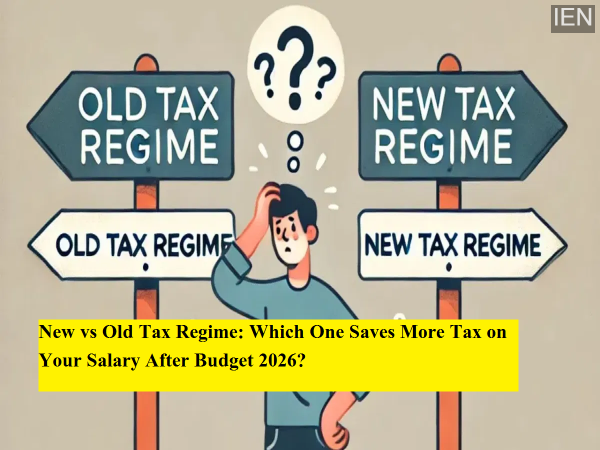
Income tax once again became a key talking point after the Union Budget 2026, especially for salaried individuals and the middle class. Expectations were high that the government might tweak income tax slabs or increase deductions to provide relief amid rising living costs. However, Budget 2026 delivered a status quo on tax slabs. Both the New Tax Regime and the Old Tax Regime will continue unchanged for the financial year 2026–27.
With no structural changes announced, taxpayers are again left with the familiar question: Which tax regime is more beneficial for you—new or old? The answer depends largely on your income level, deductions, and financial planning approach.
No Change in Income Tax Slabs in Budget 2026
The government has decided to retain the existing income tax structure. This means:
-
No revision in tax slabs
-
No additional standard deductions beyond what already exists
-
No new exemptions introduced
While this may have disappointed some taxpayers, the continuation of generous rebates under the New Tax Regime still offers significant relief, especially for middle-income earners.
Understanding the New Tax Regime (FY 2026–27)
Under the New Tax Regime, income tax slabs remain simple and straightforward:
-
Income up to ₹4 lakh: No tax
-
₹4 lakh to ₹8 lakh: 5%
-
₹8 lakh to ₹12 lakh: 10%
Thanks to the tax rebate, individuals earning up to ₹12 lakh annually pay zero income tax. For salaried employees, the benefit goes even further due to the standard deduction, which effectively makes income up to ₹12.75 lakh tax-free.
This regime is designed to simplify tax filing and reduce compliance burdens.
Why the New Tax Regime Is Gaining Popularity
The New Tax Regime is particularly beneficial for taxpayers who:
-
Do not claim multiple deductions
-
Do not invest heavily in tax-saving instruments
-
Prefer a hassle-free tax filing process
There is no need to submit investment proofs, claim House Rent Allowance (HRA), or manage multiple exemption documents. Because of lower tax rates and easy compliance, this regime has become increasingly popular among the middle class and young salaried professionals.
For individuals earning up to ₹12 lakh annually, the New Tax Regime is widely considered the most tax-efficient option.
Who Should Consider the Old Tax Regime?
The Old Tax Regime still holds value for taxpayers who actively use deductions and exemptions. It allows benefits such as:
-
HRA (House Rent Allowance)
-
Section 80C deductions (PF, ELSS, LIC, etc.)
-
Health insurance under Section 80D
-
NPS contributions
-
Home loan interest and principal repayment
If your total deductions and exemptions amount to ₹8 lakh or more, the Old Tax Regime may result in lower tax liability despite higher slab rates.
This regime is better suited for individuals with long-term financial planning, home loans, and structured investments.
What Should High-Income Earners Do?
For individuals earning ₹24 lakh or more annually, choosing the right tax regime becomes more complex. At higher income levels, the benefit of deductions can significantly impact total tax outgo.
Such taxpayers should:
-
Calculate tax liability under both regimes
-
Factor in total deductions, exemptions, and investments
-
Avoid choosing a regime based only on slab rates
A detailed comparison is essential before making a final decision.
Additional Tax-Related Reliefs in Budget 2026
While tax slabs remain unchanged, Budget 2026 introduced several procedural and compliance-related relaxations:
-
Revised income tax return deadline extended to March 31
-
Interest earned on motor accident compensation exempted from tax
-
Reduction in TCS on foreign travel and overseas education
-
New Income Tax Act, 2025 to come into effect from April 1, 2026, aimed at simplifying tax laws and filing procedures
These steps are expected to reduce litigation and make tax compliance smoother for individuals.
Bottom Line
Budget 2026 did not alter income tax slabs, but the choice between the New and Old Tax Regime remains crucial. If simplicity and lower tax rates matter to you, the New Tax Regime is likely the better option. If you maximize deductions and exemptions, the Old Tax Regime may still help you save more tax.
The smartest approach is to calculate your tax under both systems and choose the one that aligns best with your income and financial planning goals.
-
Colours of Rajasthan: Why each city has its own shade and story it narrates

-
How Untreated Dental Problems Affect Pregnancy: Signs, Risks, and What You Should Do
-
Drag'n Survey Launches in India with AI Agent to Transform Online Surveys

-
10 Amazing Tourist Places To Visit in Agra

-
10 Most Beautiful Attractions To Visit in Udaipur