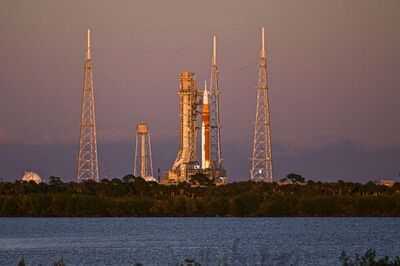
The Artemis 2 mission has been pushed back by several weeks following yesterday's wet dress rehearsal. NASA's long-awaited countdown test for its Space Launch System rocket has apparently been interrupted by hydrogen fuel leaks, raising fresh doubts about how soon astronauts will actually fly around the moon.
The problems emerged just hours into a carefully choreographed fueling operation at Kennedy Space Center. Engineers began pumping super-chilled liquid hydrogen and oxygen into the 322-foot rocket shortly after midday, a process which requires loading and holding more than 700,000 gallons of propellant for several hours. The goal was to replicate the final launch stages as closely as possible. Instead, sensors detected excessive hydrogen buildup near the rocket's base, forcing teams to halt fuelling at least twice.
The issue was uncomfortably familiar. Similar hydrogen leaks plagued the rocket's first uncrewed test flight in 2022, delaying its debut before it finally launched successfully.
This time, launch controllers again relied on workarounds developed during that earlier campaign, but the interruptions were enough to derail the schedule.
The four Artemis 2 astronauts - three Americans and one Canadian - followed the rehearsal from Houston, nearly 1,000 miles away.
They have been in pre-launch quarantine for more than a week, waiting to see whether the rocket would pass what NASA had described as a make-or-break test.
The roughly 10-day mission will send the crew past the moon and around its far side before returning directly to Earth, testing life-support and other critical systems.
The flight is intended to pave the way for future lunar landings, marking humanity's first crewed journey toward the moon since the Apollo era.
However, a post on X by NASA Administrator Jared Isaacman explained that the launch would not be this month.
He said: "With the conclusion of the wet dress rehearsal today, we are moving off the February launch window and targeting March for the earliest possible launch of Artemis II.
"With more than three years between SLS launches, we fully anticipated encountering challenges. That is precisely why we conduct a wet dress rehearsal. These tests are designed to surface issues before flight and set up launch day with the highest probability of success.
"During the test, teams worked through a liquid hydrogen leak at a core stage interface during tanking, which required pauses to warm hardware and adjust propellant flow. All core stage and interim cryogenic propulsion stage tanks were successfully filled, and teams conducted a terminal countdown to about T-5 minutes before the ground launch sequencer halted operations due to an increased leak rate.
Additional factors included extended Orion closeout work, intermittent ground audio dropouts, and cold-weather impacts to some cameras, along with the successful demonstration of updated Orion closeout purge procedures to support safe crew operations."
MORE TO FOLLOW...
-
Precision Onco-Hematology Specially personalized treatments to save lives and prevent Caner from returning
-
Tingling in hands and feet? Attention Deficiency of this vitamin can be the reason

-
Apple CarPlay could arrive in Elon Musk-owned Tesla with its own infotainment interface: Features, limitations, and wireless connectivity | Technology News

-
WhatsApp Avatar Feature: New feature of WhatsApp; How to create your own avatar? Learn the simple step-by-step method

-
Leave before traffic: Know the best time to start your journey from Google Maps