The US decision to slash tariffs on Indian goods to 18% from 50% is expected to significantly boost India’s medical devices exports by sharply improving price competitiveness against Chinese suppliers and accelerating access to the US market, said industry executives.
India’s healthcare system stands to gain as well, through lower import duties on high-value medical equipment sourced largely from the US.
Indian exports gain an edge over Chinese peers as tariffs on Chinese medical devices remain elevated at around 30%.
The Association of Indian Medical Device Industry (AiMeD) termed the deal “transformative” for domestic manufacturers.
“The US tariff slash from 50% to 18% is a game changer for Indian medical devices, slashing export costs and unlocking billions in US market potential amid China+1 shifts. AiMeD hails this as a vital boost for our manufacturers, enhancing global competitiveness, spurring investments and creating jobs,” said Rajiv Nath, forum coordinator, AiMeD.
He added, “The US tariff cut to 18% on Indian goods provides Indian medical devices a competitive edge over Chinese counterparts, which face higher section 301 tariffs, typically at 25% plus additional hikes (up to 50–60% on some items like respirators).”
Section 301 of the US trade act allows for probe and penalizing provisions against foreign countries for unfair trade practices.
Hailing the India-US trade deal, Pavan Choudary, chairman of the Medical Technology Association of India, said, “There are two clear benefits emerging from this development - exports and cost competitiveness. On the export side, the American tariffs that China currently faces are in the range of 30-34%, while US tariffs to India’s stand at 18%, creating (at least) a 12 percentage point differential. The primary products India exports to the US are medical disposables such as syringes, needles and basic accessories.”
These products operate on very thin margins, usually in the low single digits, regardless of whether they are manufactured in China or India. “In such a low-margin segment, a 12% tariff advantage is significant and gives Indian manufacturers a strong competitive edge,” he added.
Medical device exports from India to the US in 2024-25 totalled about $785 million.
“The India-US trade deal represents a decisive inflection point for India’s manufacturing and medtech ambitions,” said Himanshu Baid, managing director, Poly Medicure Ltd. “The US is also a key and growing market for Polymed, offering long-term opportunities for innovation-led growth. This agreement will further empower MSMEs (micro, small and medium enterprises) and deepen India-US economic engagement.”
Manoj Mishra, partner and tax controversy management leader, Grant Thornton Bharat, said, “The US is India’s largest medical device export market, and the tariff cut under the trade deal significantly improves cost competitiveness. With Chinese devices continuing to face section 301 duties of around 25%, and effective tariffs rising to 50% in certain critical categories, Indian manufacturers gain a clear landed-cost advantage.”
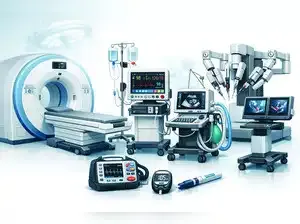
The second advantage relates to imports of high-value medical equipment such as CT scanners, MRI systems and robotic surgery platforms.
“These products account for a large share of US medical device exports to India, with the US supplying the majority of such advanced equipment. A reduction in customs duties will directly lower acquisition costs for hospitals, making these technologies more affordable,” said Choudary.
This will enable wider adoption, particularly in tier-2 and tier-3 cities where hospitals are more price-sensitive. “Over time, this expanded access will also increase exposure and hands-on training opportunities for healthcare professionals on advanced machines. As and when these high-technology products begin to be manufactured in India, their costs will decline further, and since the tarmacs for their accelerated adoption would be already ready, this would deepen market penetration beyond metros, and contribute to a more equitable healthcare ecosystem,” Choudary added.
From a pharma perspective, the deal has no direct tariff impact as Indian generic drugs were already largely duty-free in the US but the move reinforces the strategic importance of India in US supply chains.
Vishal Manchanda, pharma analyst, Systematix Group, said: “The move may be interpreted by many as a softening of US stance about the Indian pharma sector.”
Concurred Annaswamy Vaidheesh, former managing director of GlaxoSmithKline Pharmaceuticals: “The market seems to be interpreting the latest US tariff move as a signal of de-escalation in trade posture, which lowers the risk premium on India-linked exporters. It also reinforces the strategic dependence of the US on Indian pharma supply chains, especially for affordable medicines.
India’s healthcare system stands to gain as well, through lower import duties on high-value medical equipment sourced largely from the US.
Indian exports gain an edge over Chinese peers as tariffs on Chinese medical devices remain elevated at around 30%.
The Association of Indian Medical Device Industry (AiMeD) termed the deal “transformative” for domestic manufacturers.
“The US tariff slash from 50% to 18% is a game changer for Indian medical devices, slashing export costs and unlocking billions in US market potential amid China+1 shifts. AiMeD hails this as a vital boost for our manufacturers, enhancing global competitiveness, spurring investments and creating jobs,” said Rajiv Nath, forum coordinator, AiMeD.
He added, “The US tariff cut to 18% on Indian goods provides Indian medical devices a competitive edge over Chinese counterparts, which face higher section 301 tariffs, typically at 25% plus additional hikes (up to 50–60% on some items like respirators).”
Section 301 of the US trade act allows for probe and penalizing provisions against foreign countries for unfair trade practices.
Hailing the India-US trade deal, Pavan Choudary, chairman of the Medical Technology Association of India, said, “There are two clear benefits emerging from this development - exports and cost competitiveness. On the export side, the American tariffs that China currently faces are in the range of 30-34%, while US tariffs to India’s stand at 18%, creating (at least) a 12 percentage point differential. The primary products India exports to the US are medical disposables such as syringes, needles and basic accessories.”
These products operate on very thin margins, usually in the low single digits, regardless of whether they are manufactured in China or India. “In such a low-margin segment, a 12% tariff advantage is significant and gives Indian manufacturers a strong competitive edge,” he added.
Medical device exports from India to the US in 2024-25 totalled about $785 million.
“The India-US trade deal represents a decisive inflection point for India’s manufacturing and medtech ambitions,” said Himanshu Baid, managing director, Poly Medicure Ltd. “The US is also a key and growing market for Polymed, offering long-term opportunities for innovation-led growth. This agreement will further empower MSMEs (micro, small and medium enterprises) and deepen India-US economic engagement.”
Manoj Mishra, partner and tax controversy management leader, Grant Thornton Bharat, said, “The US is India’s largest medical device export market, and the tariff cut under the trade deal significantly improves cost competitiveness. With Chinese devices continuing to face section 301 duties of around 25%, and effective tariffs rising to 50% in certain critical categories, Indian manufacturers gain a clear landed-cost advantage.”
The second advantage relates to imports of high-value medical equipment such as CT scanners, MRI systems and robotic surgery platforms.
“These products account for a large share of US medical device exports to India, with the US supplying the majority of such advanced equipment. A reduction in customs duties will directly lower acquisition costs for hospitals, making these technologies more affordable,” said Choudary.
This will enable wider adoption, particularly in tier-2 and tier-3 cities where hospitals are more price-sensitive. “Over time, this expanded access will also increase exposure and hands-on training opportunities for healthcare professionals on advanced machines. As and when these high-technology products begin to be manufactured in India, their costs will decline further, and since the tarmacs for their accelerated adoption would be already ready, this would deepen market penetration beyond metros, and contribute to a more equitable healthcare ecosystem,” Choudary added.
From a pharma perspective, the deal has no direct tariff impact as Indian generic drugs were already largely duty-free in the US but the move reinforces the strategic importance of India in US supply chains.
Vishal Manchanda, pharma analyst, Systematix Group, said: “The move may be interpreted by many as a softening of US stance about the Indian pharma sector.”
Concurred Annaswamy Vaidheesh, former managing director of GlaxoSmithKline Pharmaceuticals: “The market seems to be interpreting the latest US tariff move as a signal of de-escalation in trade posture, which lowers the risk premium on India-linked exporters. It also reinforces the strategic dependence of the US on Indian pharma supply chains, especially for affordable medicines.