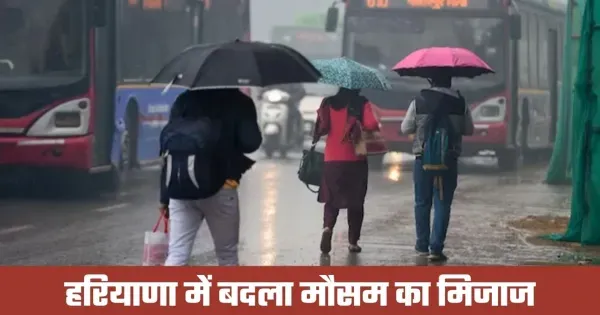
Haryana Weather: The weather patterns in Haryana are changing rapidly and the effect of cold is now gradually reducing. According to the data of the Meteorological Department released on Saturday, a continuous increase in both day and night temperatures is being recorded in the state, due to which mild warmth has started being felt in the beginning of February.
According to the Indian Meteorological Department (IMD), Chandigarh, the average maximum temperature in the state has increased by 0.5 degrees Celsius during the last 24 hours. At the same time, an average increase of 1.5 degrees has been recorded in the minimum temperature. Due to strong sunlight during the day, the temperature remains 2 to 3 degrees higher than normal, which is indicating an early arrival of summer in the coming days.
Mahendragarh has emerged as the hottest district in the state, where the maximum temperature was recorded at 25.6 degrees Celsius. After this, a temperature of 25.4 degrees was recorded in Faridabad and about 24 degrees in Bhiwani. Meteorologists say that such warmth is not unusual in the first fortnight of February, but the continuously rising mercury definitely indicates rapid change in weather.
The difference of 15 to 18 degrees between day and night temperature is considered sensitive from health point of view. Mild cold in the morning and evening while heat in the afternoon can increase the risk of diseases like cold, viral and fever. Doctors have advised people to wear light warm clothes in the morning and evening and protect themselves from sunlight in the afternoon.
This change in weather is also affecting crops. Agricultural experts have advised farmers to do light irrigation as per need to maintain moisture in wheat and mustard crops. At this time wheat is in tillering and mustard is in flowering stage, hence lack of moisture can harm the crop.
Due to increasing temperature and changing humidity, the risk of diseases like aphid and white rust in mustard may also increase. Farmers have been advised to regularly monitor the fields and spray recommended medicines when the weather is clear. At the same time, it has been asked to harvest vegetables and berseem after the dew dries, so that the problem of rot can be avoided.
However, the nights still remain cooler than the days. The minimum temperature in the state is about 1.6 degrees above normal. The lowest minimum temperature was recorded at Mahendragarh at 7.5 degrees Celsius. Apart from this, the temperature was recorded at 9.1 degrees in Hisar, 9.0 degrees in Bhiwani and 8.7 degrees in Sonipat, while the night temperature in Ambala and Rohtak remained between 11 to 12 degrees.
According to the Meteorological Department, the sky will remain clear in the state for the next few days and a slight increase in temperature may continue. This will further increase the feeling of heat during the day, while the cold in the morning and evening is likely to persist for now.
-
Recipe : For evening breakfast make dessert style ‘Dahi Kachori’, spicy taste; Perfect choice for tea time snacks

-
Samsung Galaxy S26 Leaks: Upcoming Flagship To Feature Fastest Wireless Charging But Without Magnets, Check Launch Date And All Specs

-
Tripo Studio: A Detailed Look at an AI 3D Model Generator for Modern Creators

-
IranTensions – Khamenei Skips Key Air Force Anniversary Event

-
Starlink will enter the mobile market? Internet even in places without network? The world’s attention to the new plan of SpaceX