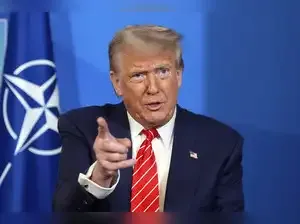
On a day when the death toll from the war with Iran rose to six Americans, President Donald Trump made time to post photos of the John F. Kennedy Center for the Performing Arts on social media, to alert his followers to Israeli Prime Minister Bibi Netanyahu’s appearance on Fox News and to announce that he would attend the White House Correspondents’ Dinner in April. What Trump didn’t make time for was an on-camera interview like Netanyahu’s with reporters that was focused on the military conflict in Iran.
When he did address Iran on Monday — his first live appearance since the war began — he offered only brief remarks. These comments came at the beginning of a Medal of Honor ceremony at the White House, an add-on to a previously scheduled event rather than dedicated time to a conflict that could define his presidency. And even then, he quickly pivoted to another topic.
“See that nice drape? When that comes down right now you see a very very deep hole, but in about a year and half you’re gonna see a very very beautiful building. And there’s your entrance to it right there,” Trump said of the $400 million ballroom. “In fact, it looks so nice I think I’ll leave it and save money on the doors. I picked those drapes. I always liked gold. I believe it will be the most beautiful ballroom anywhere in the world.”
The moment highlighted why live appearances might become problematic for the White House. But it is at odds with what Americans deserve and have come to expect in a time of war. And it marks a notable contrast from a president who has turned routine signings of executive orders into free-wheeling Oval Office press conferences — events he has used as proof that he remains sharp, unlike his predecessor Joe Biden.
His absence has been noticed and could pose a problem as he tries to convince Americans, who are largely skeptical of his handling of foreign affairs, that the war with Iran is worth the fight.
Trump on Monday appeared to have a red rash on his neck, sparking concerns about his health. Polls show that Americans have increasing concerns about Trump’s ability to handle his job at his age. According to a Washington Post poll taken before the Iran conflict began, 56% of Americans believe that Trump, 79, doesn’t have the mental sharpness to be effective. A Reuters-Ipsos poll found that 61% of Americans believe that Trump has become erratic with age, including 30% of Republicans.
On Iran, he has been surprisingly scarce when it comes to answering questions from reporters. His initial statements were pre-taped videos released to social media from Mar-a-Lago. Although he has spoken to roughly a dozen reporters on the phone, he has yet to be questioned by the White House press corps or deliver a live address to the nation. He is set to meet with German Chancellor Friedrich Merz today in what could be Trump’s first opportunity to answer questions from White House reporters on Iran.
Or he could ignore those questions, as he did on Sunday — when he pointed to new statues on the White House lawn rather than engage with the press corps.
As a result of his approach, there remains little clarity as to why America is at war with Iran, with other administration officials offering multiple and sometimes contradictory explanations for the conflict. In his brief remarks Monday, Trump laid out four objectives, including ending Iran’s support of terrorist organizations and destroying its nuclear ambitions, missile capabilities and naval fleet.
“We have the strongest and most powerful, by far, military in the world, and we will easily prevail. We’re already substantially ahead of our time projections, but whatever the time is, it’s OK,” he said. “Whatever it takes, we will always — and we have from — right from the beginning, we projected four to five weeks, but we have capability to go far longer than that. We’ll do it.”
According to a CNN poll taken in the days after the war began, 56% of Americans believe that a long-term military conflict is at least somewhat likely and 59% disapprove of the Iran strikes. This comes even as administration officials have vowed that the conflict wouldn’t be a quagmire like the wars in Iraq and Afghanistan. Still, there is the question of what victory looks like and how to achieve it.
On Monday, the “Gang of Eight” was briefed by Secretary of State Marco Rubio, with a full Senate and House hearing set for Tuesday. Rubio, Vice President JD Vance, Secretary of Defense Pete Hegseth and Chairman of the Joint Chiefs of Staff Dan Caine all took questions yesterday, highlighting the president’s relative absence in front of the camera.
In the meantime, Americans and lawmakers are looking for more clarity as the conflict with Iran widens, with real consequences for those who serve. In his recorded address after the first US casualties were announced, Trump glibly said: “That’s the way it is. Likely be more.”
Americans deserve a fuller explanation and more engagement from Trump about the chaotic and violent images coming out of the Middle East. And much more empathy for the hurt and fallen.
When he did address Iran on Monday — his first live appearance since the war began — he offered only brief remarks. These comments came at the beginning of a Medal of Honor ceremony at the White House, an add-on to a previously scheduled event rather than dedicated time to a conflict that could define his presidency. And even then, he quickly pivoted to another topic.
“See that nice drape? When that comes down right now you see a very very deep hole, but in about a year and half you’re gonna see a very very beautiful building. And there’s your entrance to it right there,” Trump said of the $400 million ballroom. “In fact, it looks so nice I think I’ll leave it and save money on the doors. I picked those drapes. I always liked gold. I believe it will be the most beautiful ballroom anywhere in the world.”
The moment highlighted why live appearances might become problematic for the White House. But it is at odds with what Americans deserve and have come to expect in a time of war. And it marks a notable contrast from a president who has turned routine signings of executive orders into free-wheeling Oval Office press conferences — events he has used as proof that he remains sharp, unlike his predecessor Joe Biden.
His absence has been noticed and could pose a problem as he tries to convince Americans, who are largely skeptical of his handling of foreign affairs, that the war with Iran is worth the fight.
Trump on Monday appeared to have a red rash on his neck, sparking concerns about his health. Polls show that Americans have increasing concerns about Trump’s ability to handle his job at his age. According to a Washington Post poll taken before the Iran conflict began, 56% of Americans believe that Trump, 79, doesn’t have the mental sharpness to be effective. A Reuters-Ipsos poll found that 61% of Americans believe that Trump has become erratic with age, including 30% of Republicans.
On Iran, he has been surprisingly scarce when it comes to answering questions from reporters. His initial statements were pre-taped videos released to social media from Mar-a-Lago. Although he has spoken to roughly a dozen reporters on the phone, he has yet to be questioned by the White House press corps or deliver a live address to the nation. He is set to meet with German Chancellor Friedrich Merz today in what could be Trump’s first opportunity to answer questions from White House reporters on Iran.
Or he could ignore those questions, as he did on Sunday — when he pointed to new statues on the White House lawn rather than engage with the press corps.
As a result of his approach, there remains little clarity as to why America is at war with Iran, with other administration officials offering multiple and sometimes contradictory explanations for the conflict. In his brief remarks Monday, Trump laid out four objectives, including ending Iran’s support of terrorist organizations and destroying its nuclear ambitions, missile capabilities and naval fleet.
“We have the strongest and most powerful, by far, military in the world, and we will easily prevail. We’re already substantially ahead of our time projections, but whatever the time is, it’s OK,” he said. “Whatever it takes, we will always — and we have from — right from the beginning, we projected four to five weeks, but we have capability to go far longer than that. We’ll do it.”
According to a CNN poll taken in the days after the war began, 56% of Americans believe that a long-term military conflict is at least somewhat likely and 59% disapprove of the Iran strikes. This comes even as administration officials have vowed that the conflict wouldn’t be a quagmire like the wars in Iraq and Afghanistan. Still, there is the question of what victory looks like and how to achieve it.
On Monday, the “Gang of Eight” was briefed by Secretary of State Marco Rubio, with a full Senate and House hearing set for Tuesday. Rubio, Vice President JD Vance, Secretary of Defense Pete Hegseth and Chairman of the Joint Chiefs of Staff Dan Caine all took questions yesterday, highlighting the president’s relative absence in front of the camera.
In the meantime, Americans and lawmakers are looking for more clarity as the conflict with Iran widens, with real consequences for those who serve. In his recorded address after the first US casualties were announced, Trump glibly said: “That’s the way it is. Likely be more.”
Americans deserve a fuller explanation and more engagement from Trump about the chaotic and violent images coming out of the Middle East. And much more empathy for the hurt and fallen.