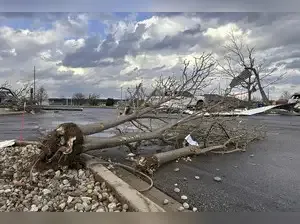
Tornadoes are among the most violent and unpredictable natural disasters capable of forming in minutes and causing devastating destruction. On Friday, southwest Michigan was hit by a series of tornadoes, leaving four people dead and at least a dozen injured. At the same time, Oklahoma reported two fatalities from a separate tornado, according to the Storm Prediction Center. These incidents signify an early and deadly beginning to the tornado season, which normally runs from March through June. Last year, tornadoes were accountable for 68 deaths in the United States.
The Branch County Sheriff’s Office reported in a press release that three people died when a tornado happened near Union Lake, west of Union City. Twelve others sustained injuries, three of whom were hospitalized. “Our thoughts are with those who have lost family, friends, and property during this incident,” said Sheriff Fred Blankenship in a statement.
Michigan Governor Gretchen Whitmer announced that the state activated its Emergency Operations Center to help coordinate the response. “By taking this action, we can ensure the state can monitor and respond to local requests,” she stated.
Understanding Tornado Formation
The New York Times describes, “The ingredients that give rise to tornadoes include warm, moist air at ground level; cool dry air higher up; and wind shear, which is the change in wind speed or direction. Each of these factors may be affected differently by climate change.” Despite technological advancements in meteorology, forecasting tornadoes remains extremely challenging. These storms can develop in minutes and disappear rapidly. The strongest tornadoes may span three miles in width and produce winds up to 300 miles per hour.Tornadoes often happen along with other severe weather like heavy rain and hail, which can intensify their destructive nature. Historical information indicates that the cumulative danger: at least seven tornadoes have resulted in 10 deaths in Michigan since 2000. Friday's outbreak included four more fatalities, according to the National Centers for Environmental Information.
Michigan’s Deadly Past Tornadoes
One of Michigan’s most devastating tornadoes in recent memory happened on May 20, 2022, when an EF3 tornado struck Gaylord. The storm caused destruction in mobile home communities and nearby commercial regions, destroying homes, overturning vehicles, and leveling businesses in just minutes. National Weather Service surveys confirmed a long, prolonged damage trajectory consistent with EF3-strength winds strong enough to obliterate manufactured dwellings and heavily damage solidly built structures.FAQs:
Q1. What causes tornadoes?Tornadoes form when warm, moist air near the ground meets cooler, drier air above, combined with wind shear. These conditions create rotating columns of air that can develop into destructive storms.
Q2. When is tornado season in the U.S.?
Tornado season generally runs from March to June, though it varies by state. “Depending on heat conditions, tornado season varies from state to state and lasts as late as November in Louisiana.”