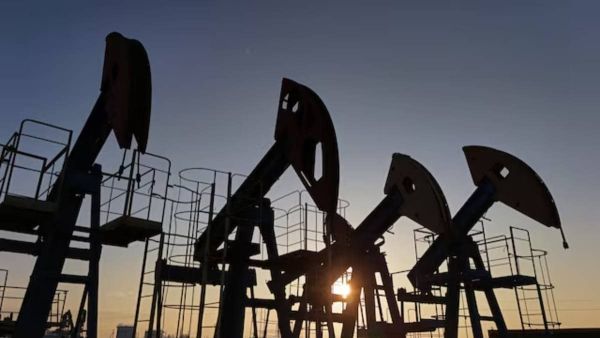
Bonds across the globe sank on Monday as a rapidly worsening U.S.-Israeli war with Iran briefly pushed oil prices near $120, heightening investor fears over inflation which they bet may prompt European central banks to hike rates this year.
Brent crude prices soared as much as 28% to almost $120 per barrel - their highest since July 2022 and were last up 14% at at around $105.
The U.S.-Israeli war with Iran is keeping the Strait of Hormuz, through which roughly one-fifth of the world's oil and liquefied natural gas typically passes, virtually shut.
Iran naming Mojtaba Khamenei to succeed his father Ali Khamenei as supreme leader, also pressured prices, signaling that hardliners remain firmly in charge.
"Today is much more like in panic mode," said Lyn Graham-Taylor, senior rates strategist at Rabobank in London.
Investors are "purely pricing in a focus from central banks on the inflation side of an energy supply shock. There's relatively limited pricing in of the downside from the perspective of GDP," he said.
The spectre of rising inflation and the possibility of central banks needing to keep rates higher for longer or even hiking them has meant the safe-haven allure of bonds is being overlooked in the conflict.
Bond Selloff Intensifies
On Monday, government bond yields surged further as prices tumbled, adding to last week's dramatic moves.
Investors moved to price in as much as two rate hikes from the European Central Bank by year-end, a huge turnaround from February, when the risk was another rate cut.
They also price in around a 70% chance that the Bank of England will hike rates by December, having seen a cut this month as fairly likely before the conflict. The Fed is still expected to cut rates in the fall but expectations have receded there too.
Britain bore the brunt of rising borrowing costs. Two-year yields were last up 25 basis points at 4.12% having risen nearly 40 bps in earlier trade to their highest in nearly a year at 4.24%.
In Germany, they touched their highest since mid-2024 at 2.48% and were last up 8 bps.
Those moves followed jumps of around 30 bps each last week, as European markets proved particularly vulnerable to the selloff given the region's dependency on energy imports.
The moves were more contained in the U.S., the world's largest liquefied natural gas producer, where two-year yields were last up 5 bps.
Longer-term bonds were mainly hit in Britain on Monday, where 10-year yields were last up 14 bps, while they were only up 3-4 bps in Germany and the U.S.
Stagflation Scenario
Investors are growing more concerned about the inflation outlook. A market gauge of euro zone inflation over the next two years is up around three quarters of a percentage point since the war broke out.
But analysts say bond market moves have also been exacerbated by positioning shifts as investors previously bet on steeper yield curves and falling short-term yields expecting central bank rate cuts.
Investors said that was hitting the UK particularly hard, where investors had previously been bullish in anticipation of rate cuts and easing fiscal concerns and were now unwinding those positions.
"What you are seeing right now is a huge capitulation," RBC BlueBay Asset Management portfolio manager Kaspar Hense said.
While the market is pricing rate hikes from the ECB, Hense expects the bank to hold.
"We would think that European growth will be hit to the same extent as inflation is rising… With that, we would think that it is more likely that the ECB looks through."
Market focus was also on how governments may tackle the energy price surge, which will hurt consumers and businesses given its speed.
News that G7 finance ministers will on Monday discuss the possible release of emergency oil reserves helped bring the oil price down from its earlier high.
Governments in Asia are scrambling to limit the impact on economies and consumers, while the European Union is examining short-term measures to ease pressure on industry.
Credit ratings agency Fitch told Reuters on Friday that the finances of governments like Britain and France, already facing high budget deficits, could come under pressure if they launch new energy support measures.
For some analysts, the bond market reaction warranted caution for riskier assets.
"Rates market repricing suggest a scenario where oil stays above $100 for months. But in that scenario we should see a much sharper repricing of the equity markets," said Jefferies economist Mohit Kumar.
-
UPSC Confirms Akanksha Singh Of Ghazipur As Official Rank 301 Holder In Civil Service Exam 2025

-
Iran Accuses US, Israel Of Plotting Partition To Seize Oil Amid Escalating West Asia Conflict

-
SSC CHSL 10+2 Tier-II Exam Date Announced for 2026

-
Final Vacancy List for SSC CGL 2025 Released: Over 15,000 Positions Available

-
Dubai LIVE: Safety fears grow as families of UK embassy staff in UAE told to leave