Every major tournament produces heroes, but it also exposes big names who fail to live up to expectations. The 2026 ICC Men’s T20 World Cup was no different. Several experienced players entered the tournament carrying enormous reputations, but their performances simply did not match the standards expected from them.
While emerging teams and new players impressed throughout the competition, some established stars struggled with form, intent, and execution. Poor strike rates, lack of impact with the ball, and failure to deliver in key moments became recurring themes.
Australia’s early exit before the Super 8 stage, Pakistan’s inconsistent campaign, and disappointing individual performances from several senior players shaped the narrative of this side. Based on overall impact and statistical output, here is the Flop XI of the 2026 T20 World Cup.
1. Jos Buttler (England)
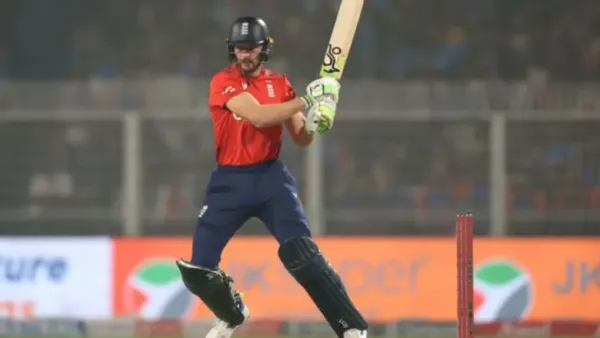
Jos Buttler entered the tournament as one of the most destructive T20 openers in the world, but his campaign never really got going. England needed aggressive starts at the top, yet Buttler struggled to find rhythm and rarely imposed himself on bowling attacks. His inability to convert starts into meaningful contributions left England searching for stability in the powerplay. Buttler finished the tournament with just 87 runs in 8 matches at a strike rate of 116.00.
2. Travis Head (Australia)
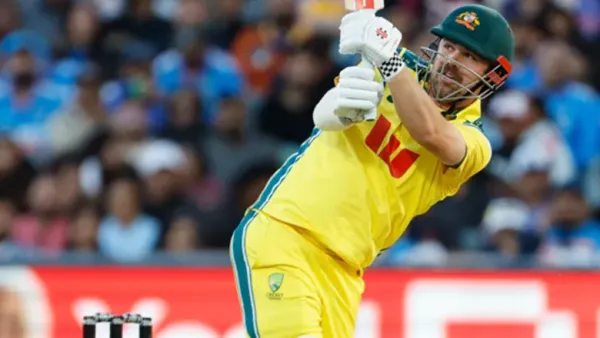
Travis Head has built a reputation as one of the most dangerous players in world cricket, but he could not replicate that form in this World Cup. Australia endured a disappointing campaign and failed to qualify for the Super 8 stage, and Head’s performances were part of that struggle. In one match where Mitchell Marsh was unavailable, Head even led the side but could not inspire a turnaround. He ended the tournament with 111 runs in 4 matches at a strike rate of 158.57.
3. Brandon King (West Indies)
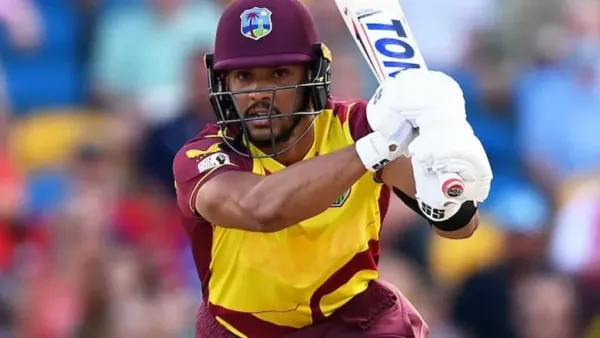
Brandon King had a forgettable campaign and was one of the most underwhelming performers among top order batters. West Indies expected him to provide solid starts, but he consistently struggled to build innings or accelerate when required. His dismissals often came at crucial moments, putting additional pressure on the middle order. King managed just 92 runs in 6 matches at a strike rate of 116.45.
4. Babar Azam (Pakistan)
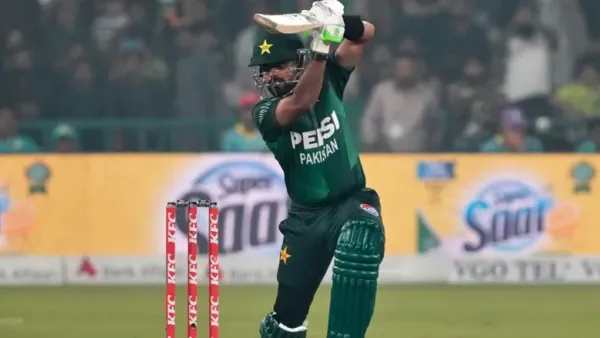
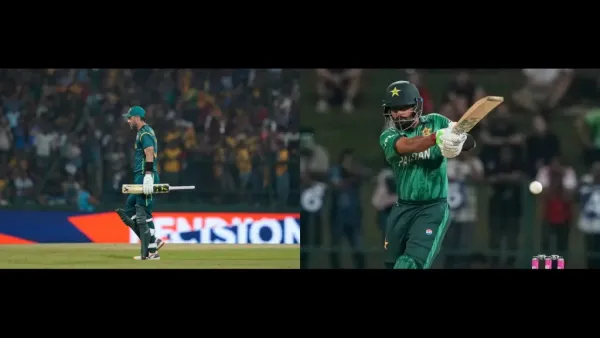
Babar Azam’s struggles in T20 cricket continued in this tournament as well. While he is known for his elegant strokeplay, the modern T20 game demands tempo, and Babar’s scoring rate once again became a concern. Pakistan required proactive intent at the top, but his approach often slowed down the innings rather than accelerating it. He scored only 91 runs in 4 innings with a strike rate of 112.34.
5. Rovman Powell (West Indies)
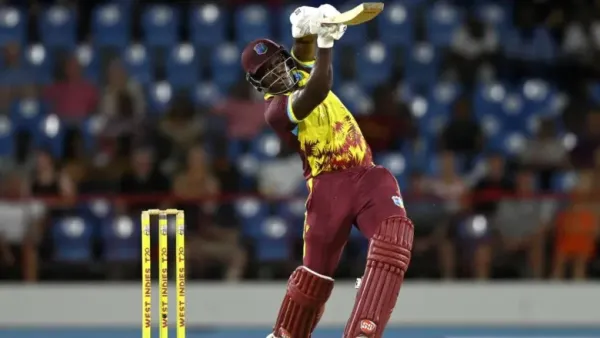
Rovman Powell was expected to provide finishing power for West Indies, but his impact remained minimal throughout the tournament. Known for his ability to dominate bowlers in the death overs, Powell struggled to impose himself and failed to produce any decisive knocks. His strike rate never reached the levels required for a middle order power hitter in T20 cricket. Powell ended the tournament with 149 runs in 6 innings at a strike rate of 147.52.
6. Glenn Maxwell (Australia)
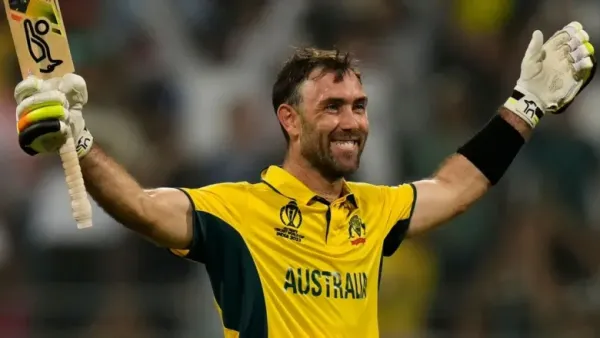
Glenn Maxwell has been one of the most influential T20 players of the last decade, but this tournament suggested that he may be nearing the latter stages of his career. Australia needed Maxwell’s experience and explosiveness in the middle order, yet he struggled to produce impactful innings. His inability to accelerate consistently reflected in his numbers and Australia’s early exit. Maxwell scored just 62 runs in 3 innings at a strike rate of 110.71.
7. Shadab Khan (Pakistan)
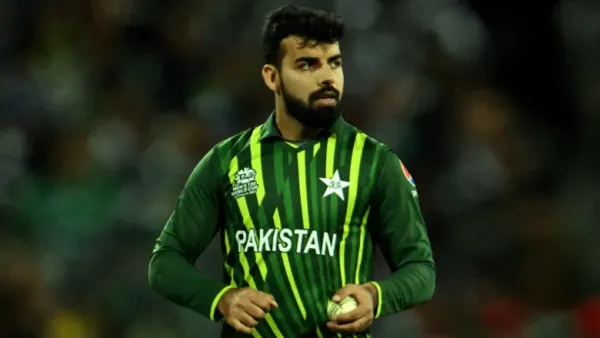
Shadab Khan’s performance as an all rounder fell well below expectations in this World Cup. Pakistan rely on him to contribute with both bat and ball, but he failed to make a strong impact in either department. With the bat, he struggled to score quickly enough in the middle overs, while his bowling lacked the bite that once made him a key wicket taking option. Shadab scored 118 runs in 6 innings at a strike rate of 153.24 and picked up 5 wickets in 7 matches.
8. Nathan Ellis (Australia)
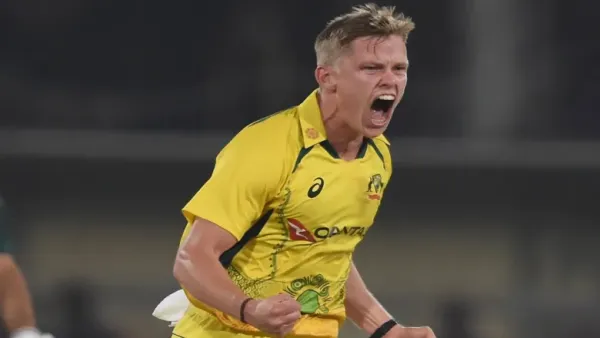
Nathan Ellis was one of the few experienced bowlers available in Australia’s attack after the absence of Pat Cummins, Josh Hazlewood, and Mitchell Starc. With that responsibility came the expectation that Ellis would lead the bowling unit, but he failed to step up when the team needed him most. All four of his wickets came in a dead rubber match, while he struggled to strike in the other three games. Ellis finished with 5 wickets in 4 matches at an economy rate of 15.40.
9. Jacob Duffy (New Zealand)
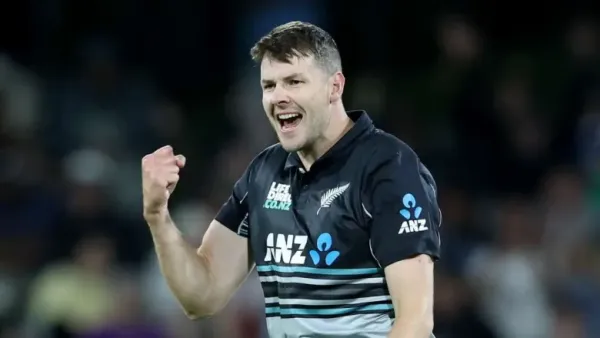
Jacob Duffy had a difficult tournament despite New Zealand progressing deep into the competition. As a frontline pacer, he was expected to deliver early breakthroughs and maintain pressure during the middle overs. However, he struggled to make meaningful inroads against opposition batting lineups. Duffy managed only 3 wickets in 5 matches and conceded runs at an economy rate of 10.86.
10. Kagiso Rabada (South Africa)
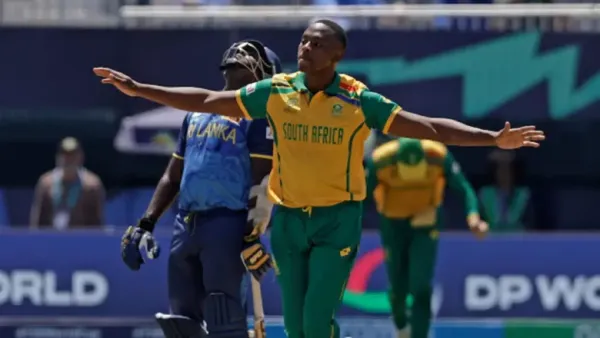
Kagiso Rabada’s tournament was far below the standards expected from a bowler of his calibre. Known for his pace and ability to produce breakthroughs, Rabada looked unusually ineffective and struggled to control the flow of runs. One of the most telling moments came during the league stage against Afghanistan, where he failed to defend 13 runs in the final over against a number eleven batter. Rabada finished with just 5 wickets in 7 matches with an economy rate of 8.13.
11. Shaheen Shah Afridi (Pakistan)
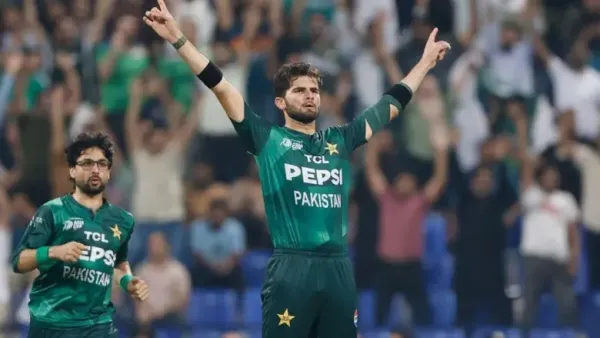
Shaheen Shah Afridi endured a frustrating tournament and never quite found the rhythm that once made him one of the most feared new ball bowlers in world cricket. His performances were inconsistent enough that he was even dropped before being brought back into the side later in the tournament. In the match against Sri Lanka, he conceded 22 runs while defending 28 in the final over, highlighting his struggles in the subcontinent conditions. Shaheen ended the tournament with 8 wickets in 5 matches at an economy rate of 10.52.
A tournament that exposed the struggles of several big names
The 2026 T20 World Cup showcased the rising standard of the format, where even the most established players cannot rely purely on reputation. Modern T20 cricket demands intent, adaptability, and the ability to perform consistently under pressure.
While several emerging players grabbed the spotlight during the tournament, some experienced stars struggled to keep pace with the evolving demands of the format. Poor strike rates, lack of breakthroughs, and failure to deliver in key situations defined the campaigns of players in this Flop XI.
For many of them, the tournament serves as a reminder that reputations alone are not enough in the fast paced world of T20 cricket.
The post ICC Men’s T20 World Cup 2026: Flop XI of the Tournament appeared first on Read.
-
Mumbai Women Stress Issues: “Family stress and marital…”, the main cause of mental stress among women in Mumbai; A report by ‘MPower’

-
Mother-child’s lovely promise hits the internet, everyone’s eyes moist

-
Mother swear! Now after fuel mobile data usage will be expensive? Govt set to tax ‘so much’ on 1 GB data

-
Lost your mobile phone? How to track and block through Sanchar Saathi portal

-
Aakash Chopra picks his ideal playing XI of Sunrisers Hyderabad (SRH) for IPL 2026. Read