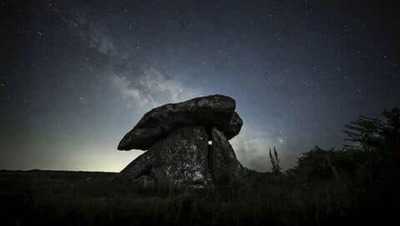
Unlike current Starlink units, these new satellites would orbit higher and stay sunlit even at midnight, meaning tens of thousands could be visible from Earth every night.
This much extra brightness could make it a lot harder for astronomers (and stargazers) to see faint objects in space.
Scientists warn that all these extra satellites could leave bright streaks across telescope images, especially for observatories like Vera Rubin.
There is also talk about Kessler syndrome: basically too much stuff in orbit leading to dangerous collisions and even more debris.
The FCC put SpaceX's application on a fast-track path and has not given final approval.
It is collecting feedback and will have to weigh the risks to astronomy and space safety before making a call.
-
From chicken tikka to musakhan: Iftar dishes that unite UAE residents

-
'Prakrit is, like Sanskrit, a literary language': Infosys Prize 2025 winner Andrew Ollett

-
India's summer forecast is a warning that extreme heat can affect democracy
-
I tried mini eggs from Aldi, Asda, M&S and Lidl - one was better and cheaper than Cadbury

-
TN Assembly polls: CPI firm on six seats as DMK alliance talks hit deadlock