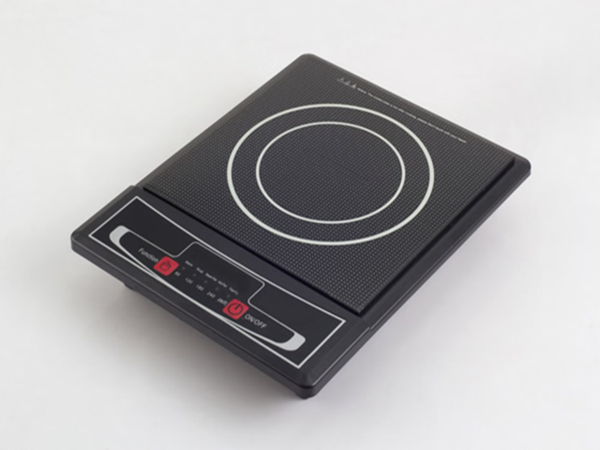
These days, long queues are being witnessed outside gas agencies in several parts of the country. People are standing in line for hours on end to procure gas, and even after booking, deliveries are being delayed amidst skyrocketing prices. Disruptions in supply within the Strait of Hormuz have increased the pressure on the availability of domestic gas in India. Consequently, the demand for electric kitchen appliances—such as induction cooktops—is rising rapidly. In particular, the induction stove is emerging as a convenient and affordable alternative for small homes, rental accommodations, hostels, and office kitchens. Now, let's address the first question: how does it actually work?
How Does an Induction Stove Work?
Induction cooking technology differs significantly from traditional gas stoves. It does not utilize an open gas flame to cook food. An induction cooktop contains a copper coil embedded within it. When electricity flows through this coil, it generates an electromagnetic field—essentially, electromagnetic energy. This energy travels directly to the base of the cookware, causing it to heat up. In this process, heat is generated directly within the vessel itself. The surface of the stove does not become excessively hot, and energy loss is minimized. This is why food often cooks faster on an induction stove compared to a gas stove.
How It Differs from Gas and Electric Stoves
With a gas stove, the cookware is heated by an open flame; whereas with a standard electric cooktop, the heating element heats up first and then transfers that heat to the cookware. However, with induction cooking, the energy is transferred directly into the cookware itself. This makes the cooking process both faster and more energy-efficient.
Now, for the second question: does induction cooking offer any additional benefits?
Experts say yes... it certainly does have several advantages. Such as:
Faster Cooking
Boiling water or cooking vegetables on an induction stove is a much quicker process because the energy is delivered directly to the cookware.
Cost-Effective
In today's times, the price of a 14.2 kg gas cylinder has soared into the thousands of rupees; however, if the same amount of cooking is done on an induction cooktop, the electricity bill typically increases by an average of only ₹500–600.
Instant Temperature Control
Unlike gas stoves, there is no need to adjust a flame. The temperature can be raised or lowered instantly.
Easy to Clean
The surface of the cooktop does not get excessively hot; therefore, if food spills onto it, it does not burn or stick, making it easy to clean.
Energy Efficient
According to energy experts, induction cooking can be more energy-efficient compared to gas cooking.
Safer
Since there is no open flame, the risk of fire hazards is significantly reduced.
Question 3: Will every type of cookware work on an induction cooktop?
Only cookware with a base made of magnetic metal—such as stainless steel or cast iron—works on an induction stove. Ordinary aluminum or copper vessels typically do not work on induction cooktops.
So, why is the demand for induction cooktops on the rise now?
Amidst ongoing discussions in the country regarding gas prices and energy costs, people are actively seeking alternatives that are affordable, safe, and convenient. Thanks to improved electricity availability and advancements in kitchen technology, induction cooktops are rapidly gaining popularity. Experts believe that in the coming years, alongside other smart kitchen appliances, induction cooking is likely to become even more commonplace in Indian households. Please note that only cookware possessing magnetic properties (such as stainless steel or cast iron) will work on an induction cooktop. To check if a vessel is compatible, simply place a magnet against its base; if the magnet sticks, the vessel is perfect for induction cooking.
Disclaimer: This content has been sourced and edited from Amar Ujala. While we have made modifications for clarity and presentation, the original content belongs to its respective authors and website. We do not claim ownership of the content.
-
What should and should not be eaten with curd? Learn the correct rules and tremendous benefits of eating curd from a nutritionist – Read

-
‘These’ are serious symptoms that appear in the body before a silent heart attack, don’t ignore it otherwise you will lose your life.
-
OnePlus Nord 6 To Debut Soon In India: 165Hz Refresh Rate, 9000mAh Battery, And Snapdragon Chipset—Check All Details, Launch Timeline And Price

-
Western Carriers reports acquisition of 1,00,000 shares by Rajendra Sethia

-
Big change on Instagram! The company will delete this important privacy feature, how will it affect users? find out