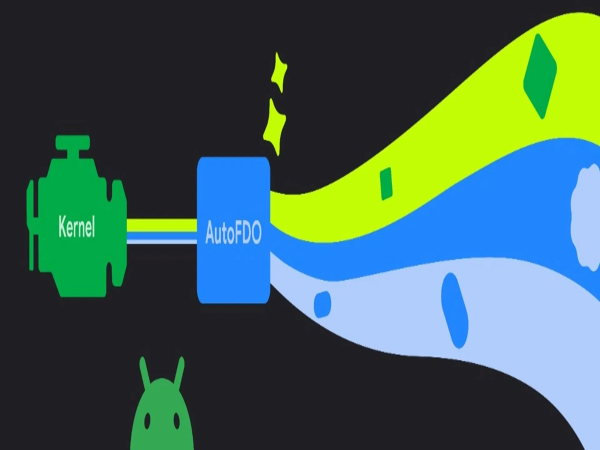
Google is working on a new optimization technique to enhance smartphone performance, dubbed AutoFDO—short for Automatic Feedback-Directed Optimization. The objective of this technology is to make the Android operating system faster, more efficient, and smoother. According to Google's Android LLVM Toolchain team, this new technique will enable apps to launch more quickly on smartphones. The system will become more responsive, and improvements in battery efficiency may also be observed.
Major Improvements Ahead
The kernel is the most critical component of the Android system. It acts as a bridge connecting the smartphone's hardware, processor, and applications. According to Google, the Android kernel manages approximately 40 percent of the phone's CPU time; consequently, even a minor improvement to the kernel can have a significant impact on the phone's overall performance. The new AutoFDO technique focuses on optimizing this very kernel more intelligently.
How Does AutoFDO Work?
AutoFDO is a data-driven optimization technique. It begins by tracking system activities during controlled laboratory tests. During this process, profiling tools record which sections of the system code are being utilized most frequently. These specific sections are referred to as "hot code paths"; subsequently, the compiler is instructed to organize these critical sections more efficiently. This allows the system's vital operations to be executed more rapidly.
Improvements in Boot Time and App Launching
According to Google's initial internal tests, the implementation of the AutoFDO technique has yielded several key improvements, such as:
The device's boot time has accelerated by approximately 2.1%.
A reduction of roughly 4.3% has been observed in "cold app launch" times.
Improved results were also noted across various other system performance metrics.
"Boot time" refers to the duration it takes for a smartphone to power on and reach the home screen. Typically, in mid-range Android phones, this duration falls between 20 and 40 seconds.
What Benefits Will Users Gain?
Google's initial tests indicate that this minor tweak has a significant impact. Consequently, once AutoFDO is implemented, smartphone users can expect to enjoy several benefits, such as:
Faster Boot Times: The time it takes for a device to power on has been reduced by up to 2.1%. This means you will now have to wait less time to see your home screen.
Faster Cold App Launches: When you open an app for the very first time, it will launch 4.3% faster.
Smoother Experience: The phone's user interface will feel more responsive and fluid compared to before.
Battery Savings: Since the processor will require less effort to process code, an improvement in battery life is also to be expected.
In short, the overall user experience of the phone is likely to improve.
Technology May Arrive in Android Updates
Experts predict that if this technology proves successful, it could be gradually rolled out in upcoming Android updates. This could lead to performance improvements not only in new devices but also in many existing Android devices.
Disclaimer: This content has been sourced and edited from Amar Ujala. While we have made modifications for clarity and presentation, the original content belongs to its respective authors and website. We do not claim ownership of the content.
-
What should and should not be eaten with curd? Learn the correct rules and tremendous benefits of eating curd from a nutritionist – Read

-
‘These’ are serious symptoms that appear in the body before a silent heart attack, don’t ignore it otherwise you will lose your life.

-
OnePlus Nord 6 To Debut Soon In India: 165Hz Refresh Rate, 9000mAh Battery, And Snapdragon Chipset—Check All Details, Launch Timeline And Price
-
Western Carriers reports acquisition of 1,00,000 shares by Rajendra Sethia

-
Big change on Instagram! The company will delete this important privacy feature, how will it affect users? find out