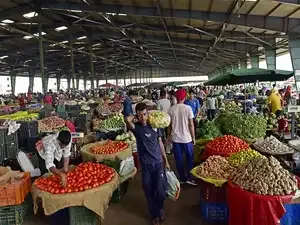
India’s wholesale inflation rose to an 11-month high of 2.13% year-on-year in February, from 1.8% in January, driven by higher prices of food and non-food articles, official data released Monday showed.
The Wholesale Price Index (WPI)-based inflation stood at 2.5% in February 2025. The uptick reflects a similar trend in retail inflation, which increased to 3.2% in February from 2.7% in January, largely due to a low base effect and rising food prices.
Also Read: Jobs data for 50 cities likely soon; Bengaluru, Mumbai in focus
“Positive rate of inflation in February 2026 is primarily due to increase in prices of other manufacturing, manufacture of basic metals, non-food articles, food articles and textiles etc.,” the commerce and industry ministry said in a statement.
Economists believe inflation is likely to rise faster from March onwards as the impact of higher oil prices begins to reflect in the WPI.
However, deflation in the fuel & power category continued at 3.8% in February, with LPG (Liquified Petroleum Gas) and petrol prices falling by 4.6% and 5.4%, respectively.
Food inflation, which accounts for around a quarter of the WPI basket, rose to a nine-month high of 1.9% in February compared with 1.4% in January.
Among key food categories, prices of cereals, pulses and wheat declined by 2.4%, 5.9% and 4.4% and, respectively.
Also Read: Fitch raises India FY26 GDP growth forecast to 7.5% on strong domestic demand
In contrast, vegetable prices rose 4.7%, although key items such as potato and onion recorded sharp declines of 27.4% and 41%, respectively.
Manufacturing products, which account for 64.23% of the WPI basket, edged up to 2.92% in February from 2.86% in January.
Of the 22 manufactured sub-groups, 16 registered price increases, including basic metals (4.4%), textiles (3.3%), food products (1.1%), and chemical products (0.7%).
Meanwhile, inflation in primary articles rose to 3.3% in February, up from 2.2% in January.
The Wholesale Price Index (WPI)-based inflation stood at 2.5% in February 2025. The uptick reflects a similar trend in retail inflation, which increased to 3.2% in February from 2.7% in January, largely due to a low base effect and rising food prices.
Also Read: Jobs data for 50 cities likely soon; Bengaluru, Mumbai in focus
“Positive rate of inflation in February 2026 is primarily due to increase in prices of other manufacturing, manufacture of basic metals, non-food articles, food articles and textiles etc.,” the commerce and industry ministry said in a statement.
Economists believe inflation is likely to rise faster from March onwards as the impact of higher oil prices begins to reflect in the WPI.
However, deflation in the fuel & power category continued at 3.8% in February, with LPG (Liquified Petroleum Gas) and petrol prices falling by 4.6% and 5.4%, respectively.
Food inflation, which accounts for around a quarter of the WPI basket, rose to a nine-month high of 1.9% in February compared with 1.4% in January.
Among key food categories, prices of cereals, pulses and wheat declined by 2.4%, 5.9% and 4.4% and, respectively.
Also Read: Fitch raises India FY26 GDP growth forecast to 7.5% on strong domestic demand
In contrast, vegetable prices rose 4.7%, although key items such as potato and onion recorded sharp declines of 27.4% and 41%, respectively.
Manufacturing products, which account for 64.23% of the WPI basket, edged up to 2.92% in February from 2.86% in January.
Of the 22 manufactured sub-groups, 16 registered price increases, including basic metals (4.4%), textiles (3.3%), food products (1.1%), and chemical products (0.7%).
Meanwhile, inflation in primary articles rose to 3.3% in February, up from 2.2% in January.