India Deploys Warships to Arabian Sea Amid Hormuz Tensions, Ensures Safe Passage for Tankers
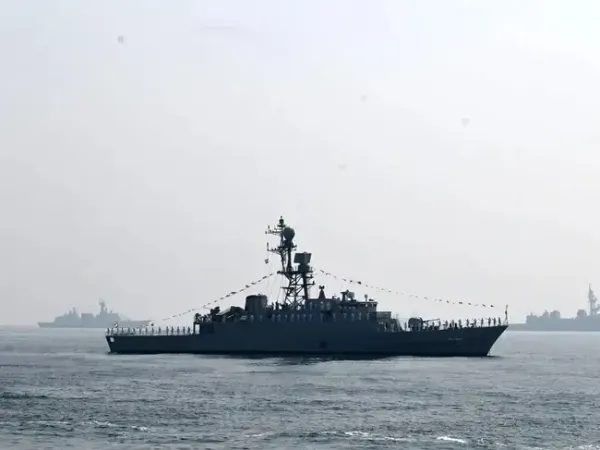
India has deployed additional warships to the Gulf of Oman and the Arabian Sea to safeguard its commercial vessels, as tensions continue to disrupt movement through the Strait of Hormuz. According to Bloomberg, citing people familiar with the matter, the Indian Navy has sent more than half a dozen warships, including logistics support vessels, as a precautionary measure to ensure the safe transit of fuel shipments.
While the news has been confirmed, the authenticity of this widely circulated video has not been independently verified.
Watch viral video here:
Read more: How Navy warships are protecting India-bound ships amid rising Gulf tensions
Escort Operations Planned Outside Strait
The deployed warships will remain positioned east of the Strait of Hormuz and are not expected to enter the strategic waterway. Instead, their role will be to escort Indian vessels once they exit the strait and guide them safely towards the northern Arabian Sea.
Sources told Bloomberg that the move is aimed at minimising risks amid ongoing geopolitical tensions in the region.
Fuel Supply Concerns as Hormuz Disruptions Continue
India has already facilitated the safe passage of two state-owned liquefied petroleum gas (LPG) tankers in recent days and is in discussions with Iran to allow additional fuel shipments to pass through.
The Strait of Hormuz has effectively faced severe disruptions since the United States and Israel launched airstrikes on Iran in late February, impacting global energy routes.
India, which imports nearly 90 per cent of its LPG from the Middle East, has been particularly affected, raising concerns over potential supply shortages.
No Direct Alignment with US Military Push
Bloomberg reported that New Delhi has not directly responded to US President Donald Trump’s call for countries to deploy warships in the region to assist maritime traffic.
Ministry of External Affairs spokesperson Randhir Jaiswal stated earlier that the issue had not been discussed with the United States in a bilateral context.
Policy Rooted in Strategic Autonomy
India has traditionally participated in international military operations under a United Nations mandate, maintaining a stance of strategic autonomy rather than aligning with unilateral actions led by individual countries.
Officials indicated that the current deployment is purely precautionary and focused on protecting national interests.
Operation Sankalp Continues Maritime Security Role
The naval deployment is part of Operation Sankalp, an initiative launched in 2019 to ensure maritime security and protect Indian-flagged vessels in the Gulf region.
India has previously undertaken similar operations. In 2024, the Navy deployed multiple warships in the Arabian Sea following piracy threats linked to Iran-backed Houthi militants in Yemen.
Dozens of Indian Vessels Still Stranded
Government officials said that 22 Indian-flagged vessels remain stranded in the Persian Gulf. These include six LPG carriers, one liquefied natural gas (LNG) vessel, and four crude oil tankers.
Prime Minister Narendra Modi recently discussed the “serious situation in the region” with Iranian President Masoud Pezeshkian, including efforts to secure safe passage for Indian ships.
Inputs from agencies
While the news has been confirmed, the authenticity of this widely circulated video has not been independently verified.
Watch viral video here:
Read more: How Navy warships are protecting India-bound ships amid rising Gulf tensions
Escort Operations Planned Outside Strait
The deployed warships will remain positioned east of the Strait of Hormuz and are not expected to enter the strategic waterway. Instead, their role will be to escort Indian vessels once they exit the strait and guide them safely towards the northern Arabian Sea.Sources told Bloomberg that the move is aimed at minimising risks amid ongoing geopolitical tensions in the region.
Fuel Supply Concerns as Hormuz Disruptions Continue
India has already facilitated the safe passage of two state-owned liquefied petroleum gas (LPG) tankers in recent days and is in discussions with Iran to allow additional fuel shipments to pass through.The Strait of Hormuz has effectively faced severe disruptions since the United States and Israel launched airstrikes on Iran in late February, impacting global energy routes.
India, which imports nearly 90 per cent of its LPG from the Middle East, has been particularly affected, raising concerns over potential supply shortages.
No Direct Alignment with US Military Push
Bloomberg reported that New Delhi has not directly responded to US President Donald Trump’s call for countries to deploy warships in the region to assist maritime traffic.Ministry of External Affairs spokesperson Randhir Jaiswal stated earlier that the issue had not been discussed with the United States in a bilateral context.
Policy Rooted in Strategic Autonomy
India has traditionally participated in international military operations under a United Nations mandate, maintaining a stance of strategic autonomy rather than aligning with unilateral actions led by individual countries.Officials indicated that the current deployment is purely precautionary and focused on protecting national interests.
Operation Sankalp Continues Maritime Security Role
The naval deployment is part of Operation Sankalp, an initiative launched in 2019 to ensure maritime security and protect Indian-flagged vessels in the Gulf region.India has previously undertaken similar operations. In 2024, the Navy deployed multiple warships in the Arabian Sea following piracy threats linked to Iran-backed Houthi militants in Yemen.
Dozens of Indian Vessels Still Stranded
Government officials said that 22 Indian-flagged vessels remain stranded in the Persian Gulf. These include six LPG carriers, one liquefied natural gas (LNG) vessel, and four crude oil tankers.Prime Minister Narendra Modi recently discussed the “serious situation in the region” with Iranian President Masoud Pezeshkian, including efforts to secure safe passage for Indian ships.
Inputs from agencies