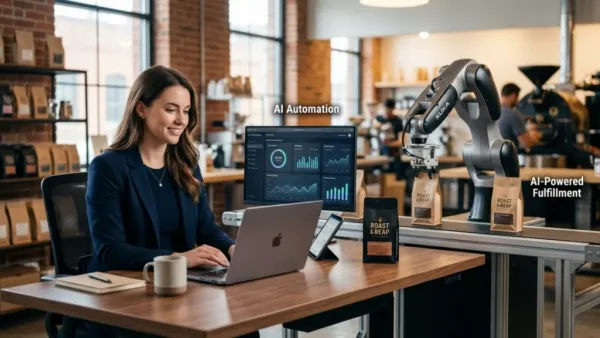
For most of the past decade, the conversation around artificial intelligence in business has been dominated by large organizations. The companies with dedicated data science teams, the platforms spending hundreds of millions on model development, the enterprise software vendors wrapping AI features around products that cost more per year than a small business’s entire technology budget.
That picture is changing quickly. AI capabilities that were genuinely out of reach for smaller businesses two or three years ago are now accessible, affordable, and in many cases already integrated into tools that SMEs use every day. The question for small business owners is no longer whether AI will affect their sector. It is whether they engage with it deliberately or stumble into it reactively.
Red Eagle Tech works with UK SMEs on exactly this question, and the conversations have shifted considerably in tone over the past eighteen months. Early enquiries were often speculative — business owners curious about AI but not sure where it fitted into their operations. Now the conversations tend to be more specific. Owners who have seen competitors move faster, handle more volume, or deliver a more consistent customer experience, and who want to understand what is driving that.
Where AI is making a practical difference for smaller businesses
The most useful AI applications for SMEs tend to share a common characteristic: they handle the repetitive, time-consuming work that slows teams down, freeing people to focus on the parts of their job that actually require human judgement.
Document processing is a strong example. Businesses that spend staff time manually extracting information from invoices, contracts, purchase orders or customer forms can automate that process almost entirely. The same data gets captured more accurately and fed directly into the systems that need it. What took an hour a day takes minutes.
Customer communication is another. AI-assisted tools can handle a significant proportion of routine customer enquiries, triage incoming requests by type and urgency, and draft responses for human review. For a small team managing a high volume of customer contact, the capacity this creates is substantial.
Reporting and business intelligence, which in many SMEs still means someone spending Friday afternoon pulling numbers out of various systems into a spreadsheet, is an area where AI-integrated custom software creates immediate and visible value. Red Eagle Tech has built solutions for UK businesses where leadership teams get accurate, up-to-date performance data without anyone having to compile it manually.
The importance of building AI around your business
One of the more common mistakes in how SMEs approach AI adoption is treating it as a product to be purchased and installed. The reality is that the most effective AI implementations are built around the specific data, processes and objectives of a particular business rather than applied generically from outside.
Red Eagle Tech’s custom AI solutions for UK SMEs are built on this principle. Rather than recommending an off-the-shelf AI tool and hoping it fits, the starting point is always the business itself — what it does, where its data lives, what decisions its people make repeatedly, and where automation would create the most value. The resulting solution is integrated, functional and specific to how that business operates.
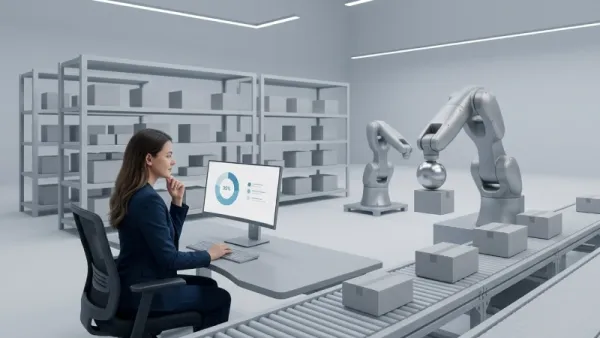
This matters particularly in competitive terms. An AI tool that every business in a sector can buy from the same vendor creates no competitive advantage for any of them. An AI capability built around a specific business’s operations, data and customer relationships is much harder for a competitor to replicate.
Governance and readiness
One aspect of AI adoption that SMEs often overlook until it becomes urgent is governance. As AI tools become embedded in business operations, questions around data handling, transparency, and accountability become more pressing. The UK regulatory environment around AI is developing, and businesses that establish sensible governance practices early are in a much stronger position than those scrambling to catch up.
Red Eagle Tech has published a practical guide to AI governance for UK SMEs that addresses the key considerations without requiring a legal team to decode it. For any business starting to think seriously about AI adoption, it is a useful reference point.

Getting started
The SMEs that tend to move fastest with AI are not the ones that try to do everything at once. They identify one or two areas where AI can create clear, measurable value, implement those well, and build from there. The confidence and internal capability that comes from a successful first implementation makes subsequent ones considerably easier.
Red Eagle Tech works with UK businesses through that process, from identifying the right starting points through to building, integrating and supporting the resulting solutions. The businesses that engage thoughtfully with AI now are building a genuine operational advantage, and in most markets that advantage compounds over time as the gap widens between those who have made AI work for them and those still figuring out where to begin.
For SMEs thinking about where to start, the starting point matters less than actually starting. The learning that comes from a real implementation, even a modest one, is far more valuable than any amount of planning in the abstract.
-
TikTok 'sickfluencers' teach fans how to get thousands of pounds in DWP benefits

-
Fuel shortage rumours false, Gujarat govt urges public to avoid panic buying

-
UK weather maps turn white as wall of snow to hit Manchester, Newcastle and London

-
Ken O'Flaherty dead: BBC radio legend dies as children pay heartbreaking tribute

-
Major new £21 change for everyone in UK with a pet