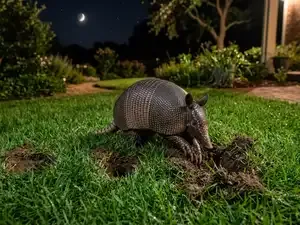
Should your lawn be spotted with small cone-like holes overnight, chances are that you may have been visited by an armadillo that foraged at night in your garden. According to Oklahoma State University Extension, such holes constitute one of the most definitive indicators of the presence of armadillos, specifically in irrigated lawns, mulched flower beds, and areas with softer soils.
The animals dig tunnels through the ground in order to find insects, grubs, earthworms, and other invertebrates within. This kind of destruction of the lawn surface is the result of armadillos' attempts to dig their prey out of the soil.
It is sometimes mistakenly identified as work done by squirrels and skunks. However, it is important to recognize the recurrent conical formation. Unlike other rodents, armadillos do not tear large sections of grass but instead dig several holes all over the yard.
The unusual shape of these holes is indicative of the feeding behavior of armadillos, as mentioned on the site of the Florida Extension. Armadillos look for grubs, insects, larvae, and worms near the surface. If the prey is abundant, several holes will be made within one night.
Armadillos are known to be mostly nocturnal animals, especially during summer. This means that most of the activities of these animals will occur when the homeowner is asleep. They will have gone by the time the morning comes, leaving the holes as the only evidence of their existence.
Various scientific sources back up this phenomenon. According to PubMed, armadillos are considered fossorial and cryptic mammals. These animals are known to live and stay underground most of the time when they are actively foraging for food.
This explains why one might not come across the animal in person.
Another thing is moist soil that is rich in insects and worms on the surface. Practically speaking, this provides an ideal environment for feeding. The routine activities, such as watering and fertilizing your lawn, can lead to more insects and worms and hence provide more prey for armadillos.
However, Oklahoma State University Extension warns that reducing irrigation might help make your lawn less attractive. Unfortunately, according to OSU Extension, the outcome will not happen instantly. This is because once the armadillos realize that there is plenty of food at your place, they will continue visiting you even when the conditions have changed.
This situation is what makes the problem frustrating.
As reported by the University of Florida IFAS Extension, this is a reason why the destruction caused by armadillos is often misdiagnosed. The animal does not have to be sighted, but the pattern of holes makes it clear to identify.
An additional PubMed-listed study on the movement patterns of the nine-banded armadillo indicated that local conditions affected its activity patterns around human developments. In essence, the suburbs themselves could encourage armadillo activity due to available food sources and easily dug ground.
The use of fences is suggested when working with small gardens only; however, this approach cannot be applied to large areas of turf. Limiting watering can also help reduce the attractiveness of a certain place; yet, it is not likely to work instantly.
It is also important to note that, according to the instructions from the extension, the destruction process will probably accelerate before stopping because armadillos keep seeking their prey in a familiar place. This means that homeowners are unlikely to see immediate results of their efforts.
Despite how bizarre the holes in yards may seem, experts claim that there is something very peculiar about their appearance. Armadillos do not simply destroy the turf; they follow their food underground, especially at night.
The animals dig tunnels through the ground in order to find insects, grubs, earthworms, and other invertebrates within. This kind of destruction of the lawn surface is the result of armadillos' attempts to dig their prey out of the soil.
Why do the holes look so unusual
The nature of damage caused by armadillos is rather distinct since it does not resemble the scarring and turf-tearing done by most other wildlife species. As per the information provided by the University of Florida IFAS Extension, armadillos generally form clusters of shallow burrows that can be up to six inches deep. The burrowing generally takes place in loose soils, mulches, flower gardens, or irrigated lawns.It is sometimes mistakenly identified as work done by squirrels and skunks. However, it is important to recognize the recurrent conical formation. Unlike other rodents, armadillos do not tear large sections of grass but instead dig several holes all over the yard.
The unusual shape of these holes is indicative of the feeding behavior of armadillos, as mentioned on the site of the Florida Extension. Armadillos look for grubs, insects, larvae, and worms near the surface. If the prey is abundant, several holes will be made within one night.
Why does the digging happen overnight?
Another factor that contributes to the mystery of the destruction is the timing of the attack. The lawn could be pristine at night, but look extremely disturbed in the morning.Armadillos are known to be mostly nocturnal animals, especially during summer. This means that most of the activities of these animals will occur when the homeowner is asleep. They will have gone by the time the morning comes, leaving the holes as the only evidence of their existence.
Various scientific sources back up this phenomenon. According to PubMed, armadillos are considered fossorial and cryptic mammals. These animals are known to live and stay underground most of the time when they are actively foraging for food.
This explains why one might not come across the animal in person.
Image Credit: Gemini| An armadillo digging small conical holes in a lush green lawn at night
Why irrigated lawns attract armadillos
According to experts, watered grass is very susceptible. For example, according to Oklahoma State University Extension, damage done by armadillos usually peaks during summertime when the irrigated grass is soft and easy to penetrate.Another thing is moist soil that is rich in insects and worms on the surface. Practically speaking, this provides an ideal environment for feeding. The routine activities, such as watering and fertilizing your lawn, can lead to more insects and worms and hence provide more prey for armadillos.
However, Oklahoma State University Extension warns that reducing irrigation might help make your lawn less attractive. Unfortunately, according to OSU Extension, the outcome will not happen instantly. This is because once the armadillos realize that there is plenty of food at your place, they will continue visiting you even when the conditions have changed.
This situation is what makes the problem frustrating.
Why homeowners rarely spot the animal
Even when the lawn shows clear evidence of digging, the animal itself may not be seen. Scientists characterize them as being low-visibility mammals who hide under brush, burrows, or ground cover.As reported by the University of Florida IFAS Extension, this is a reason why the destruction caused by armadillos is often misdiagnosed. The animal does not have to be sighted, but the pattern of holes makes it clear to identify.
An additional PubMed-listed study on the movement patterns of the nine-banded armadillo indicated that local conditions affected its activity patterns around human developments. In essence, the suburbs themselves could encourage armadillo activity due to available food sources and easily dug ground.
What actually works to stop the damage
Experts suggest that the best ways to address this problem involve the creature itself rather than simply the yard. As stated by Oklahoma State University Extension, trapping and removal tend to be better options than treatment throughout the whole area.The use of fences is suggested when working with small gardens only; however, this approach cannot be applied to large areas of turf. Limiting watering can also help reduce the attractiveness of a certain place; yet, it is not likely to work instantly.
It is also important to note that, according to the instructions from the extension, the destruction process will probably accelerate before stopping because armadillos keep seeking their prey in a familiar place. This means that homeowners are unlikely to see immediate results of their efforts.
Despite how bizarre the holes in yards may seem, experts claim that there is something very peculiar about their appearance. Armadillos do not simply destroy the turf; they follow their food underground, especially at night.