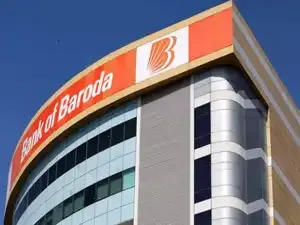
Bank of Baroda, one of India’s biggest lenders, aims to double its balance sheet over the next five years by capitalizing on the country’s strong economic growth, expanding fee-based businesses and deepening its presence overseas.
Debadatta Chand, chief executive officer of the bank, which absorbed two state-run lenders in 2019, said larger balance sheets will be crucial as lenders look to compete globally. “If India wants globally competitive banks, scale and capital base are very important,” he said in an interview. “There are advantages to consolidation.”
Authorities have been discussing options to create large state banks in Asia’s third-largest economy in order to finance big infrastructure and industrial projects. Prime Minister Narendra Modi has set a target to transform India into a developed economy by 2047.
Currently, only State Bank of India, the country’s biggest lender, and private sector leader HDFC Bank Ltd. rank in the top 100 global sector list by total assets. China and the US have rivals among the 10 biggest, data compiled by Bloomberg showed.
Indian banks have grown their balance sheets rapidly since the Covid-19 pandemic, supported by strong deposit inflows, rebounding credit demand and infrastructure spending in the world’s fastest-growing economy.
Bank of Baroda, the second-largest state-owned lender, has expanded its total assets by nearly 75% to 21 trillion rupees ($219 billion) as of March-end over the last five years. That compares with a near-72% growth at State Bank of India and roughly 57% at third-ranked state-owned rival Punjab National Bank.
Debadatta Chand, chief executive officer of the bank, which absorbed two state-run lenders in 2019, said larger balance sheets will be crucial as lenders look to compete globally. “If India wants globally competitive banks, scale and capital base are very important,” he said in an interview. “There are advantages to consolidation.”
Authorities have been discussing options to create large state banks in Asia’s third-largest economy in order to finance big infrastructure and industrial projects. Prime Minister Narendra Modi has set a target to transform India into a developed economy by 2047.
Currently, only State Bank of India, the country’s biggest lender, and private sector leader HDFC Bank Ltd. rank in the top 100 global sector list by total assets. China and the US have rivals among the 10 biggest, data compiled by Bloomberg showed.
Indian banks have grown their balance sheets rapidly since the Covid-19 pandemic, supported by strong deposit inflows, rebounding credit demand and infrastructure spending in the world’s fastest-growing economy.
Bank of Baroda, the second-largest state-owned lender, has expanded its total assets by nearly 75% to 21 trillion rupees ($219 billion) as of March-end over the last five years. That compares with a near-72% growth at State Bank of India and roughly 57% at third-ranked state-owned rival Punjab National Bank.