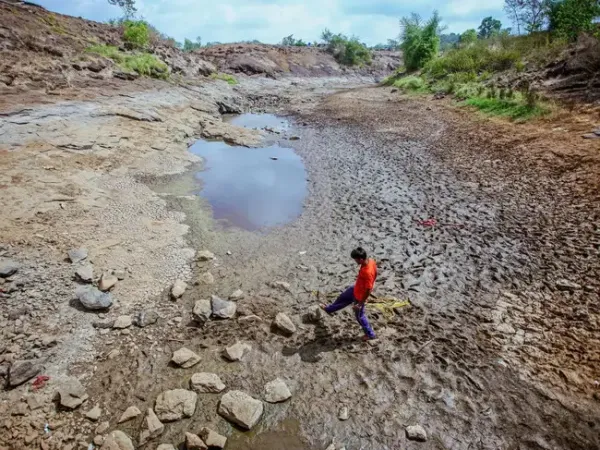
India’s largest banks need to do more to incorporate climate risks into lending decisions as the country suffers escalating impacts from the effects of global warming, according to a new analysis.
While 92% of major lenders now disclose at least some climate-related data — up from 40% in 2022 — there’s little evidence it is being used to inform policy or limit exposures, an assessment of 35 banks by Bengaluru-based think tank Climate Risk Horizons found.
Also Read | Banks’ exposure to carbon-intensive sectors raises long-term credit risk, costs: IIM Lucknow study
“The economic impacts of physical climate risks such as floods, heat, and drought are worsening,” said Sagar Asapur, the group’s head of sustainable finance and a co-author of the report. Those threats “cannot be treated as peripheral sustainability concerns. They affect borrower cash flows, collateral quality, and portfolio stability.”
Less than half the banks examined had begun climate stress testing work, and none disclosed the results of the exercises, including potential impacts on asset quality or portfolio performance, according to the report published Wednesday.
Only two of the companies reviewed — Federal Bank Ltd. and RBL Bank Ltd. — had explicit policies that set out a clear timeline to phase out lending to the coal sector, while one other institution had made a more limited commitment, the report said. Reducing lending to the sector is seen by climate advocates as a crucial tool to curb fossil fuel emissions.
Costs of natural disasters exacerbated by climate change are mounting in India, with incidents triggering losses of $1 billion or more now increasingly common, according to Swiss Re. Total losses in 2023 topped $12 billion, the Centre for Environment and Energy Development said in a report last year.
Also Read | Climate action an opportunity; AI can help streamline development spending: World Bank
The Reserve Bank of India has warned increasing climate-related threats could challenge financial stability. Though the central bank has taken steps to provide better data to lenders on the issue by launching a climate data repository over the last two years, it has so far stopped short of implementing plans for mandatory risk disclosures.
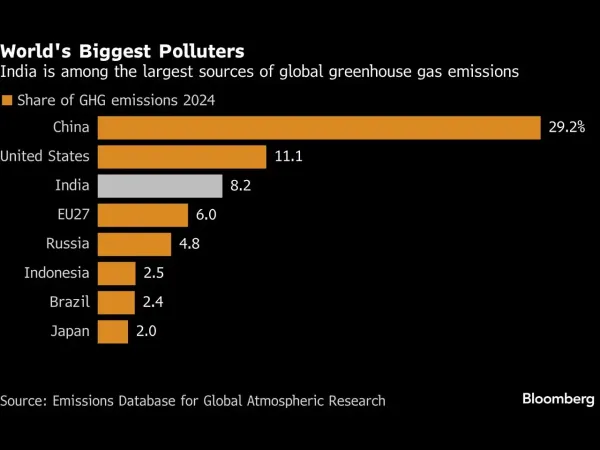
India’s government in March outlined a cautious approach on new targets to curb greenhouse gas emissions and reduce reliance on fossil fuels, limiting the prospects for faster climate action from the world’s third-largest polluting nation.
For most of the nation’s banks, progress on climate disclosures “is not getting translated into decision-useful risk management,” the report’s authors wrote. Banks that delay action “risk accumulating exposures, becoming stranded, non-performing and socially undesirable,” they said.
There are also continuing gaps in data, most significantly for financed emissions — the greenhouse gases produced by a bank’s borrowers, which typically account for more than 95% of a lender’s total climate impact. Only five of the banks surveyed disclosed the metric for the financial year to the end of March 2025, the study said.
While 92% of major lenders now disclose at least some climate-related data — up from 40% in 2022 — there’s little evidence it is being used to inform policy or limit exposures, an assessment of 35 banks by Bengaluru-based think tank Climate Risk Horizons found.
Also Read | Banks’ exposure to carbon-intensive sectors raises long-term credit risk, costs: IIM Lucknow study
“The economic impacts of physical climate risks such as floods, heat, and drought are worsening,” said Sagar Asapur, the group’s head of sustainable finance and a co-author of the report. Those threats “cannot be treated as peripheral sustainability concerns. They affect borrower cash flows, collateral quality, and portfolio stability.”
Less than half the banks examined had begun climate stress testing work, and none disclosed the results of the exercises, including potential impacts on asset quality or portfolio performance, according to the report published Wednesday.
Only two of the companies reviewed — Federal Bank Ltd. and RBL Bank Ltd. — had explicit policies that set out a clear timeline to phase out lending to the coal sector, while one other institution had made a more limited commitment, the report said. Reducing lending to the sector is seen by climate advocates as a crucial tool to curb fossil fuel emissions.
Costs of natural disasters exacerbated by climate change are mounting in India, with incidents triggering losses of $1 billion or more now increasingly common, according to Swiss Re. Total losses in 2023 topped $12 billion, the Centre for Environment and Energy Development said in a report last year.
Also Read | Climate action an opportunity; AI can help streamline development spending: World Bank
The Reserve Bank of India has warned increasing climate-related threats could challenge financial stability. Though the central bank has taken steps to provide better data to lenders on the issue by launching a climate data repository over the last two years, it has so far stopped short of implementing plans for mandatory risk disclosures.
India’s government in March outlined a cautious approach on new targets to curb greenhouse gas emissions and reduce reliance on fossil fuels, limiting the prospects for faster climate action from the world’s third-largest polluting nation.
For most of the nation’s banks, progress on climate disclosures “is not getting translated into decision-useful risk management,” the report’s authors wrote. Banks that delay action “risk accumulating exposures, becoming stranded, non-performing and socially undesirable,” they said.
There are also continuing gaps in data, most significantly for financed emissions — the greenhouse gases produced by a bank’s borrowers, which typically account for more than 95% of a lender’s total climate impact. Only five of the banks surveyed disclosed the metric for the financial year to the end of March 2025, the study said.