Top News

Nvidia’s China Breakthrough Stalls Despite US Approval for H200 Chip Sales
Samira Vishwas | May 16, 2026 8:24 AM CST
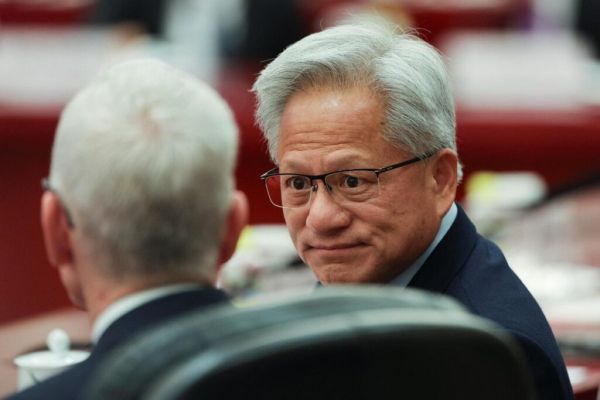
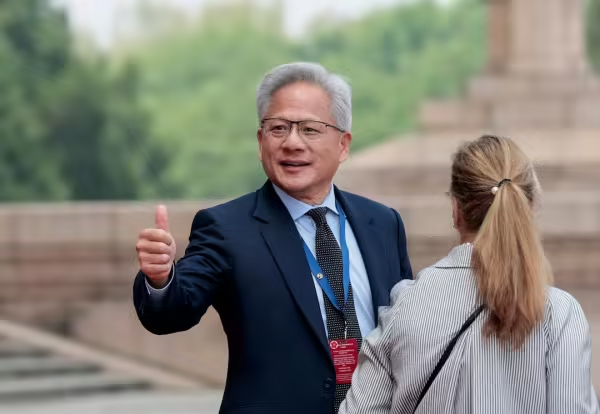
Nvidia’s ambitions in China have hit another major roadblock. Despite receiving approval from the U.S. government to sell its powerful H200 artificial intelligence chips to several Chinese firms, not a single shipment has reportedly reached customers yet. The delay highlights how intensifying tensions between Washington and Beijing are disrupting even officially approved technology trade.

At the center of the issue is Jensen Huangthe charismatic CEO of Nvidiawho is now attempting to navigate one of the most politically sensitive tech markets in the world.

Credits: AOL

Nvidia’s China Strategy Faces Fresh Uncertainty

According to sources familiar with the matter, the U.S. Commerce Department has approved around 10 Chinese companies to purchase Nvidia’s H200 AI chips. The approved buyers reportedly include Chinese tech giants such as Alibaba, Tencent, ByteDanceand JD.com.

In addition, distributors like Lenovo and Foxconn have also reportedly received authorization to distribute the chips inside China.

But despite the approvals, deliveries remain frozen. That has created uncertainty for both Nvidia and its Chinese customers, many of whom are aggressively investing in AI infrastructure to compete globally.

The H200: Nvidia’s Powerful AI Weapon

The H200 chip is Nvidia’s second-most powerful AI accelerator, positioned just below its top-tier offerings. It is designed to train and run advanced artificial intelligence models, making it highly valuable for cloud computing providers, AI startups, and large internet platforms.

Before U.S. export restrictions tightened, Nvidia dominated China’s advanced AI chip market with an estimated 95% market share. China was once responsible for roughly 13% of Nvidia’s total revenue, making it one of the company’s most important international markets.

Huang himself has previously estimated that China’s AI market could be worth nearly $50 billion this year alone. Losing access to such a massive opportunity could significantly impact Nvidia’s long-term growth ambitions.

Jensen Huang’s Surprise China Diplomacy

The situation has become so critical that Jensen Huang reportedly joined a White House delegation to Beijing this week after receiving a personal invitation from U.S. President Donald Trump.

Trump is said to have picked up Huang in Alaska while traveling to a summit with Chinese President Xi Jinping. The unexpected move fueled speculation that Nvidia’s stalled China business may have become part of broader U.S.-China negotiations.

Huang has increasingly emerged as one of the most influential voices in global AI policy discussions. While Nvidia wants to continue selling to China, the U.S. government remains concerned that advanced chips could strengthen China’s technological and military capabilities.

This balancing act has left Nvidia trapped between commercial opportunity and geopolitical pressure.

Export Controls Are Reshaping Global Tech

The stalled H200 shipments demonstrate how export controls are no longer just trade tools — they are now shaping the future of the global AI race.

The U.S. has steadily tightened restrictions on advanced semiconductor exports to China over the past few years. Washington argues these measures are necessary to maintain national security and prevent China from gaining dominance in critical technologies like artificial intelligence.

China, meanwhile, has accelerated efforts to build a self-sufficient semiconductor ecosystem. Domestic companies are racing to develop alternatives to Nvidia chips, although most analysts believe Chinese firms still trail far behind Nvidia in high-end AI hardware.

For Chinese tech companies, delayed H200 deliveries could slow AI development plans at a time when competition in generative AI is intensifying worldwide.

US clears sales of Nvidia's H200 chip to 10 China firms

Credits: Reuters

A Billion-Dollar Limbo

Each approved customer is reportedly allowed to purchase up to 75,000 H200 chips under current licensing rules. That represents billions of dollars in potential sales for Nvidia and massive computing power for China’s largest tech firms.

Yet for now, the chips remain stuck in limbo.

The episode underscores a new reality for the global technology industry: in the AI era, business decisions are increasingly inseparable from geopolitics. And for Nvidia, the company powering much of the world’s AI boom, China may remain both its biggest opportunity and its biggest challenge.

The post Nvidia’s China Breakthrough Stalls Despite US Approval for H200 Chip Sales appeared first on Read.


READ NEXT
Cancel OK