
IIndia is approaching the period when its weather will be most unstable, with the (IMD) reporting about heavy rains, thunderstorms, stormy seas, and heat waves in various regions of the country while the summer holiday season is still at its peak.
According to the latest advisory published by IMD, the situation has turned out to be favorable for further development of the southwest monsoon in the Arabian Sea, Bay of Bengal, and Andaman Sea regions, and the southwest monsoon is predicted to hit the state of Kerala on May 26.
As the change in seasons has already become more evident, many popular destinations have started to prepare for adverse weather conditions.
Such states as Kerala, Coastal Karnataka, Andaman & Nicobar Islands, Assam, Meghalaya, Arunachal Pradesh, and Sub-Himalayan West Bengal and Sikkim are some of the regions where heavy rains are predicted to hit in the coming days. The IMD has also forecast thunderstorms accompanied by lightning and strong gusty winds across several states, including Odisha, Bihar, Jharkhand, Tamil Nadu, Andhra Pradesh, and Karnataka.
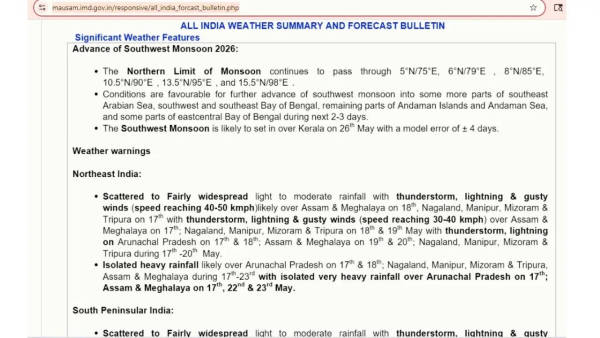
For travellers, the timing is significant. Hill destinations across Northeast India and the eastern Himalayas are entering a weather-sensitive period where intense rain can quickly trigger landslides, falling debris, road closures, and long traffic delays. Popular routes leading to destinations such as Gangtok, Cherrapunji, and parts of Arunachal Pradesh could become vulnerable to sudden weather-related disruptions if rainfall intensifies further.
The IMD has specifically warned about localised flooding, waterlogging in low-lying urban areas, reduced visibility, and disruptions to traffic movement due to heavy rain.
The Andaman & Nicobar Islands, one of India’s most sought-after summer island destinations, are expected to remain under prolonged wet and stormy conditions throughout the week. The IMD has forecast squally weather over the Andaman Sea and adjoining regions, with wind speeds reaching up to 60 kmph in some areas. Such conditions can affect inter-island ferries, water sports, boat excursions, and visibility for marine tourism activities.
Interior Karnataka has additionally been placed under hailstorm warning for May 17 and 18. Thunderstorms accompanied by lightning and strong winds are likely across parts of South India over the next several days, creating the possibility of sudden flight delays, highway slowdowns, and disruptions to outdoor tourism activities.
Even as southern and northeastern states prepare for intense rain, large parts of North and Central India continue to remain under dangerous heatwave conditions. Rajasthan, Delhi, Punjab, Haryana, Madhya Pradesh, Vidarbha, Telangana, and Uttar Pradesh are expected to witness persistent heatwave conditions through the week. IMD has further warned that parts of Uttar Pradesh may experience severe heatwave conditions between May 19 and 23.
The scale of the heat is already evident. Banda in Uttar Pradesh recorded the country’s highest maximum temperature at 46.4°C. These temperatures pose serious dehydration dangers, including heat exhaustion and heat stroke, especially to tourists who stay outdoors for extended periods, whether at historical landmarks, religious locations, wildlife parks, or urban tourist spots.
How are the coasts faring?
Sea conditions are also becoming increasingly rough along parts of India’s coastline. IMD has advised fishermen not to venture into several parts of the Arabian Sea and Bay of Bengal, including waters along the Kerala and Karnataka coasts and the Andaman Sea region. Coastal tourism operators and travellers planning ferries, cruises, or marine excursions may face temporary restrictions depending on local weather conditions.
With the monsoon now steadily approaching the Indian mainland while extreme summer heat continues elsewhere, travellers across the country may need to prepare for a week marked by rapidly changing weather, transport disruptions, and potentially hazardous outdoor conditions.
-
Starting June 1st, women in Bengal will receive ₹3,000 per month; find out how to apply and how to receive the funds...
-
Railway Rules: Can You Carry Ghee and Oil on a Train? Know the Railway Rules Before Traveling..

-
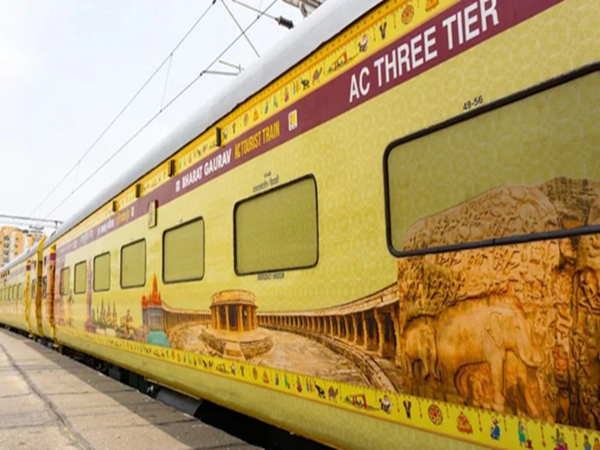
IRCTC launches 'Bharat Gaurav' train for Pashupatinath Yatra, running from Indore to Nepal..
-
UPPCL Reveals a Smart Mantra for Running ACs: Stay Cool and Save Money—A Smart Way to Conserve Electricity..

-
UIDAI's Major Announcement: Free Aadhaar Update Deadline Extended; New App to be Launched Soon..