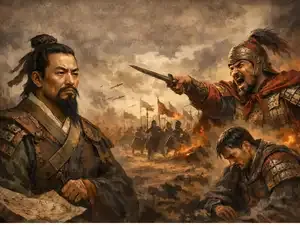
“Treat your men as you would your own beloved sons. And they will follow you into the deepest valley.”
These timeless words come from Sun Tzu, the legendary Chinese general and philosopher best known for the classic military text The Art of War. Though written thousands of years ago, the quote still carries powerful meaning in today’s world — not just for armies and leaders, but for parents, teachers, managers, entrepreneurs, and anyone responsible for guiding others.
Meaning of Sun Tzu's Quote
At first glance, the quote appears to be about leadership in war. But its deeper message is about trust, loyalty, and human connection.
Sun Tzu believed that true leadership is not built on fear alone. A leader may command authority, but authority without compassion rarely inspires devotion. When people feel respected, protected, and valued, they naturally become more committed to the mission and the person leading them.
The phrase “treat your men as you would your own beloved sons” is especially striking. It suggests care beyond duty. A good leader does not see followers as tools or numbers. Instead, they understand their struggles, protect their well-being, and guide them with sincerity. In return, people develop deep loyalty. That is why Sun Tzu says they will follow such a leader “into the deepest valley” — even through danger, hardship, and uncertainty.
This idea applies far beyond battlefields.
In workplaces today, employees often leave toxic managers, not difficult jobs. A boss who listens, supports growth, and stands by their team during hard times earns far greater respect than one who rules with intimidation. Similarly, great teachers inspire students not only through knowledge but through encouragement and patience. Even in families and friendships, trust grows where care and understanding exist.
Interestingly, Sun Tzu was also warning leaders against arrogance. History is filled with rulers who demanded loyalty but failed to earn it. Fear may produce obedience for a while, but compassion creates lasting unity. People willingly sacrifice for leaders who genuinely care about them.
The quote also reminds us that leadership is a responsibility, not a privilege. To lead others means carrying their burdens too. It means setting an example during difficult moments. Leaders who remain distant from the pain of their people often lose them emotionally long before they lose them physically.
In the modern world, where competition, pressure, and stress dominate many environments, Sun Tzu’s wisdom feels surprisingly relevant. People remember how they were treated more than what they were told. Respect and empathy are still among the strongest forms of influence.
Perhaps that is why Sun Tzu continues to be quoted centuries later. His teachings were not only about winning wars, but also about understanding human nature — something that never goes out of date.
These timeless words come from Sun Tzu, the legendary Chinese general and philosopher best known for the classic military text The Art of War. Though written thousands of years ago, the quote still carries powerful meaning in today’s world — not just for armies and leaders, but for parents, teachers, managers, entrepreneurs, and anyone responsible for guiding others.
Meaning of Sun Tzu's Quote
At first glance, the quote appears to be about leadership in war. But its deeper message is about trust, loyalty, and human connection.Sun Tzu believed that true leadership is not built on fear alone. A leader may command authority, but authority without compassion rarely inspires devotion. When people feel respected, protected, and valued, they naturally become more committed to the mission and the person leading them.
The phrase “treat your men as you would your own beloved sons” is especially striking. It suggests care beyond duty. A good leader does not see followers as tools or numbers. Instead, they understand their struggles, protect their well-being, and guide them with sincerity. In return, people develop deep loyalty. That is why Sun Tzu says they will follow such a leader “into the deepest valley” — even through danger, hardship, and uncertainty.
This idea applies far beyond battlefields.
In workplaces today, employees often leave toxic managers, not difficult jobs. A boss who listens, supports growth, and stands by their team during hard times earns far greater respect than one who rules with intimidation. Similarly, great teachers inspire students not only through knowledge but through encouragement and patience. Even in families and friendships, trust grows where care and understanding exist.
Interestingly, Sun Tzu was also warning leaders against arrogance. History is filled with rulers who demanded loyalty but failed to earn it. Fear may produce obedience for a while, but compassion creates lasting unity. People willingly sacrifice for leaders who genuinely care about them.
The quote also reminds us that leadership is a responsibility, not a privilege. To lead others means carrying their burdens too. It means setting an example during difficult moments. Leaders who remain distant from the pain of their people often lose them emotionally long before they lose them physically.
In the modern world, where competition, pressure, and stress dominate many environments, Sun Tzu’s wisdom feels surprisingly relevant. People remember how they were treated more than what they were told. Respect and empathy are still among the strongest forms of influence.
Perhaps that is why Sun Tzu continues to be quoted centuries later. His teachings were not only about winning wars, but also about understanding human nature — something that never goes out of date.