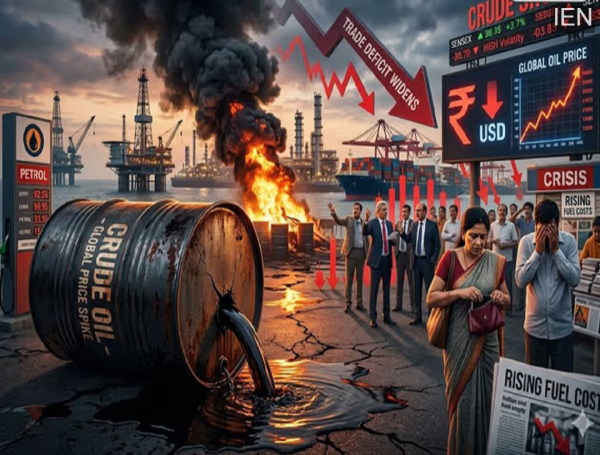
CRISIL Report: India Caught in the Oil Trap! Major Revelations in CRISIL’s ‘Oil’s Not Well’ Report. Expensive crude oil and declining exports have once again pushed the country’s trade deficit to a critical juncture.
CRISIL Report: Amidst soaring domestic prices for petrol and diesel—coupled with the historic weakness of the Rupee—a major warning has now emerged regarding the external balance of the Indian economy. In a report released on Tuesday, May 19, the renowned ratings agency CRISIL stated that India’s oil trade deficit is set to widen rapidly in the fiscal year 2026-27 (FY27). According to the report, a confluence of factors—rising crude oil prices in the international market, a decline in India’s petroleum exports, and our heavy reliance on foreign oil—is collectively undermining the country’s economic health.
85% Dependence: India’s Greatest Vulnerability
In its report, CRISIL clearly highlights that India imports over 85 percent of its annual crude oil requirements from abroad. This is precisely why even the slightest fluctuation in the international market causes our entire budget to wobble.
Fiscal Year 2013-14 (FY14): India imported approximately 190 million tonnes of crude oil.
Fiscal Year 2025-26 (FY26): This import volume has surged to cross the 300-million-tonne mark.
Why is the Historical Trend Breaking?
Typically, economic principles dictate that when crude oil prices fall, India’s trade deficit narrows. However, this time, that trend has been disrupted:
Declining Refined Oil Exports: India imports crude oil from abroad, refines it, and subsequently sells (exports) it to other nations in the form of petrol, diesel, and Aviation Turbine Fuel (ATF). While there was a surge in this sector following the COVID-19 pandemic, India’s petroleum exports have been declining for two consecutive years, starting from the fiscal year 2023-24 (FY24).
On one hand, our expenditure on importing crude oil is steadily rising, while on the other, our earnings from exporting refined oil are shrinking. Consequently, our oil trade deficit—measured in dollar terms—is continuously widening.
Current Account Deficit (CAD) Projected to Reach 2.2%
According to a report by CRISIL, the situation could become even more challenging in the current fiscal year (FY27).
Risk of Crude Oil Surpassing $95: In the previous fiscal year, the average price of Brent crude stood at $70.3 per barrel. However, CRISIL estimates that in the current fiscal year (FY27), the average price of crude oil could range between $90 and $95 per barrel (a figure that is currently hovering around $110, given the prevailing geopolitical tensions).
Pressure on Remittances from Gulf Nations: Tensions involving the US, Iran, and the broader Middle East region could adversely impact the remittances sent home by Indians working in the Gulf countries. Surge in Current Account Deficit (CAD): Driven by these various factors, CRISIL projects that India’s Current Account Deficit (CAD) could nearly triple from the 0.8% recorded in the previous fiscal year, potentially reaching 2.2% of the GDP this year.
-
Do your feet start smelling as soon as you wear socks in summer? Adopt these measures, you will remain fresh the whole day

-
Why uhomes.com Is a Reliable Choice for Student Accommodation in Coventry?

-
Recipe : Lightly sweet, melt in your mouth…, have you ever tried this 1100 year old recipe of Uttarakhand?

-
Hiccups Home Remedies: Do hiccups really occur due to remembering someone? Or is there some other reason behind it?

-
Amazon’s Alexa+ can now generate entire podcast episodes on demand