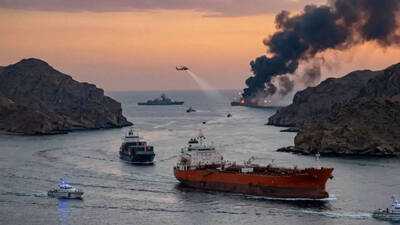
The ongoing struggle for dominance over the Strait of Hormuz between the United States and Iran has escalated the dangers faced by commercial shipping. Maritime intelligence analysts indicate that many vessels are opting to navigate without broadcasting essential identification signals. According to a report from the US Central Command, American forces have redirected 65 commercial ships and disabled four others as part of their blockade against Iranian ports, with not all vessels being linked to Iran.
Iran has significantly broadened its claimed operational area within the Strait of Hormuz. Mohammad Akbarzadeh, the political deputy of the Islamic Revolutionary Guard Corps Navy, announced that this zone now extends from the shores of Jask and Sirik to beyond Greater Tunb Island, encompassing a much larger area than previously defined.
Increase in 'Dark Activity'
This power struggle has resulted in a notable rise in 'dark activity' at sea. Ami Daniel, CEO of maritime intelligence company Windward, reported a staggering 600% increase in vessels disabling their transponders and radars designed for detecting other ships. 'Many vessels are going dark primarily for safety reasons,' Daniel explained. The presence of hundreds of IRGC vessels patrolling these waters has further heightened tensions. Since the onset of the US-Israeli conflict with Iran in late February, Iran has executed over three dozen retaliatory strikes on commercial shipping.
Negotiating Safe Passage
Some ships have sought to negotiate safe passage by sailing closer to the Iranian coastline and paying tolls under a new system established by Tehran. However, this approach poses the risk of breaching the US blockade. A case in point is the oil tanker Agios Fanourios I, which was redirected by US forces after it had cleared the strait while transporting Iraqi oil to Vietnam. The Greek-managed vessel reportedly obtained permission from Iran to transit, illustrating the conflicting pressures faced by ship operators. The US Treasury has cautioned that engaging in Iran's toll system or entering its waters could lead to sanctions against vessels and companies.
Strategic Significance of the Strait
The Strait of Hormuz is a vital global chokepoint, through which approximately one-fifth of the world's oil and liquefied natural gas was transported prior to the conflict. As both the US and Iran assert their control, safe navigation has become increasingly perilous and uncertain.
-
'Nervous' Princess Kate's behind the scenes admission to Mary Berry after major move

-
Premier League team left in limbo by Southampton Spygate scandal after £20m demand

-
Strictly bosses made a big mistake with one new host - and it's not Emma Willis

-
5 subtle hints Emma Willis was always going to be new Strictly Come Dancing host

-
UK charity shop giant confirms 45 stores to close - two before end of May