On the morning of 20 May 1991, Rajiv Gandhi himself drove the car with Sonia to cast his vote at his booth in Delhi. A party worker moved towards him with a puja thali, wishing for an auspicious start to the day. A worried Sonia touched the plate in panic and the plate fell down and turned upside down. This bad omen disturbed Sonia so much that she started thinking of returning without voting. Rajeev showed his patience by asking for water for him.
Rajiv Gandhi's early return home the same evening had made Sonia and Priyanka happy. But he had to go back again. This was the last phase of the election campaign. Sonia had asked him whether he could not wait? Rajeev took leave with a smile. Told that it was only a matter of two days. Then we will be together. Unfortunately, his return came in a coffin wrapped in the tricolor. In the bomb attack by LTTE militants in Sriperumbudur on May 21, the body of 46 year old Rajiv was so mutilated that the doctors could hardly shape it with the help of cotton bandages. What resentment did the LTTE have against him, due to which they took his life? Read its inside story on his death anniversary.
Sri Lanka's unrest - a challenge for India
In the eighties, India was facing a double challenge amid the deteriorating situation in Sri Lanka. On one hand, the threat to India was increasing due to the strengthening of other foreign powers. On the other hand, resentment among the Tamil population of India regarding the incidents in Sri Lanka was at its peak. The flames of ethnic violence were engulfing Sri Lanka. The minority Tamil population had strong complaints of neglect and exploitation by the Sinhalese majority-dominated government there. In protest, he launched an armed movement for “Tamil Eelam” with full autonomy in the northern and eastern parts of Sri Lanka.
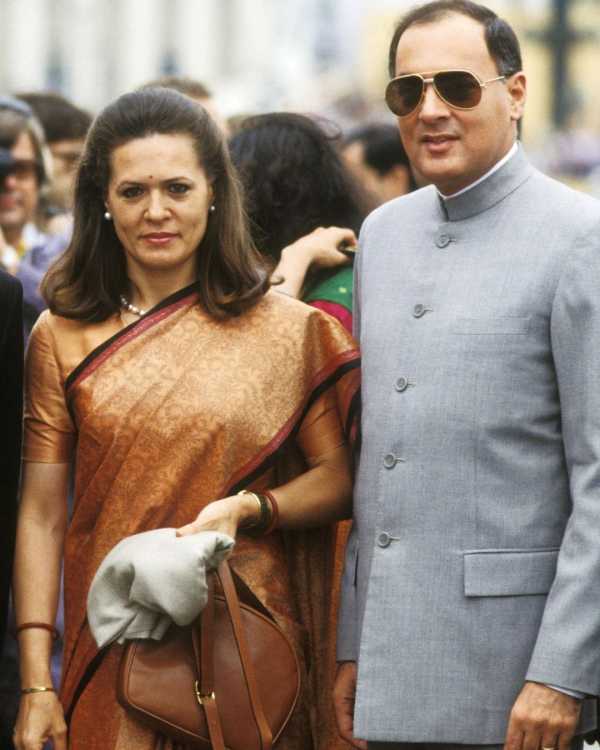
Sonia Gandhi had stopped Rajiv before going to Sriperumbudur. Photo: Getty Images
Liberation Tigers of Tamil Eelam (LTTE), which was growing stronger day by day, had also started talking about an independent Tamil country. The map of his thinking included the Tamil populated areas of Sri Lanka as well as the Tamil populated area of India. Rajiv was faced with this challenge after coming to power. Crowds of Tamil refugees were entering India amid intense attacks by the Sri Lankan Army. Thousands of refugees were not just facing the problem of food and shelter. There was a strong fear that this dissatisfaction of Tamils with their demand for separate Tamil Nadu could become a threat to the unity and integrity of the country.
Rajiv wanted a quick solution to the Sri Lankan problem.
In the SAARC conference held in Bengaluru in November 1986, Sri Lankan President J.R. Jayewardene created a difficult situation for India. In his speech, Jayawardene said that he is overwhelmed by the welcome he has received in the land of Gandhi-Nehru and whatever he says today, he will say from the heart. But whatever he said next was going to make India uncomfortable.
Jayewardene accused India of supporting Sri Lankan Tamil militants and reminded him of the Phut Panchsheel Treaty, which commits to non-interference in the internal affairs of other countries. In response, Rajiv Gandhi assured Jayewardene that India respects the integrity and sovereignty of Sri Lanka. He does not support independent Eelam but it is necessary to solve the problems of the Tamil population there and respect their wishes.
Kunwar Natwar Singh, who was the Minister of State for External Affairs in Rajiv's government, has written in his book One Life Is Not Enough that Rajiv Gandhi was in a hurry to solve the ethnic problem of Sri Lanka. According to Natwar Singh, Rajiv Gandhi had several meetings with Jayawardene in this regard. However, Natwar Singh's assessment was that Rajiv Gandhi was not very familiar with the history of Sri Lanka's ethnic problem.
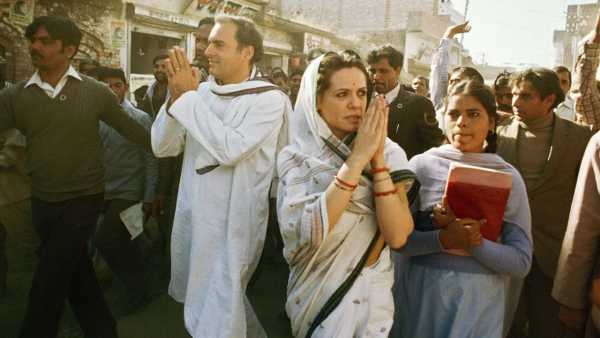
Rajiv Gandhi and Sonia Gandhi during the election campaign.
The people of Sri Lanka disliked India's efforts.
Amidst the increasing unrest in Sri Lanka, the Indian government offered humanitarian assistance there. But Sri Lanka stopped the boats and sent back the material sent by sea route. Then India dropped aid material in Tamil areas by air under the protection of fighter planes. India had a clear warning that stopping them would mean an invitation to war. Sri Lanka had strong objection to this step of India and expressed its displeasure.
Amidst this tussle, the series of meetings between representatives of both the countries continued. A draft of the agreement was agreed upon. According to this draft, power was to be transferred to the provinces of Sri Lanka. Merger of the North-Eastern provinces subject to referendum and official status for the Tamil language, the Sri Lankan Army ceasing operations in the northern peninsula and a promise to return to barracks and the Tamil militants to surrender their weapons as well as assurances by India not to support separatist forces were part of the draft.
Rajiv's decision to send Indian army to Sri Lanka
An agreement was signed between India and Sri Lanka on 29 July 1987. But there was such resentment in Sri Lanka regarding this agreement that after landing at Colombo Airport, it was not possible for Rajiv to enter the city by road. Thousands of people have blocked the roads. There was arson at various places. President Jayewardene's personal properties were also set on fire. Those protesting included Prime Minister Premadasa, ministers and the entire opposition including Srimavo Bandaranaike.
Rajiv Gandhi and his entourage were taken to the venue by helicopters. According to Natwar Singh, during lunch, Rajiv Gandhi had told him that President Jayewardene had said that in view of the deteriorating situation in Sri Lanka, if the Indian Army did not immediately reach here for help, then his government could be overthrown tonight itself. The next moment Natwar Singh was surprised to know that Rajiv Gandhi had already ordered the immediate march of the Indian Army to Sri Lanka. On receiving this information, Foreign Minister Narasimha Rao, who was accompanying him, was also very upset, but as per his nature, he did not consider it appropriate to say anything to Rajiv Gandhi.
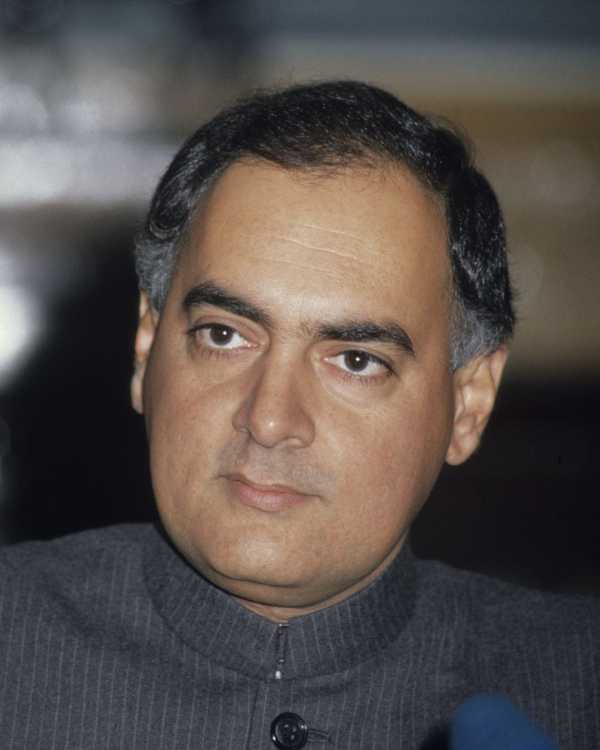
Rajiv Gandhi reached Tamil Nadu at 8 pm on 21 May.
SPG had advised not to join the Guard of Honor
The next day was very bad. On July 30, during the guard of honour, Sri Lankan sailor Wijitha Rohan Wijemuni attacked Prime Minister Rajiv Gandhi with the butt of his rifle. Javier Moro, in his book “The Red Sari” focused on Sonia Gandhi, has written that the Sinhalese majority was extremely unhappy with this agreement and had already started violently protesting against it.
Rajiv to SPG Had requested that they should not go in the guard of honor because there could be danger there. Rajiv ignored this advice. Naval officer Vijitha Rohan Wijemuni hit Rajiv with the butt of his rifle while he was taking the army salute amidst the music of the military band. His aim was on Rajiv's head. But seeing him moving to attack, Rajeev had bent down a bit and had to bear the blow on his shoulder. Not immediately, but on the return flight, Rajiv took the help of a doctor for relief from this injury. Javier Moro quotes Sonia Gandhi, “For many days, Rajiv could neither move his shoulder nor sleep on his left side.
Decision to send army: Sinhalese and Tamil both angry
The decision to send Indian Army to establish peace in Sri Lanka proved to be very costly. India's Chief of Army Staff was hopeful of establishing peace there within two weeks. The objective of the peacekeeping force was to get the militants engaged in guerrilla warfare to surrender their weapons. But this was a campaign which angered both Sinhalese and Tamils.
The Sinhalese majority had objections to India's interference in their sovereignty. On the other hand, the Tamil fighters of the LTTE, who till now were considered supporters of India, now faced Sri Lanka as a common enemy with the Indian Army. Gradually India had to send more than seventy thousand of its soldiers there. Indian soldiers had no knowledge about the geographical conditions of Jaffna and the hiding places of LTTE militants. The army had to pay a heavy price for this. About twelve hundred Indian soldiers were sacrificed. Rajiv Gandhi was ousted from power in the 1989 elections. The tenure of the next VP Singh government was brief. During the same government, the Indian Army finally withdrew from Sri Lanka in 1990. Of course Rajiv Gandhi was no longer in power. But unfortunately he was the target of LTTE militants.
Rajiv used all his strength to return to power in 1991
There was scope for Rajiv Gandhi to return to power in the 1991 elections after a gap of just one and a half years. Vishwanath Pratap Singh's Janata Dal government, which was based on the support of BJP and communists, left within just eleven months. Congress supported the next Chandrashekhar government only for four months. The first experiment of shared government at the center had failed miserably.
Rajiv hoped that the voters would understand the truth that only Congress can provide a stable government. Rajiv Gandhi had given all his strength in the election campaign to win. Full of confidence, Rajeev himself took over the steering of the car while leaving to cast his vote on the morning of 20th May. Sonia was sitting next to him. Party workers were present at the polling place to welcome. Among them, a worker came forward carrying a puja thali with wishes for the victory of his leader and party. Who knows why Sonia was not normal in some way. His hand touched the plate and the plate along with the puja material turned down. Fearing some bad omen, Sonia became so worried that she asked to go back without voting. Rajeev normalized him by giving him a glass of water and then holding his hand.
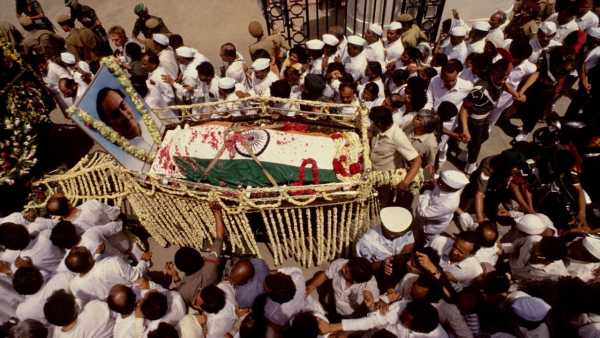
Amidst the security, a woman bowed towards Dhanu Rajiv's feet, Rajiv was stopping her and then a massive explosion occurred.
Death took away Sriperumbudur
Rajiv returned home early from the election campaign on the evening of 20 May. Talking to Rahul living in America on phone, he wished him all the best for success in the examination. Loved daughter Priyanka. He was preparing to leave for his next tour soon.
Javier Moro wrote, “Sonia asked him, “Can't you stop now? This one visit will not have any impact on the elections.” Rajiv encouraged Sonia, “I know. But all the preparations have been done. Just come one more time. Then again we will be at the peak. It's just a matter of two days. Then we will be together.” During the day on 21 May, Rajiv held several meetings in Orissa. By evening he was very tired. I felt like canceling the last rally of the night in Sriperumbudur. The Intelligence Bureau had also advised against holding meetings at night in areas under LTTE influence. Then he remembered the workers and the public who would be waiting for him.
He boarded the plane amidst fatigue and hunger. ate something. Then there was news of some mechanical fault in the plane. Rajeev was about to get down and leave for the Dak Bungalow in an Ambassador car when a policeman informed him that the plane was fine. Death was pulling him towards itself. Again he boarded the plane. He reached Tamil Nadu at eight in the night.
New York Times correspondent Barbara Crosetto was covering his visit. He found that the crowd was flocking towards Rajiv. Security personnel would come in between but Rajiv would push them away. In the last meeting of Sriperumbudur, which was delayed by two hours, a woman police officer tried to stop the woman Sagittarius moving towards Rajiv. Rajeev said let him come. Everything is fine. Then the police officer stepped back. Dhanu bowed towards Rajiv's feet. Rajiv was stopping him. Then a massive explosion occurred.
When friend and colleague Suman Dubey turned back, he saw, "People are flying in the air. Like a slow motion film." Suman told, "I was looking for something white. Because Rajiv used to wear white dress. I was seeing everything black and burnt there." Rajiv's body was so mutilated in the attack that doctors could hardly give it shape with the help of cotton bandages. The body of 46 year old Rajiv was so mutilated that the doctors could hardly give it shape with the help of cotton bandages.

-
Manchester United told Andre Onana to find a new club this summer: Report

-
Manchester United seal £62.5m deal for Matheus Cunha on five-year contract as Brazilian forward fulfils lifelong dream
-
Why Aston Villa Will Feature a Charity Logo on Their Shirt in the Europa League Final
-
'Easy call!' – Kiernan Dewsbury-Hall completes £25m switch from Chelsea to Everton after one year at Stamford Bridge
-
Angry Erik ten Hag Stops Granit Xhaka’s Bayer Leverkusen Exit After Sunderland Deal, Says ‘No More Departures’