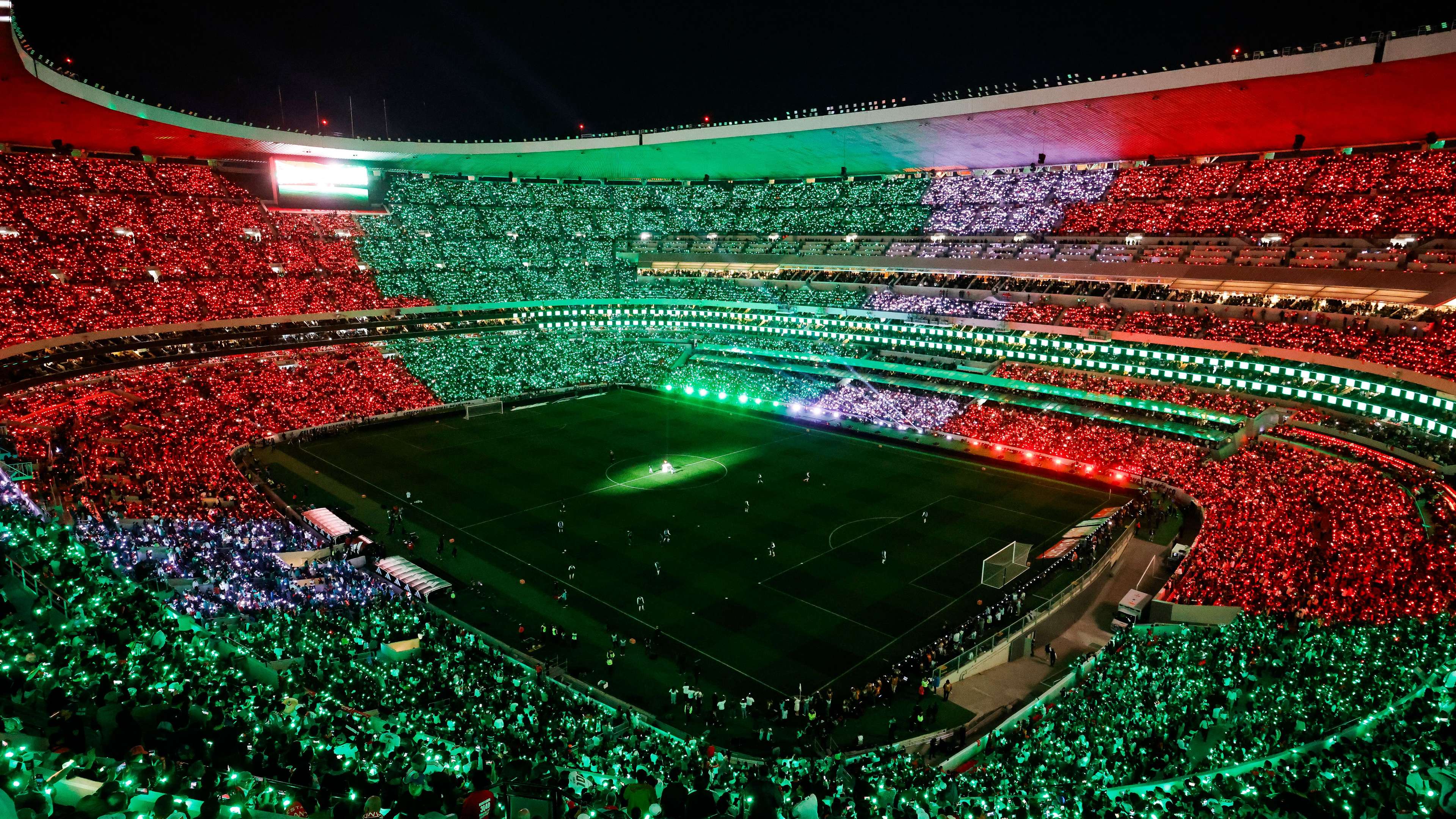
Growing frustration over soaring World Cup ticket prices has led to a unique situation in Mexico, where 14,000 fans are set to attend the tournament’s opening match without paying a single peso. Their right to free entry stems from a decades-old agreement dating back 60 years, one that has survived multiple legal challenges and remains valid even today.
In preparation for the 1968 Summer Olympics and the 1970 FIFA World Cup, Mexico decided to construct a new national stadium in the mid-1960s. The result was the iconic Estadio Azteca, designed to accommodate more than 100,000 spectators and instantly recognized as one of the largest stadiums in the world.
However, financial problems soon arose during construction. The solution was extraordinary for a project of such magnitude: before the stadium was even completed, 600 private boxes (each seating about ten people) and 8,000 grandstand seats were sold to wealthy supporters. In return, these buyers received a 99-year guarantee—valid until 2065—granting them free access to every single event held at the venue.
Whether it’s a Club América home fixture, a match involving the Mexican national team, a Papal visit, a Michael Jackson concert, an NFL game, or the FIFA World Cup itself, the ‘Titulares de Palcos y Plateas’—the holders of these boxes and premium seats—are entitled to occupy their 14,000 seats without paying additional fees.
The Battle of the Box and Stand Holders
During the 1970 FIFA World Cup in Mexico, which famously featured the ‘Match of the Century’ semi-final between Germany and Italy and Pelé’s third championship triumph with Brazil, this issue did not pose any problem for FIFA. But by the time of the 1986 tournament, FIFA sought complete ticketing control over the Azteca Stadium. Their attempt failed, allowing the ‘Titulares de Palcos y Plateas’ to witness Diego Armando Maradona’s unforgettable ‘Goal of the Century’ and the controversial ‘Hand of God’ against England, followed by Argentina’s victory over West Germany in the final—all at no cost.
In 2026, the Estadio Azteca will make history by becoming the first stadium to host World Cup matches for the third time. Already holding the record for the most tournament fixtures (19), it is scheduled to host five more, including the opening match between Mexico and South Africa, along with a round-of-16 clash.
Unsurprisingly, disputes over the rights to these 14,000 seats have resurfaced once again. This time, FIFA and the stadium’s operator, Ollamani, exerted more pressure than ever before. In response, the seat holders organized themselves into the Asociación Mexicana de Titulares de Palcos y Plateas (AMTPP). “Our association took legal action against FIFA’s and the Azteca Stadium’s plans and won,” said Secretary-General Roberto Ruano Ortega in an interview with Austrian football magazine Ballesterer. “Our box and stand seats will be honoured. We will not pay a single peso.”
Because the stadium’s management had already promised FIFA that those seats would be sold, the operator ultimately had to compensate the governing body with approximately €54 million, according to consistent reports from Mexican media outlets.
Despite the legal victory, tensions continue to rise. “The situation could escalate,” warned Ruano Ortega.
Following the ruling, FIFA and the stadium management tried to impose new restrictions on the ‘Titulares de Palcos y Plateas’. They banned them from bringing their own food and drinks to World Cup matches—a privilege normally granted—and instead offered official catering packages priced between 123,000 and 262,000 pesos (around 6,116 to 13,010 euros). Additionally, they threatened to revoke access for any ticket holders who attempted to resell their seats. Both restrictions were later overturned by Mexican courts in May.
With just over a week left before the opening match, the electronic tickets for these 14,000 seats have still not been delivered. According to AMTPP’s General Secretary Ruano Ortega, the distribution was supposed to be completed by the previous Friday. But what happens if the tickets never arrive?
“If they deny us entry, we will file a complaint and request court permission to use force,” Ruano Ortega stated after the missed deadline. “The situation could escalate.” Despite the uncertainty, he remains confident that the 14,000 fans he represents will ultimately attend the opening match at the Azteca—without paying a rupee.
-
‘Relax’ – Liverpool’s Jeremie Frimpong clarifies his jubilant reaction after Arsenal’s Champions League final penalty heartbreak against PSG

-
Manchester United and Arsenal enquire about Rafael Leao as AC Milan star eyes Premier League switch

-
Uli Hoeneß was right, but optimism remains: Julian Nagelsmann’s tactical innovation must now be applied at the World Cup
-
Arsenal ready to offload Gabriel Jesus for £18m as Brazilian forward tops list of four senior players available this summer

-
Lionel Messi ‘completed football’ in 2022 – so what still fuels the GOAT’s chase for World Cup glory with Argentina in 2026?