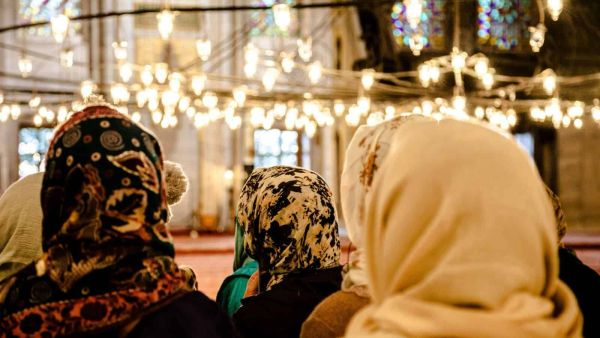
The debate surrounding Muslim women’s entry into mosques is no longer confined to courtrooms or religious committees. It has become part of a larger conversation about faith, dignity and justice in contemporary India. The petition before the Supreme Court seeking equal access for Muslim women to mosques has reignited discussions that many communities had long avoided. Yet, from an Islamic perspective, this demand is neither alien nor rebellious. Rather, it reflects a return to principles deeply rooted in the faith itself.
Islam, in its foundational teachings, did not prohibit women from entering mosques. Historical records from the time of Prophet Muhammad (PBUH) clearly demonstrate that women regularly attended congregational prayers in the mosque. They participated in religious discussions, sought knowledge and were recognised as active members of the spiritual community.
A well-known Hadith recorded in Sahih Muslim states, “Do not prevent the females from going to the mosques of Allah.” This statement alone carries immense significance in present debates.

Over time, however, cultural practices and patriarchal interpretations began overshadowing the egalitarian spirit of Islam. Restrictions imposed on women in several parts of the Muslim world often emerged less from religion and more from social conservatism. In many Indian mosques today, women either have no access at all or are confined to inadequate spaces, despite the absence of any categorical Quranic prohibition.
Seeking equal rights
The Constitution of India guarantees equality, dignity and freedom of religion. For many Muslim women, the demand to enter mosques is, therefore, not merely about physical space, it is about recognition as equal believers before God and equal citizens before the law. Critics often portray such demands as Western influence or an attack on tradition. Yet, reform and introspection have always been part of Islamic intellectual history.
The concept of ijtihad, ie, independent reasoning, encourages Muslims to engage with changing social realities while remaining faithful to the ethical foundations of Islam.
Importantly, advocating for women’s access to mosques does not undermine religion. On the contrary, it can strengthen religious institutions by making them more inclusive, participatory and spiritually vibrant. Mosques are not only places of worship, but they are also centres of community life, education and social interaction.
Excluding half the community weakens this collective spirit. Across the world, several Muslim-majority societies have already embraced more inclusive practices. In countries such as Turkey, Indonesia, the United Arab Emirates (UAE) and even parts of Saudi Arabia, women increasingly participate in mosque life with dignity and respect.
Indian Muslims, known historically for their pluralism and adaptability, can similarly evolve without compromising their faith. The issue also demands sensitivity from within the community itself. Reform imposed through hostility often creates resistance. Genuine transformation must emerge through dialogue among scholars, community leaders and Muslim women themselves.
Progressive Islamic scholarship today increasingly emphasises maqasid al-Shariah – the higher objectives of Islamic law that include justice, human dignity, equality and welfare. Any practice that systematically marginalises women deserves careful reconsideration in light of these objectives.
Going beyond symbolism
At the same time, the conversation should move beyond symbolic entry into mosques.
Muslim women continue to face broader challenges relating to education, equality, personal law matters, employment and representation within religious institutions. Access to mosques should become a part of a larger movement towards meaningful participation in community decision-making and religious discourse.
For younger generations of Indian Muslims, this debate offers an opportunity to redefine the relationship between faith and modernity. Modernity need not mean abandoning religion, just as religiosity need not imply resistance to equality. Islam’s moral vision is vast enough to accommodate both devotion and gender justice.
The Supreme Court’s involvement in the matter may ultimately provide legal clarity, but social change cannot rely on judicial orders alone. Communities themselves must introspect honestly. If Islam teaches compassion, justice and equality before God, then Muslim women should not have to struggle for access to spaces meant for collective worship.
The future of Indian Islam will not be shaped merely by preserving old structures, but by rediscovering the ethical essence of the faith in a changing world. Allowing women equal access to mosques is not the erosion of tradition. It may well be the revival of a forgotten Islamic ideal.
-
Bruno Fernandes expresses 'sadness, frustration, and disillusionment' after Portugal’s World Cup exit to Spain

-
Newcastle United Eye World Cup Star as Bournemouth Legend Welcomes New Head Coach

-
Jurgen Klopp waves to Kylian Mbappe’s mother as he recalls Liverpool’s near signing of the Real Madrid star during World Cup reunion

-
Manchester United handed major boost as Ederson travels to London for medical ahead of summer move

-
What's behind Germany's World Cup woes?