We live in an increasingly apathetic, self-centred and rude world, where we behave in real life, like we behave in social media. There’s no pause, no thought, no wisdom; just an alarming rise to win conversations. But conversations aren’t for winning. And the rising rage-baiting on social media has made us behave like everything that needs to be talked about, must be argued. Even abuse is fair play.
In the past couple of years, we have also started talking to AI. Will this make us more rude? Maryellen MacDonald, Ph. D. , professor of the psychology programme in language sciences at the University of Wisconsin-Madison, studies how people produce, learn, and comprehend language. She says it's a huge possibility. In a recent article in Psychology Today, she says declining politeness is a serious concern, because it is essential for society's functioning. But our history of interactions on social media and now, AI, are often rude or self-centered.
Politeness is not simply about etiquette; it is one of the invisible systems that holds society together. Language is shaped by repetition. The words, tone and conversational styles we use repeatedly become easier for our brains to retrieve. Psychologists call this priming, i.e., past behaviour influences future behaviour, often without conscious awareness. If much of our daily communication becomes a series of clipped instructions to AI: "Write this", "Summarise that", "Fix it", "Do it again"... those linguistic habits may gradually become our default mode of speaking.
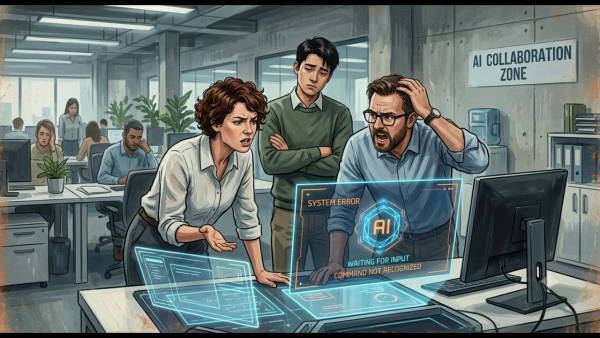
This concern is consistent with decades of psychological research showing that behaviour is highly context-dependent. Habits formed in one setting often spill over into another, particularly when they are repeated thousands of times. The brain values efficiency. Once a communication style becomes automatic, it is less likely to distinguish between talking to a chatbot and talking to a colleague, spouse or shop assistant. Courtesy, after all, is also a habit. If we stop exercising it, it may weaken.
There is another psychological risk. Human relationships are built on reciprocity. We constantly adjust our words based on another person's emotions, facial expressions and vulnerability. AI demands none of that. It never looks hurt, never takes offence, never withdraws from the relationship. Psychologists have long argued that empathy develops through responding to real emotional feedback. The more time we spend interacting with systems that require no emotional regulation, the fewer opportunities we have to practise the mental muscles that sustain patience, compassion and self-restraint.
So is there a way out of rudeness?

Yes. It’s not a quick solution, but becoming conscious of the habits we have built is the first step. Behavioural psychology shows that small, repeated actions shape long-term behaviour, whether we notice them or not. Treating AI conversations as a space to practise clear, respectful communication—not because the chatbot deserves courtesy, but because we do—can help preserve those habits.
Equally important is ensuring that our day still contains enough real conversations where listening, compromise and emotional awareness are required. AI is designed to maximise efficiency; human relationships are not. The more we recognise that these are two fundamentally different kinds of interaction, the less likely we are likely to let one reshape the other.
-
Comparison of cheap mobile recharge plans: Jio, Airtel and Vi
-
Tobacco addiction is taking its toll! 40% of cancer patients are young, big warning from experts

-
Bhubaneswar: Visit the ‘City of Temples’ in 1 day, don’t miss these 5 places

-
Justin and Hailey Bieber’s multi-million-dollar real estate portfolio

-
Dua Lipa backs protests against Albania luxury resort project