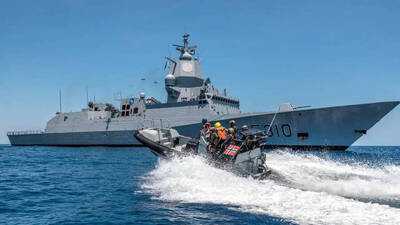
The United States has reinstated its naval blockade on vessels navigating to and from Iranian ports, following a deadline established by US Central Command (CENTCOM). This move signifies a heightened escalation in relations with Tehran. The blockade took effect at 4:00 PM ET on Tuesday, just a day after President Trump announced that the US would take on the role of 'guardian' of the Strait of Hormuz. Prior to the deadline, CENTCOM confirmed via social media that US forces were conducting additional strikes against Iranian assets near this crucial waterway. The command stated, 'The strikes are occurring as American forces prepare to enforce the naval blockade against Iranian ports and coastal regions.'
Recent Strikes Prior to Blockade Implementation
CENTCOM reported that the latest military strikes commenced at 3:00 PM ET, one hour before the blockade was reinstated. 'At 3 PM ET today, US Central Command forces initiated another series of strikes against Iran to further diminish Iranian capabilities that threaten commercial shipping in the Strait of Hormuz,' the military stated in a post on social media. They noted that these operations were underway as US forces readied themselves to enforce the naval blockade against Iranian ports and coastal areas. Specifics regarding the scale or targets of these strikes were not immediately disclosed.
Impact of the Blockade
With the renewed blockade in place, vessels traveling to or from Iranian ports will be barred from passing through the Strait of Hormuz. US officials clarified that these restrictions are directed solely at Iranian ships and those servicing Tehran's clientele, while commercial vessels from other nations will still have access to the waterway. Previously, a similar blockade was enforced for approximately two months from April to June, extending operations from the Middle East into the Indian Ocean.
Trump's Change on Hormuz Fee
The reestablishment of the blockade follows President Trump's decision to retract plans for a 20% fee on commercial cargo transiting the Strait of Hormuz. On Monday, Trump indicated that commercial shippers would incur this fee to compensate the US for ensuring 'safety and security' in this vital shipping lane. However, he reversed this decision the following day after receiving feedback from US allies in the Gulf region. 'I have opted to replace the 20% United States Reimbursement Fee with Trade and Investment Deals that various Gulf States will pursue in the United States,' Trump announced on social media, without detailing which Gulf nations would be involved or the anticipated investment amounts. Ahmed Sharif Al Ameri, an Emirati geopolitical analyst, remarked that Gulf leaders largely support the renewed US actions. 'Gulf leaders see the reimposition of the American blockade on Iranian vessels as a targeted and necessary response to the party responsible for recent disruptions,' he stated. Nonetheless, it remains uncertain how swiftly commercial shipping will return to its previous levels. During the last US blockade, Iran frequently targeted vessels in the Strait of Hormuz before the restrictions were lifted under a US-Iran memorandum of understanding signed last month, which has since fallen apart. The latest blockade occurs amid escalating hostilities between the US and Iran, raising new concerns regarding security in one of the globe's busiest energy shipping routes.
-
"India's Plans Have Not Sat Well": Gautam Gambhir, Shreyas Iyer Under Fire After 0-4 T20I Series Humiliation vs England

-
Youri Tielemans to wear No.18 shirt at Manchester United after £35 million move from Aston Villa

-
Decoding Tilak Varma's Issues Against Spin, And Why He Shouldn't Be India's Vice-Captain

-
Monsoon Special Recipe: Make crunchy cauliflower parathas in the rain, the taste will be such that you will feel like eating it again and again

-
Pahadi Kulthi Dal Recipe From Uttarakhand Is Packed With Flavor And Nutrition