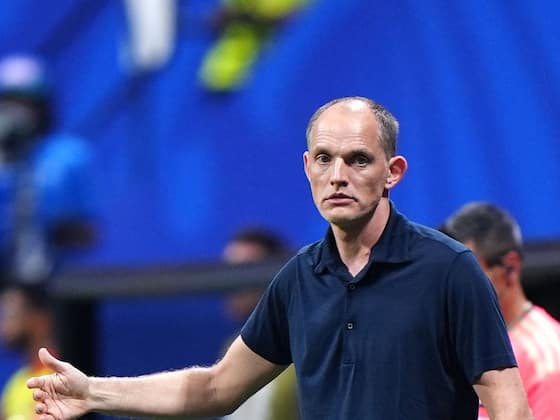
Wayne Rooney had issued a warning long before England’s World Cup semi-final heartbreak. When England triumphed over Mexico at the Azteca Stadium, much of the commentary hailed it as a tactical masterstroke and a display of extraordinary resolve. The victory was seen as proof that Thomas Tuchel had fostered a deep sense of unity within his squad. England had silenced a fierce crowd, battled through the high altitude, and regrouped impressively after Jarell Quansah’s red card. Jude Bellingham was majestic, Anthony Gordon tireless, and Dan Burn’s towering presence became a symbol of resilience.
Yet, Rooney was not entirely convinced by Tuchel’s approach. In the 74th minute, with England leading 3-2 but reduced to ten men, Tuchel effectively abandoned any offensive intent. Burn came on for Elliot Anderson to add defensive bulk, England switched to a 5-3-1 formation, and spent the remainder of the match entrenched in defence.
England defended heroically, and Rooney praised the players’ spirit. “They showed attitude, grit, desire – everything you’d want from an England side, they showed tonight,” the former England captain told BBC Sport. “We were the better team until the red card, and then we gave a masterclass in heading balls clear and blocking shots – just brilliant.”
However, the final stretch of that game amounted to nearly half an hour of desperate defending. England stopped passing, let alone attacking. Their determination was commendable, but it was Mexico’s lack of creativity that kept the scoreline intact. Instead of pulling defenders out of position, the Mexicans persisted with looping crosses into the box, apparently forgetting that a 6ft 7in Geordie now occupied the heart of England’s defence, towering over Raul Jimenez.
“I thought it was a bit early to drop so deep and concede possession entirely,” Rooney observed. “We defended the box brilliantly, but Mexico played into our hands by putting balls in for us to head clear or for Pickford to come and punch. If they had played around the box a bit more, making us chase the ball, it would have been much tougher.”
Fast forward two weeks to England’s semi-final against Argentina. In the 72nd minute, Tuchel repeated the same conservative tactic. This time, Ezri Konsa replaced Anthony Gordon. There was no red card, no pressing need for extreme caution. Yet England fell back into a defensive 5-4-1, surrendering all attacking ambition. Tuchel could not clearly explain why his team vacated the attacking half of the pitch.
That decision made Argentina’s task far simpler. Like Mexico, they no longer had to defend. The same pattern had emerged against Norway in the quarter-finals, when Burn was introduced with about 12 minutes remaining. Where Mexico and Norway failed to exploit England’s withdrawal, Argentina succeeded.
Lionel Messi quickly spotted the weakness on the left flank of England’s compact midfield. From there, he orchestrated the play, delivering delicate crosses and sharp passes that unpicked England’s defensive structure. One such move created the space for Enzo Fernandez to equalise for Argentina.
Moments later, Messi surged down the right, cutting towards the byline. England’s defence was stretched, and his cross found Lautaro Martinez perfectly, leaving the substitute with a simple header into an open goal.
England’s problems when defending leads extended beyond formation. Tuchel’s reluctance to substitute Harry Kane and Bellingham left the team without pace or counterattacking options. In situations where Ollie Watkins or Marcus Rashford could have relieved pressure, England remained static.
This pattern is not new. England have historically retreated once in front. At Euro 2000, they blitzed Portugal for 20 minutes to go 2-0 up, then sat deep and invited pressure from Luis Figo and company – a strategy only slightly less reckless than allowing one of the greatest players ever half an hour to dismantle a parked defence.
Tuchel was appointed to end that cycle of caution. Instead, England’s campaign ended in familiar disappointment. The squad will likely finish fourth, return home from North America, and spend the summer hearing that the manager’s decisions cost them the World Cup.
Perhaps that conclusion is harsh, shaped by hindsight and the sting of defeat. Yet the same could be said of the reaction to the Mexico match: England were praised for their defensive defiance because they won, because Mexico failed to score. In truth, Rooney had already identified the deeper flaw, sounded the alarm – and few paid attention.
-
Comparison of cheap mobile recharge plans: Jio, Airtel and Vi

-
Tobacco addiction is taking its toll! 40% of cancer patients are young, big warning from experts

-
Bhubaneswar: Visit the ‘City of Temples’ in 1 day, don’t miss these 5 places

-
Justin and Hailey Bieber’s multi-million-dollar real estate portfolio

-
Dua Lipa backs protests against Albania luxury resort project