The Numbers Fuel the Debate
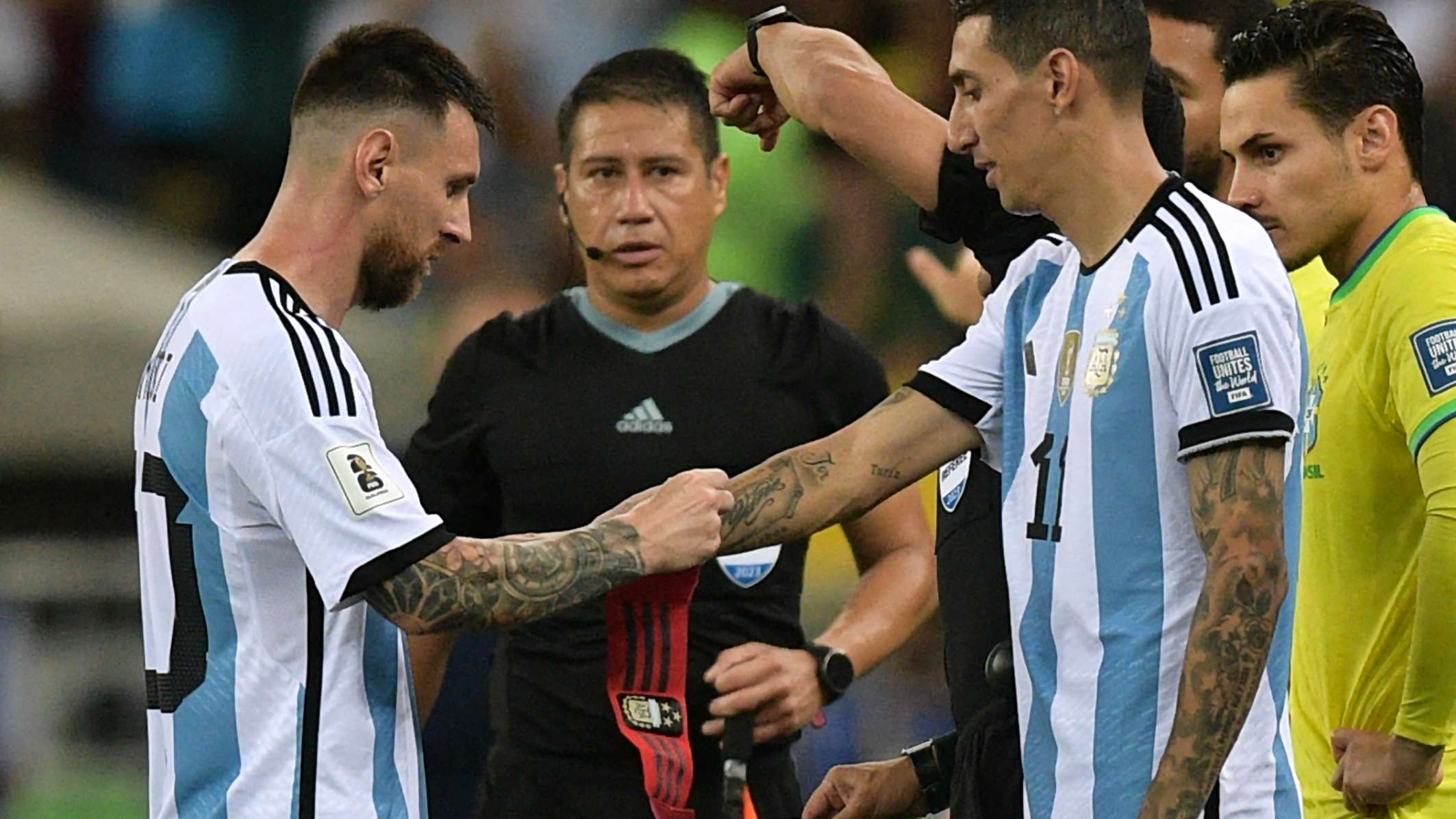
Argentina’s loss to Spain in the 2026 World Cup final has reignited a long-standing debate that had faded since Ángel Di María’s retirement from international football two years earlier: did Lionel Scaloni’s squad miss their true big-match talisman?
Ferran Torres decided the contest in the 106th minute of extra time, his strike sealing Spain’s victory and prompting a flood of statistics linking Di María’s involvement in finals to Argentina’s success rate. The discussion quickly resurfaced, combining tactical and statistical arguments about his influence on the grandest stages.
A Final Attempt That Never Materialised
In the months leading up to the World Cup, several Argentine players tried to persuade Di María to reverse his decision and return for one last tournament. The veteran winger, however, stood firm.
When Argentina announced their preliminary squad in May 2026, his name was absent for good.
Scaloni later disclosed that the coaching staff had urged him to come back, even if only for a farewell appearance before the home crowd. But Di María declined.
Spanish daily AS quoted Scaloni saying, “We asked him to come and say goodbye to the fans. He’s gone, and there’s no way to convince him. We tried, but his decision is final.”
The coach added, “He retired as a winner and as one of the finest footballers in our history.”
Final 2026... Numbers Unlike Any Other
The 2026 final against Spain produced attacking statistics that may be the worst in Argentina’s World Cup final history. Throughout the 90 minutes of regulation play, the team failed to register even a single shot or goal attempt.
Argentina managed only two shots during the entire match—both off target—compared to Spain’s 20, 12 of which were on goal. Spain also dominated possession with 65% compared to Argentina’s 35%.
Matters worsened when Enzo Fernández was sent off in the 90+3rd minute, forcing Argentina to play extra time with ten men. Emiliano Martínez stood out with 11 saves, underlining the relentless defensive pressure his side faced.
Statistically, the 2026 final marked Argentina’s weakest attacking display in the Lionel Messi era, even poorer than the 2014 defeat to Germany.
The Di María Effect: A Record That Keeps the Debate Alive
Di María’s track record in finals continues to drive discussions after the 2026 loss.
He missed the 2014 World Cup final due to a muscle injury sustained against Belgium in the quarter-finals, and Argentina fell to Germany. In 2015, he limped off the Copa América final, which Chile won on penalties. A year later, he played the Centenary final while unfit, and Argentina again lost on spot-kicks.
When fully fit for the 2021 Copa América final, Di María scored the winner against Brazil. He struck again in the 2022 World Cup final versus France, and started in the 2024 Copa América final, where Argentina defeated Colombia.
By 2026, having retired, Di María was no longer involved—and Argentina again ended as runners-up.
The pattern is striking: Argentina have lost every final Di María missed or entered carrying an injury, and won every one in which he was at his physical peak.
Beyond the Scoreboard: The Psychological Impact
Di María’s importance transcended mere appearances in finals. He became synonymous with scoring at decisive moments. He netted the winning goal in the 2008 Beijing Olympics final against Nigeria, struck the title-clinching goal in the 2021 Copa América final against Brazil, and added another in the 2022 World Cup final against France. In modern Argentine football, only Lionel Messi can match such feats.
On a personal note, Di María retired with 145 international caps, 31 goals, and 32 assists. He also ranks second in all-time Copa América appearances with 28, trailing only Messi.
In a previous interview with Infobae, he admitted that he had to take medication for a period to cope with the emotional strain of the defeats in the 2014, 2015, and 2016 finals, despite the triumphs that came later.
A Role That Numbers Cannot Fully Capture
During the 2026 World Cup, Scaloni’s staff struggled to fill the void Di María left. Several players were tested on the left flank—Thiago Almada, Giovani Lo Celso, and Nicolás González—but none offered a lasting solution. For the final, Scaloni abandoned the 4-3-3 formation, switching to a 4-4-2 setup and deploying Alexis Mac Allister on the left. It underscored the ongoing search for a reliable replacement for the retired star.
Team insiders, quoted by local media, mentioned another void: Di María’s leadership. He often calmed teammates in tense moments, an influence that could not be quantified.
Numbers Don’t Tell the Whole Story
While the statistics are compelling, attributing the 2026 defeat solely to Di María’s absence—and using it to diminish Messi’s impact—oversimplifies matters. The 2018 World Cup is evidence enough: Di María played and was fit, yet Argentina were eliminated by France in the Round of 16 amid tactical imbalance and declining form.
Argentina’s titles in 2021, 2022, and 2024 were not Di María’s doing alone. Emiliano Martínez’s heroics in goal, Lautaro Martínez and Julián Álvarez’s goals, and Scaloni’s tactical stability all contributed crucially.
Similarly, various factors shaped the 2026 final: Enzo Fernández’s red card, Lisandro Martínez’s early injury, and a dominant Spanish side arriving on a long unbeaten run with five consecutive clean sheets.
Messi’s Perspective
Lionel Messi’s numbers tell their own story. As Argentina’s captain, he remained the central figure in their fortunes—whether or not Di María was on the field. The team’s success depended more on the collective system than on any individual absence.
At 39, Messi delivered one of his most complete tournaments in 2026, scoring 8 goals and providing 4 assists in 8 matches.
His career World Cup tally rose to 21 goals, making him the second-highest scorer in the tournament’s history, just behind Kylian Mbappé (22).
He also became the only player to register at least one assist in six consecutive World Cups (2006, 2010, 2014, 2018, 2022, and 2026) and to score in seven successive knockout matches.
These records confirm that Argentina’s collective dip in the 2026 final never reflected a drop in Messi’s individual brilliance. Comparing their international careers, Messi clearly leads in appearances, goals, and assists, and uniquely guided Argentina to three World Cup finals—in 2014, 2022, and 2026—an unprecedented feat in the tournament’s history.
Argentina’s struggles in finals did not begin with Di María’s departure either. Messi suffered a 3-0 loss to Brazil in the 2007 Copa América final—a year before Di María’s international debut in 2008.
The challenge of crossing the finish line in finals predated Di María and persisted long after, shaped by factors beyond any one player’s presence.
-
First Drive: Lotus Emira 420 Sport – lighter, quicker, and a £105,900 track-focused masterpiece
-
First Drive: Donkervoort P24 RS – The 592bhp Lightweight Supercar Arriving in the UK
-
Middlesbrough to Earn £35 Million Windfall from Chelsea’s Deal for Morgan Rogers
-
Range Rover GT Bridges the Gap Between Luxury Sedan and SUV
-
Honda to Revive Its European Presence with Fun and Distinctive New Cars