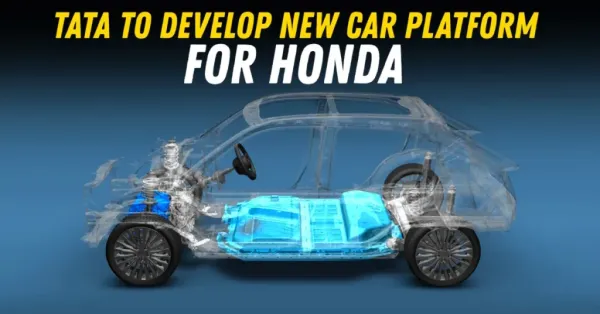
Honda Motor has reportedly handed Tata Technologies a major vehicle-development programme that could shape several future Honda cars. The Tata Group engineering company has been entrusted with end-to-end development work for a new platform capable of supporting petrol, hybrid and electric powertrains.
This is Tata Technologies, not Tata Motors’ passenger vehicle business. Honda will remain the carmaker, while Tata Technologies will provide engineering capability for the underlying vehicle programme. The exact models and markets linked to the project have not been disclosed.
Honda has separately confirmed that it will begin introducing new strategic models tailored to this market from 2028, including vehicles in the sub-4-metre and midsize categories. That makes the timing relevant, although Honda has not confirmed that those 2028 products will use this Tata-developed platform.
A vehicle platform defines far more than the floorpan. It fixes key dimensions, structural hard points, crash requirements, suspension mounting points, electrical architecture and how different engines, batteries and drivetrains can be packaged.
The programme is expected to support multiple models rather than a single car. It has also been designed around more than one powertrain, allowing Honda to use conventional engines, hybrids and battery-electric systems without developing a completely fresh base each time.
Tata Technologies has already said, without naming Honda, that it is working on a full-vehicle development programme for a leading Japanese carmaker. Its capabilities include vehicle engineering, powertrain integration, validation, manufacturing engineering, embedded systems and software-defined vehicle development.
This does not mean future Hondas will become rebadged Tata cars. The arrangement is an engineering-services contract. Honda will still set the product targets, brand requirements and final specifications.
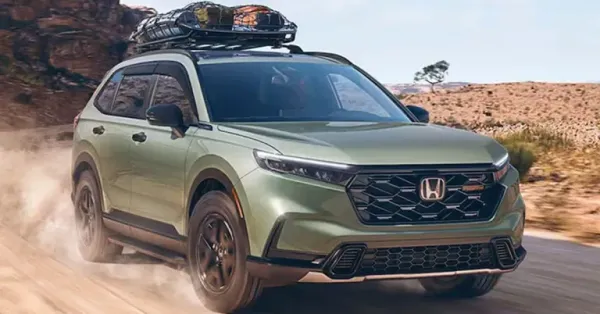
Honda’s passenger vehicle market share has fallen to below 2 per cent from around 7 per cent more than a decade ago, while its locally produced range is still centred on the Amaze, City and Elevate.
Domestic sales improved in June 2026 to 5,243 units, up 13.5 per cent from 4,618 units a year earlier. Exports jumped to 3,545 units from 506 units. Even with that improvement, Honda operates at far smaller volumes than the market leaders, making development cost and launch speed especially important.
Honda has said it intends to use outside engineering resources more strategically. Doing more development work here can lower costs, shorten development cycles and put engineering teams closer to a market where Honda plans a much larger product offensive.
The company has already announced 10 new models by 2030, including seven SUVs. That is a major change from its present three-model locally made line-up.
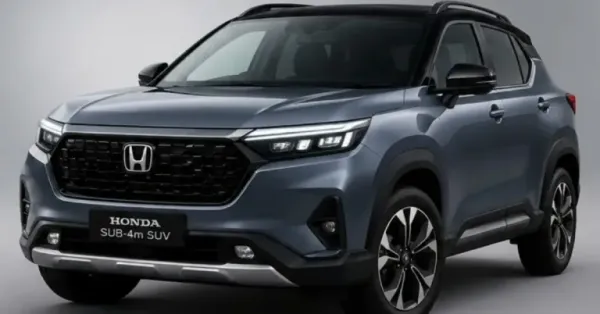
Honda has confirmed that its next phase of locally focused products begins in 2028. One group will target vehicles under four metres in length, while another will sit in the midsize category. A compact SUV is an obvious gap because Honda currently has no direct rival to the Maruti Brezza, Tata Nexon, Hyundai Venue and Kia Sonet.
Honda has not announced which of these cars will use the Tata Technologies programme, and no reliable expected prices are available yet. Current reference points put the Amaze at roughly Rs 7.48 lakh to Rs 10 lakh and the Elevate at about Rs 11.6 lakh to Rs 16.67 lakh, ex-showroom. Future models could sit above or below these depending on size, engine and equipment.
There is also no confirmation that this reported platform is the same as other Honda architectures discussed earlier for future cars. Linking it today to a specific City successor, compact SUV or EV would therefore be speculation.
-
Mourinho emotional at Real Madrid unveiling: ‘I am one of you’

-
Jeff Bezos-led consortium buys nearly 40 per cent stake in Liverpool with club valued at more than £5bn

-
Manchester City transfer update: Ancelotti confirms €100m World Cup star is edging closer to a move

-
New witness claims surface about Liam Payne’s final hours

-
Is Neem toothbrush better than toothbrush? Know its advantages, disadvantages and correct way of use