Trump-Aligned Kennedy Center Board Revives Two-Yea Closure Plan Blocked by Judge/ TezzBuzz/ WASHINGTON/ J. Mansour/ The Kennedy Center board decided to proceed with a two-year closure for extensive renovations, according to AP sources. The decision revives a plan previously blocked by a federal judge, who called the board’s initial approval “ill-informed and seemingly preordained.” Some outdoor programming may continue, but the renewed closure plan could face another round of legal challenges.
Quick Look
- The Kennedy Center board approved moving forward with a two-year closure.
- Extensive renovations are expected throughout the performing arts complex.
- Some outdoor programming may continue during the shutdown.
- The board rejected partial and narrowly phased closure alternatives.
- Judge Christopher Cooper blocked the original closure scheduled for July 5.
- Cooper questioned whether the board had genuinely considered its options.
- It is unclear whether the latest decision will trigger another legal challenge.
- Kennedy Center officials cite water damage, corroded steel and aging cooling equipment.
- The board is largely composed of allies of President Donald Trump.
- Critics fear the closure could enable more extensive changes to the institution.
Deep Look
Kennedy Center board revives two-year closure
The Kennedy Center will move forward with a two-year shutdown of the sprawling Washington performing arts complex to complete substantial renovations, according to two people familiar with the board’s decision.
Some outdoor programming may continue while the main building is closed.
The board, largely composed of allies appointed by President Donald Trump, reached its decision Thursday after reviewing three possible approaches to the renovation project.
The people who confirmed the action were not authorized to discuss it publicly before an official announcement and spoke on condition of anonymity.
Board doubles down after court setback
The decision represents a renewed commitment to the institution’s original full-closure proposal.
Kennedy Center leaders have argued that a complete shutdown is necessary to perform safety- repairs efficiently and comprehensively.
Critics have warned that closing the building for two years could give Trump and his allies an opportunity to pursue more dramatic architectural or institutional changes as part of his broader effort to transform Washington during his second term.
The board’s decision comes despite an earlier federal court ruling that prevented the original shutdown from taking effect.
Judge previously blocked July closure
U.S. District Judge Christopher Cooper blocked the initial closure plan in May.
That shutdown had been scheduled to begin July 5 and continue for two years.
Cooper concluded that the board’s March 16 vote supporting the proposal appeared “ill-informed and seemingly preordained.”
His ruling raised questions about whether trustees had thoroughly reviewed the plan, considered alternatives and independently exercised their authority before approving the closure.
It was not immediately clear whether Thursday’s decision would trigger another lawsuit or further intervention from Cooper.
Trustees face pressure to justify decision
The board may now have to demonstrate that its latest vote followed a meaningful review of the available options.
Before Thursday’s meeting, Kennedy Center management prepared three possible renovation strategies for trustees to consider.
Those alternatives included a complete closure, a partial shutdown and a highly limited series of phased closures.
Presenting several approaches could help the board argue that it addressed the court’s criticism and did not simply approve a predetermined result.
However, selecting the same two-year closure Cooper previously blocked may invite scrutiny over whether the new process was substantively different.
Full closure selected over limited alternatives
Under the complete-closure option, the Kennedy Center’s indoor venues would shut down while extensive renovations proceed across the complex.
The partial-closure alternative would have allowed “some continued public access and limited programming in spaces unaffected” by construction.
A third option would “consider a highly limited series of phased closures to address only the Center’s most serious infrastructure needs while scheduling and maintaining a full slate of programming.”
The board ultimately chose to proceed with the broadest and most disruptive approach, although certain outdoor performances may continue.
Outdoor programming could continue
The closure does not necessarily mean the complete suspension of all Kennedy Center activity.
The people familiar with the board’s action said some outdoor programming may remain possible during the two-year construction period.
The extent of that programming, the venues involved and the effect of construction on public access were not immediately detailed.
Outdoor events could provide the institution with a limited cultural presence while its principal theaters and indoor facilities remain unavailable.
The Kennedy Center will still have to determine how it manages existing bookings, performers, employees and partner organizations during the shutdown.
Kennedy Center becomes symbol of presidential power
Trump’s intervention in the Kennedy Center has turned the institution into a prominent symbol of presidential influence during his second term.
The Republican president largely ignored the performing arts complex during his first administration.
After returning to office in January 2025, he moved quickly to remove its leadership and replace the board of trustees with allies.
The new board subsequently named Trump its chairman.
The changes transformed the traditionally nonpartisan cultural institution into a focal point for disputes over political control, artistic programming and presidential authority.
Trump’s name was added and then removed
Trump’s name was quickly placed on the Kennedy Center building after the leadership overhaul.
Cooper later ruled that the addition was illegal.
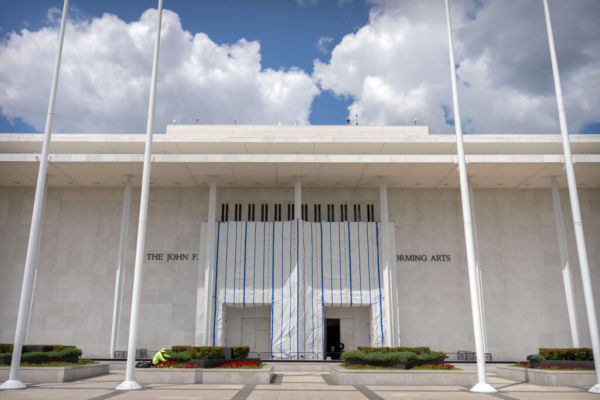
The president’s name was removed from the building in June, but a massive tarp continues to cover the area where it had appeared.
Cooper has asked the Kennedy Center to provide updates about how long the tarp is expected to remain in place.
The covering has become a visible reminder of the ongoing legal conflict surrounding Trump’s control of the institution.
Closure fits Trump’s effort to reshape Washington
The Kennedy Center renovation forms part of Trump’s broader campaign to alter the physical landscape of the nation’s capital.
The scale and direct presidential involvement in the projects have few modern parallels.
Trump demolished the White House’s East Wing and began replacing it with a controversial ballroom.
An appeals court ruled last week that construction should stop because Congress had not approved the project.
Trump has said he plans to take the ballroom dispute to the Supreme Court.
Reflecting Pool project faces setbacks
Trump’s renovation of the Lincoln Memorial Reflecting Pool has also encountered problems.
Algae returned after the work was completed, while damage appeared in the pool’s new lining.
Trump blamed vandals for the damage.
U.S. Attorney Jeanine Pirro disputed that explanation after prosecutors found evidence indicating that installation problems may have been responsible.
The episode generated tension between Trump and one of his longtime allies and added to criticism of his Washington renovation campaign.
Golf course and triumphal arch plans advance
Trump is also planning substantial renovations to the golf course at East Potomac Park.
Critics say the project could significantly reduce public access to running and cycling paths.
Another proposal involves building a triumphal arch near Arlington National Cemetery.
The arch has raised concerns about its scale, location and potential effect on Washington’s historic character.
Together with the Kennedy Center closure and White House ballroom, the proposals reflect Trump’s attempt to establish a lasting architectural legacy in the capital.
Trump describes Kennedy Center as deteriorated
Trump has repeatedly portrayed the Kennedy Center as being in severe physical decline.
He called the building “rusted, rotted, and rat and bug infested.”
After Cooper rejected both the closure and the addition of Trump’s name to the building, the president threatened to turn the Kennedy Center over to Congress.
Institutional leaders maintain that the need for repairs is genuine, regardless of the political and legal disputes surrounding the project.
They say aging systems, water infiltration and structural deterioration require significant intervention.
Officials document water and structural damage
Kennedy Center Executive Director and Chief Operating Officer Matt Floca led journalists through the building in April to highlight its condition.
He pointed to severe water damage and areas where steel had corroded until it was reportedly as thin as tissue paper.
Several pieces of mechanical equipment are decades old and need to be replaced.
Among them are multiple 800-ton chillers used to cool the enormous performing arts complex.
Management argues that delaying work could increase repair costs and create additional risks to the building’s operations.
Floca says full closure was his recommendation
Floca said he initially explored the possibility of completing repairs individually.
He ultimately recommended closing the complex and carrying out the renovation as a single coordinated project.
His statement framed the full shutdown as an operational recommendation rather than solely a presidential preference.
The board’s latest vote adopts that approach despite the judge’s earlier concerns about how the plan was approved.
Cultural mission remains part of dispute
The Kennedy Center’s legal and political controversies have increasingly surfaced during its own programs.
When comedian Bill Maher accepted the Mark Twain Prize for American Humor in late June, the battles surrounding the institution became the subject of jokes and criticism.
At the start of that event, Trump-appointed trustee Pamella Roland DeVos described the Kennedy Center as a “national cultural center open not just for some but for every American patron who wants to experience the greatest art and expression the world has to offer.”
The two-year closure will now test how the board balances that cultural mission with the extensive construction work it says is necessary.
New legal fight remains possible
The immediate question is whether Thursday’s decision satisfies the concerns raised by Cooper or prompts another legal challenge.
The board can argue that it reviewed three distinct alternatives before selecting the complete shutdown.
Opponents may contend that trustees merely repeated the earlier outcome without adequately addressing its consequences or legal deficiencies.
Any new court action could determine whether the closure proceeds as planned, is delayed again or must be revised to preserve greater public access and programming.
Until an official announcement provides additional details, the closure’s start date, construction schedule and precise impact on performances remain unclear.
More on US News
-
What is PM-VBRY? Youth to receive ₹15,000 upon securing employment; find out who is eligible

-
NEET UG Counselling: Round 1 seat allotment result to be declared on August 19; check important dates..

-
Major change in Bihar DElEd: Up to 5% marks benefit now available; EWS category will not get relaxation..
-
Which route did the British take to reach Jharkhand? Learn key GK questions and answers for the JSSC exam.

-
IOCL Recruitment 2026: Applications open for Engineer, JE (Law), and other posts at IOCL; apply by this date..