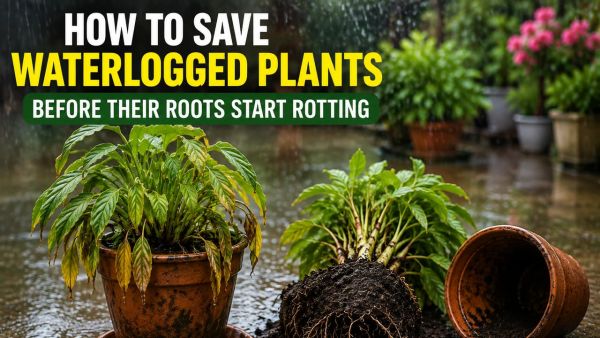
Is heavy monsoon rain leaving your plants waterlogged? Learn how to spot early root-rot symptoms, improve drainage, inspect damaged roots and give overwatered plants a better chance to recover.
Monsoon rains can be ideal for gardening, but excessive rains can rapidly become an issue for plants grown in pots. The excess moisture will keep the air pockets in the soil wet, depriving the roots of oxygen. Damp conditions can also promote root rot.
Luckily, just because a plant has been affected by excess moisture does not necessarily mean it has to be discarded right away. Quick action may give the roots an opportunity to recover from the damage done.
5 ways to save them
Check the Soil First Before Taking Any Action
Do not think that watering the plant is in order if it has sagging leaves since a plant may wilt due to too much moisture in its soil. Stick your finger in the potting soil to see whether the soil is moist enough and also search for excess water in the saucer or the decorative outer pot to drain out any water collected in it.
Relocate the Plant to Avoid Further Rains
In case your plant is growing on a balcony, terrace or outdoor garden, you should temporarily move your potted plant to a place which will provide proper lighting without further rain. You should not keep it in a very dark place for many days. You only need to stop watering, while letting the extra water drain out.
Check the Roots When the Soil Is Too Wet
In case the pot is still wet or the plant continues to look sick, take it out of the pot and examine its roots. Healthy roots usually appear firm, while the signs of root rot include dark, soft or limp roots. Other symptoms may include yellowing old leaves, slow growth, and wilting even in wet soil.
Get Rid of Dying Roots and Repot the Plant
In case there are dying roots, cut off the visibly dying parts with sterilized tools. Put the remaining healthy root system into new potting soil. Choose a pot that is not too large because the remaining extra soil might get wet.
Tackle the Drainage Issue
It does no good to save the plant one time if the issue of the drainage is there again and again. Make sure that the drainage holes of the plant pot are clear. In case you have put the plant in a cachepot, then ensure that the excess water coming out of the cachepot is drained properly.
After you have saved the plant, you should not immediately water it but make sure that you check the moisture level before giving any water to the plant. The monsoon season will reduce the need for watering outdoor plants.
-
Revamped Championship returns with a sharper competitive edge, but familiar shadows remain

-
Independence Day Rangoli: Make this beautiful tricolor rangoli design to decorate your home and office on 15th August.

-
What Is Analogue Paneer? Cheap, Unhealthy, And Banned By 5 States Now

-
Fiber is disappearing from diet in changing lifestyle, it is very important for digestion and overall health.

-
Changed the generation of Instagram! What are netizens saying about the new look?