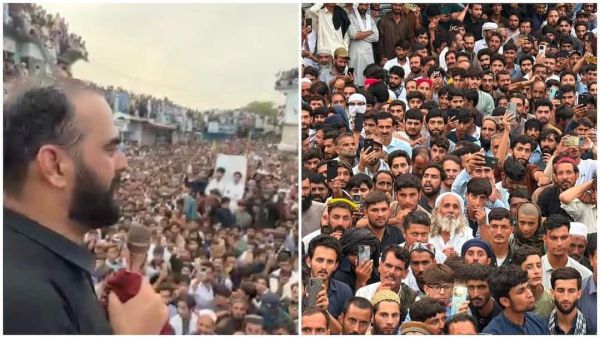
As the uprising in Pakistan-occupied Kashmir (PoK) reaches its 76th day without resolution, the Awami Action Committee (AAC) has declared a parallel administrative framework across the region. Under this system, three specialized bodies a Political Committee, a Finance Committee, and a Defense Committee will be established in every village to enforce directives issued from Rawalakot.
Sardar Aman Khan, a prominent AAC leader and Head of the Jammu Kashmir Liberation Front (JKLF), PoK Chapter spearheaded this announcement. The defense committees aim to organize local self-defense mechanisms against state forces. According to military analyst Col. Shailendra Singh (Retd.), establishing these village-level defense committees allows the resistance movement to arm its personnel for direct engagement. Given the historical context of the JKLF being trained by Pakistani security agencies in the 1990s, these organizational structures are now being leveraged directly against Pakistani state apparatuses.
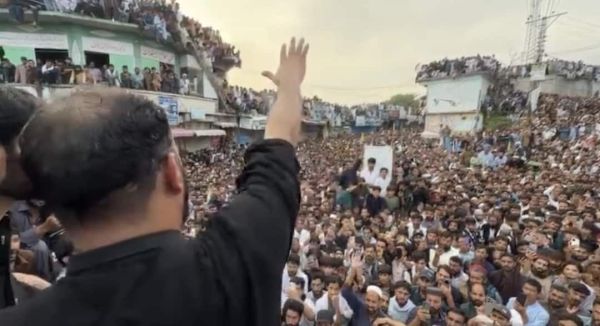
Armed Defence Contingents To Lead Upcoming March To Muzaffarabad
Between June 9 and August 23, unarmed demonstrators attempted to march toward the regional capital of Muzaffarabad four separate times. On each occasion, forces including the Pakistani Rangers and Frontier Constabulary (FC) opened fire to halt their advance. An internet blackout has remained active across PoK since June 5, with violent clashes resulting in over 133 civilian deaths. The newly formed village Defense Committees are instructed to march at the front of the next demonstration, with explicit directives to counter paramilitary gunfire and protect the marchers.
Local Blockades Halt Pakistani Military Reinforcements
To suppress the resistance, Pakistan has maintained over 17,500 paramilitary personnel (FC and Rangers) in PoK over the past two months. As the military attempts to rotate and reinforce its forces, civilian resistance has intensified.
In Palandri, local residents set up road blockades, stopping incoming Pakistani army buses outside city limits and forcing them to halt. Although PoK police filed formal FIRs against several activists involved in the blockade, Aman Khan cited the Palandri incident to warn the military that its forces should withdraw from urban areas entirely. Despite these warnings, additional military convoys continue entering PoK during late-night hours.
Rule Of Law, Direct Retaliation, And Trade Routes
Addressing the state's military response, Sardar Aman Khan issued direct warnings regarding local governance and armed resistance and said “Only the rule of law will exist in PoK not the law that Pakistan has forcibly imposed for 78 years, but the law decided by the people. We place their law of bullets at the tip of our shoes; this country will run strictly on the law of its people."
He directly threatened military personnel attempting to suppress the population and stated that "I want to tell them: if you want to rule through bullets, then the public will also respond with bullets."
Regarding the ongoing two-month supply blockade that has created near-famine conditions, Khan announced an upcoming march to restore food supplies. Pointing toward alternative cross-border linkages toward India, he declared "Because Pakistan has stopped our food supplies, we will attempt to open alternative trade routes. We will not bow down before Pakistan."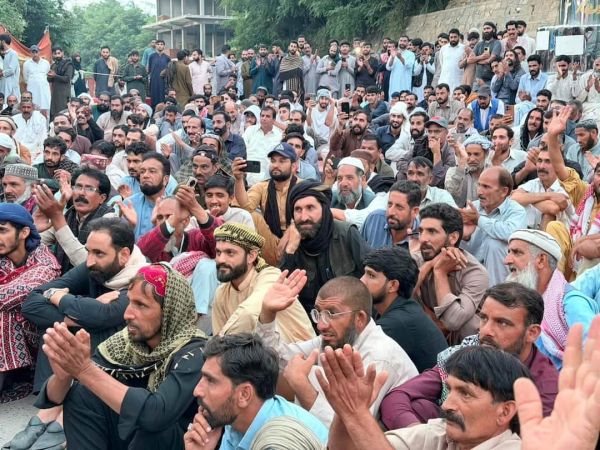
Non-Cooperation, Boycotts, And Parallel Civil Administration
While markets and educational institutions have remained closed since June 5, the AAC updated its operational guidelines to allow local shops to open on Tuesdays and Fridays starting at 2:00 PM. Educational institutions will continue their total boycott, operating after 2:00 PM only if the rebellion extends, deliberately disregarding official state schedules.
Thousands of residents have joined a civil non-cooperation movement, pledging a total boycott of PoK’s administrative infrastructure. Citizens are refusing to visit government offices, choosing instead to settle civil, judicial, and financial disputes internally through civil committees.
Rejection Of State Authorities And "Terrorist" Designations
Aman Khan condemned regional administrative officials for taking orders from military commanders while failing to manage basic supplies and said "What can we expect from these officials who cannot even restore food supplies in PoK and do nothing without orders from a Colonel or General?"
With over 190 social activists, journalists, overseas expats, and AAC members officially proscribed as terrorists by Pakistani authorities, Khan rejected the state's narrative and said "When we demand our rights, they call us separatists... they try to kill and intimidate us. Pakistani leaders have done nothing but loot PoK. Not only have they looted us, but they have also pushed our coming generations into oppression and darkness to prevent our development."
He directly turned the "terrorist" label back on the state apparatus and said "There are no terrorists here. The real terrorists are those wearing uniforms... the terrorists are those who carry guns and move around in vehicles on the instructions of two intelligence agencies."
Pointing out the breakdown of basic civic infrastructure, Khan noted "When a transformer breaks down in PoK, electricity officials ask us to collect donations to bring a vehicle for repairs. Whose purpose do these official vehicles serve the ones they ride around in, funded by PoK’s tax money?"
Strategy For Future Marches, Army Mutiny Call, And Economic Calculations
Outlining the tactical framework for the next advance from Rawalakot to Muzaffarabad, Khan stated that women will march at the front of the procession. He warned of severe consequences if military forces open fire and said "If firing occurs during the march, we will incite a mutiny within the army to recall all PoK personnel serving in the Pakistani military. We will surround the official residences of government and military officers, and not a single brick of their houses will remain standing."
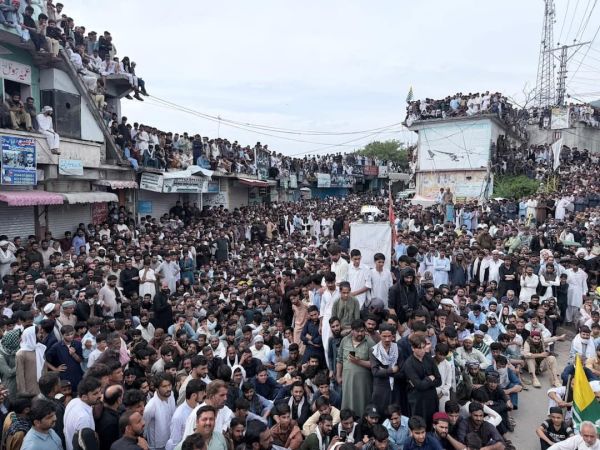
In response to statement by Pakistani military sPoKesperson Lt. Gen. Ahmed Sharif Chaudhry describing PoK as a "favored child," Khan stated "PoK residents are not children; they are Pakistan's fathers. If Pakistan thinks it spent money and allocated a budget for PoK, then calculate the accounts let's see who spent how much on whom. If you spent more, we will pay you back; but if we spent more, you should drown in shame."
He reaffirmed that the complete tax and utility strike remains active across PoKand said “As long as this rebellion continues, the people will pay neither electricity bills nor taxes."
The AAC announced an absolute social boycott targeting any civilian or local official supporting the Pakistani administration. Sardar Aman Khan declared that "Those who side with the government today will face a complete social boycott. We will not attend their funerals, nor will they attend ours. They will not be invited to our weddings, nor will we attend theirs, and they will not be buried in our graveyards."
Voter Boycott And Rigging In Regional Elections
The civil rebellion coincided with regional assembly elections, where polling was conducted across 38 of 45 constituencies between July 27 and August 15. Official claims attributed 25 seats to Shehbaz Sharif’s PML-N, 12 seats to Bilawal Bhutto’s PPP, and 1 seat to the Jammu Kashmir Awami Dast-o-Bazoo. Polling for the remaining 7 seats in Poonch and Sudhanoti remains suspended over security concerns.
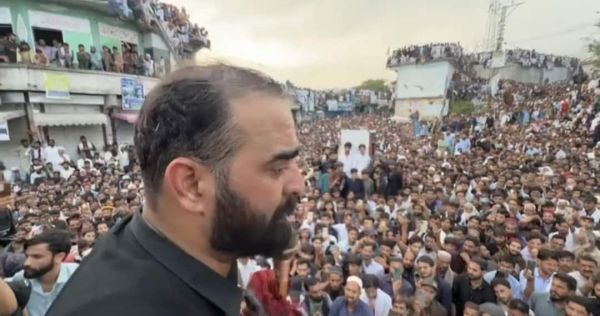
The elections witnessed widespread public boycotts. While the election commission claimed a 38% voter turnout, AAC representatives estimated actual participation at under 10%, reporting hundreds of empty polling stations alongside widespread booth capturing.
-
Benefits of working out with tennis balls at home

-
Weather patterns changed in UP, chances of heavy rain with thunder in the next 24 hours
-
Does the taste of tea become dull? How to make strong and delicious tea in 3 minutes

-
Woman uses executive recruitment strategy in 3-year search for husband

-
Zanjeerain’s Gul Meher opens up about Sajal Aly