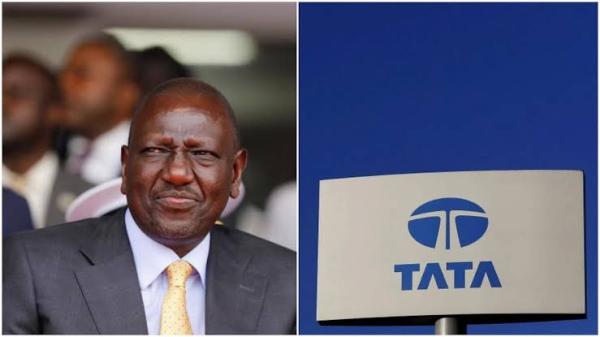
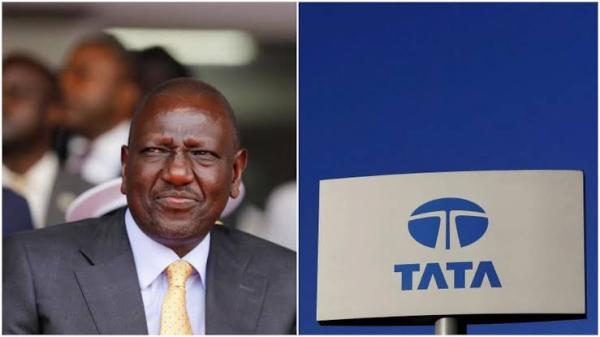
Kenyan President William Ruto has told Tata Chemicals to “pack and go” from the country, escalating a dispute over the Indian company’s long-running soda ash operations in Kajiado County.
Ruto, speaking during a visit to Magadi in southern Kenya on Thursday, accused Tata Chemicals of extracting soda ash without doing enough to process the mineral locally.
“Tata has held mining rights for 100 years yet it has not built anything in Kajiado,” Ruto said, adding that the resource was being taken to India and elsewhere.
Ruto said Kenya would seek new investors to take over the operations and develop local processing facilities.
Why is Kenya unhappy with Tata Chemicals?
The dispute centres on local processing and value addition.
Kenya is a major producer of natural soda ash, also known as sodium carbonate. The mineral is used in industries including glass manufacturing, cleaning products and batteries.
Ruto said companies granted mining rights should establish processing facilities in Kenya instead of primarily exporting the raw resource.
“We have said we will bring a new company and … they should put a big glass company here in Kajiado. And another company to make chemicals here,” Ruto said.
He also questioned whether Kenya was being treated fairly in the arrangement, asking: “Are we slaves to other people?”
Kajiado Governor Joseph Ole Lenku similarly called for new investors to establish large glass and chemical manufacturing facilities in the region.
Mining rights and regulatory concerns
Kenyan officials have also raised questions over Tata Chemicals Magadi Ltd.’s mining rights and regulatory obligations.
Lenku said the company’s mining rights expired in 2023. Kenya has been producing soda ash since 1911, while Tata Chemicals acquired the Magadi operation from Brunner Mond Ltd. in 2005.
The dispute follows an order issued by Kenya’s mining ministry around five weeks ago directing Tata Chemicals Magadi to suspend operations.
Mining Cabinet Secretary Hassan Joho had cited unpaid royalties and other regulatory concerns, saying the company needed to provide documents demonstrating compliance with statutory obligations and settlement of outstanding liabilities before production could resume.
Other concerns raised by the Kenyan government reportedly include value-addition and skills-transfer commitments, employment of Kenyan citizens, export reporting, local procurement and environmental compliance.
What has Tata Chemicals said?
Tata Chemicals has rejected suggestions that its Kenyan operations are not complying with regulations.
The company said it is “fully compliant with all requisite regulations” and continues to engage with Kenyan authorities.
Tata Chemicals said its Kenyan subsidiary had submitted a comprehensive response to the issues raised by the ministry and was awaiting the government’s review.
“TCML has provided a comprehensive response to the matters raised by the Ministry, including information regarding its compliance with applicable regulatory requirements,” the company said.
It added that it remained committed to resolving the issues through the appropriate legal and regulatory channels.
Tata Chemicals shares fall
The developments also weighed on Tata Chemicals’ stock in India.
Shares of Tata Chemicals fell 2.7% to ₹624.85 on the BSE on Friday after Ruto called for the company to stop operations in Kenya.
The stock has also remained under pressure over recent months, according to the figures cited in the source report.
Tata Chemicals shares had touched a 52-week high of ₹1,026 in September 2025 and a 52-week low of ₹581.30 in March 2026.
Why soda ash matters to Kenya
Soda ash is an important industrial mineral used in the production of glass and cleaning products, among other applications. It is also used in some battery technologies.
Kenya is the world’s fourth-largest producer of natural soda ash, according to the US Geological Survey, accounting for roughly 1% of global production.
Lake Magadi in Kajiado County is at the centre of Kenya’s soda-ash industry, where Tata Chemicals’ unit has operated for decades.
The latest dispute could therefore have wider implications for Kenya’s strategy of encouraging local processing and securing greater economic value from its natural resources.
-
Jimmy Kimmel scores Emmy win, shares moment with wife Molly

-
Easy ways to keep coconut fresh for a long time, store cut coconut like this…
-
3 Zodiac Signs Attract Luck & Good Fortune On September 8, 2026

-
Regarding space partnership with India, Australian official said – 'Partnership with ISRO is at the highest level'

-
Thousands Of Costco Items Go To B-Stock Auctions Every Week: Here’s How To Bid