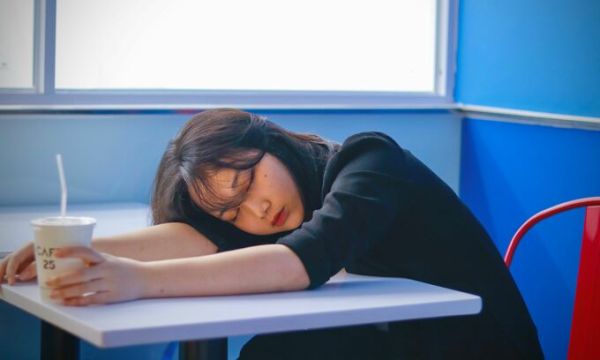
Pham Ha, 25, an office worker in Hanoi’s Cau Giay area, barely left her home during the break. She stayed up scrolling through social media until 3 a.m., slept until 2 p.m., ate just one meal a day and then went back to bed.
Before the holiday starting Aug. 29, she deleted her work messaging apps and silenced her phone. “Weeks of working late into the night to meet back-to-back deadlines had worn me out. Once the holidays came, all I wanted was to lie still, see no one and think about nothing,” she says.
By the final day, however, she was aching all over and suffering from headaches and dizziness, and, instead of feeling refreshed for the week ahead, she felt worse.
|
Illustration photo by Pexels |
Minh Thu, 27, a communications worker in Hanoi, also spent most of the holidays in bed at her parents’ house in central Nghe An Province.
Just fighting the crowds for a ticket and traveling more than 300 kilometers home had exhausted her. So she canceled plans for outings with friends and family, confined herself to her room where she ate in bed, watched movies, listened to music, and slept.
“By the time I returned to the city for work, my mind was blank. I felt more sluggish and tired than before,” she says,
Ha and Thu are among a growing number of young people embracing “bed rotting,” a term that originated on TikTok for spending days on end in bed to escape work pressures and social interactions.
In a Read survey of nearly 1,000 readers, 34% said they regularly engaged in bed rotting on days off. U.S. research firm Morning Consult found that 49% of Gen Z did so regularly or occasionally, compared with 41% of millennials. Among Gen Z, 62% had canceled social plans just to stay in bed, with 53% saying they felt guilty or empty afterward.
Dr. Nguyen Viet Chung, head of the mental health department at Hanoi’s E Hospital, says the behavior has clear psychological roots in pressure to perform, hit KPIs, and meet social expectations, which could keep young people in a constant state of stress.
A 2023 UNICEF report said that 20% of adolescents in Vietnam faced mental health issues, while a NielsenIQ survey found that 65% of young people felt pressured to outperform their peers.
Against this backdrop, Chung says sleeping in, reading, and unplugging from work for a single weekend day could help the body recover, but when the inactivity stretches into a third or fourth day, the line between recharging and avoiding reality begins to disappear.
“At a certain point, staying in bed is no longer rest. When people begin to lose motivation and feel guilty but still cannot get themselves off the mattress, the behavior has become an unhealthy coping mechanism. It may even be an early sign of anxiety or depression.”
He lists three physical effects of staying in bed for prolonged periods:
Disrupted sleep-wake cycle: Sleeping out of sync with the body’s natural day-night rhythm disrupts hormone release, leaving people drowsy by day and unable to sleep at night.
Poorer circulation: Inactivity slows metabolism. After several days, muscles and joints stiffen, leaving people feeling even more fatigued.
Constant stimulation of the cerebral cortex: Using a phone in bed prevents the brain from fully resting and erodes the association between bed and sleep, potentially leading to sleep disorders.
“People need to know the difference between allowing themselves to rest and no longer having enough energy to function. The two may look similar, but they are fundamentally different.”
To make time off truly restorative, he recommends keeping a consistent wake time, sleeping seven to eight hours a night, and avoiding long daytime naps to catch up on lost sleep. He also advises reserving the bed for sleep and taking activities such as reading and phone scrolling elsewhere.
Rather than stay glued to a screen, young people should interrupt their scrolling with a short activity every two hours, spend 15-30 minutes in sunlight each day, and do some light exercise, he says.
After once finding that oversleeping left him exhausted, Tuan Minh, 24, of HCMC, decided to structure his days off differently this year.
He woke at 7 a.m., ran for 30 minutes, cooked three meals a day and spent time reading. “Work keeps me busy and makes me eat at irregular hours. I used the holiday to get back to a healthier routine,” he says.
-
Star names shine in dramatic 2-2 draw between Inter Miami and Atlanta United

-
Miss World 2026: Miss World Johari Mol's glamorous looks created a stir, every style is stylish, see photos

-
When is Aja Ekadashi on 7th or 8th September? Know everything from the exact date to the time of Paran

-
Could Your Milk Contain Detergent? Food Authority Shares Easy At-Home Test

-
New identity for border villages: Target of development of 2,616 villages through 'Vibrant Villages Programme' worth Rs 11,639 crore