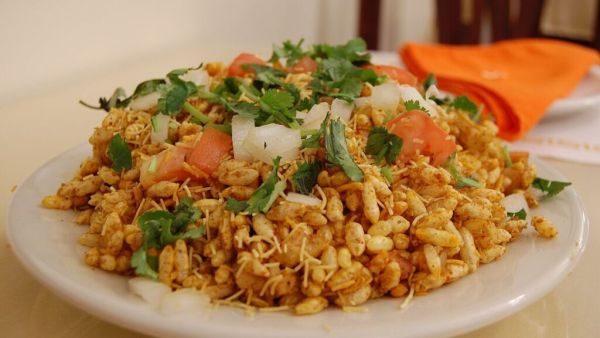
Golgappa, a roadside street food enjoyed by everyone, turned out to be a nightmare for a woman from Uttar Pradesh’s Auraiya district. The woman’s ordeal started as soon as she opened her mouth to eat the first golgappa, her jaw locked in an open position leaving her with half of it inside and the remaining outside, a TOI report said.
Inkla Devi, 42, a resident of Gauri Kishanpur village under the Dibiya police limits, had gone to Auraiya Hospital with her family members for her niece’s delivery on Saturday. While waiting at the hospital, she and her relatives decided to eat at a nearby chaat stall. As she opened her mouth to eat a golgappa, her jaw locked in an open position, leaving her unable to close it. Initially, her family members found the incident amusing, but when the pain intensified and she began frantically signalling for help, they realised the seriousness of the situation and rushed her back to the hospital for treatment.
Doctors at the district hospital were unable to put her jaw in position and after administering primary care they referred to the Lokmata Punyashloka Devi Ahilyabai Holkar Autonomous State Medical College Auraiya. The doctors at the medical college were able to set her jaw in the correct place after an hour-long procedure.
1. Can you explain what exactly happens during a jaw dislocation?
Dr. Alok Thakar explains that when the rounded end of the jawbone moves too far forward and gets stuck outside the joint, the jaw can still move up and down, but it loses the ability to slide back into place. That’s why people who experience this can’t close their mouth properly. The teeth no longer align, the facial muscles spasm, and every attempt to move the jaw becomes painful and tight.
Dr. Ankit Parasher adds that this slipping can even happen during something as ordinary as eating, laughing hard, or opening the mouth too wide while yawning. In such moments, the ligaments and cushioning disc in the TMJ stretch more than they’re meant to, and the joint loses stability. The person is then left with intense pain, a jaw that may appear stuck open, difficulty speaking, and a frightening sense of being unable to move the mouth normally.
2. How can something as simple as eating golgappe or large foods cause the jaw to dislocate?
Dr. Alok Thakar explains that most of us rarely need to stretch our mouth to its full limit. But foods like giant burgers, thick wraps, and golgappas practically challenge you to take big bites. And when someone has naturally loose ligaments around the jaw or a shallow TMJ socket, that extreme stretch can push the jawbone forward and out of its joint.
Dr. Ankit Parasher adds that when you bite into something wide, like a stuffed golgappa, the movement can overstretch the joints and the cartilage disc inside the TMJ. If that disc slips or the jawbone moves too far forward, it can lock up. People with weaker ligaments or naturally looser joints are even more at risk.
3. Are certain people more at risk for jaw dislocation?
Dr. Ankit Parasher explains that individuals with naturally loose or flexible ligaments are at a higher risk. People with conditions like EDS, those with TMJ dysfunction, arthritis, or previous jaw injuries face greater vulnerability. Teeth grinding or clenching further strains the joint.
Dr. Alok Thakar adds that there’s a genetic angle too. People with extra flexible joints or shallow sockets are more prone, and once someone has a dislocation, it becomes more likely to recur.
4. What should a person do right away if their jaw gets locked open or they cannot close their mouth?
Dr. Ankit Parasher explains that one should not panic or attempt to push the jaw back. Instead, they should go to the emergency room where doctors can reposition it safely. Warm compresses and head support may ease discomfort while waiting.
Dr. Alok Thakar adds that the jaw should be kept open and supported without applying force. Doctors typically use controlled techniques along with pain relief or light sedation to relax the muscles before repositioning the jaw.
5. What message would you like to give to people seeing this viral video and worrying about eating golgappe?
Dr. Ankit Parasher points out that jaw dislocation while eating golgappas is extremely rare. Only those with existing TMJ problems, loose ligaments or a history of jaw dislocation need to be extra careful.
Dr. Alok Thakar adds that foods like golgappas, burgers, or wraps are safe as long as one does not force the mouth open too wide. Issues occur mainly when the jaw is pushed beyond its natural limit.
(With inputs from TOI)
Inkla Devi, 42, a resident of Gauri Kishanpur village under the Dibiya police limits, had gone to Auraiya Hospital with her family members for her niece’s delivery on Saturday. While waiting at the hospital, she and her relatives decided to eat at a nearby chaat stall. As she opened her mouth to eat a golgappa, her jaw locked in an open position, leaving her unable to close it. Initially, her family members found the incident amusing, but when the pain intensified and she began frantically signalling for help, they realised the seriousness of the situation and rushed her back to the hospital for treatment.
Doctors at the district hospital were unable to put her jaw in position and after administering primary care they referred to the Lokmata Punyashloka Devi Ahilyabai Holkar Autonomous State Medical College Auraiya. The doctors at the medical college were able to set her jaw in the correct place after an hour-long procedure.
What experts say on the case?
TOI spoke to Dr. Ankit Parasher, Consultant - ENT, Yatharth Super Speciality Hospital Faridabad and Dr. Alok Thakar, Director- Head & Neck Cancer Thyroid & Parathyroid Surgery , Medanta Hospital Noida about this mishap. For most of us, that one big bite won’t be a problem at all. But the incident serves as a serious reminder: even our street-food favourites deserve a bite taken with a little caution.1. Can you explain what exactly happens during a jaw dislocation?
Dr. Alok Thakar explains that when the rounded end of the jawbone moves too far forward and gets stuck outside the joint, the jaw can still move up and down, but it loses the ability to slide back into place. That’s why people who experience this can’t close their mouth properly. The teeth no longer align, the facial muscles spasm, and every attempt to move the jaw becomes painful and tight.
Dr. Ankit Parasher adds that this slipping can even happen during something as ordinary as eating, laughing hard, or opening the mouth too wide while yawning. In such moments, the ligaments and cushioning disc in the TMJ stretch more than they’re meant to, and the joint loses stability. The person is then left with intense pain, a jaw that may appear stuck open, difficulty speaking, and a frightening sense of being unable to move the mouth normally.
2. How can something as simple as eating golgappe or large foods cause the jaw to dislocate?
Dr. Alok Thakar explains that most of us rarely need to stretch our mouth to its full limit. But foods like giant burgers, thick wraps, and golgappas practically challenge you to take big bites. And when someone has naturally loose ligaments around the jaw or a shallow TMJ socket, that extreme stretch can push the jawbone forward and out of its joint.
Dr. Ankit Parasher adds that when you bite into something wide, like a stuffed golgappa, the movement can overstretch the joints and the cartilage disc inside the TMJ. If that disc slips or the jawbone moves too far forward, it can lock up. People with weaker ligaments or naturally looser joints are even more at risk.
3. Are certain people more at risk for jaw dislocation?
Dr. Ankit Parasher explains that individuals with naturally loose or flexible ligaments are at a higher risk. People with conditions like EDS, those with TMJ dysfunction, arthritis, or previous jaw injuries face greater vulnerability. Teeth grinding or clenching further strains the joint.
Dr. Alok Thakar adds that there’s a genetic angle too. People with extra flexible joints or shallow sockets are more prone, and once someone has a dislocation, it becomes more likely to recur.
4. What should a person do right away if their jaw gets locked open or they cannot close their mouth?
Dr. Ankit Parasher explains that one should not panic or attempt to push the jaw back. Instead, they should go to the emergency room where doctors can reposition it safely. Warm compresses and head support may ease discomfort while waiting.
Dr. Alok Thakar adds that the jaw should be kept open and supported without applying force. Doctors typically use controlled techniques along with pain relief or light sedation to relax the muscles before repositioning the jaw.
5. What message would you like to give to people seeing this viral video and worrying about eating golgappe?
Dr. Ankit Parasher points out that jaw dislocation while eating golgappas is extremely rare. Only those with existing TMJ problems, loose ligaments or a history of jaw dislocation need to be extra careful.
Dr. Alok Thakar adds that foods like golgappas, burgers, or wraps are safe as long as one does not force the mouth open too wide. Issues occur mainly when the jaw is pushed beyond its natural limit.
(With inputs from TOI)