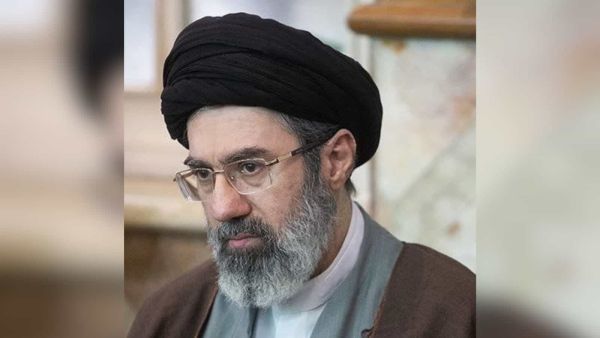
Iran’s new Supreme Leader Mojtaba Khamenei is expected to issue his first public message since taking office, as the conflict involving Iran, Israel and the United States continues to escalate across the region.
According to his official Telegram channel, Ayatollah Seyyed Mojtaba Hosseini Khamenei’s statement will be released “in a few moments”, though it was not immediately clear whether it would be a recorded address or a written message.
The statement is expected to address the death of former leader Ayatollah Ali Khamenei, the responsibilities of Iran’s people and armed forces, the role of government institutions, the “resistance front”, and relations with regional countries and adversaries.

The message comes amid a widening war that has shaken the Middle East and disrupted global energy supplies.
War likely to continue for weeks
US President Donald Trump is eager to continue military operations against Iran for at least another three to four weeks before considering any decision on ending the conflict, Axios reported, citing a US source.
Israeli officials quoted by Axios said Washington does not currently plan to end the war within the next two or three weeks, although they acknowledged Trump could make a sudden decision if he believes US objectives have been achieved.
US Energy Secretary Chris Wright said the military operation could last “weeks, not months”, adding that Washington ultimately aims to eliminate Iran’s ability to threaten neighbouring states and maritime routes.
He also said the United States could use oil from its strategic reserve to stabilise markets while the crisis continues.
Strait of Hormuz crisis deepens
The war has severely disrupted global oil supplies, with the International Energy Agency warning that the conflict is creating the largest supply disruption in the history of the global oil market.
According to the agency, crude production has fallen by at least eight million barrels per day, with an additional two million barrels per day in petroleum products affected.
Shipping traffic through the Strait of Hormuz — a critical corridor for about one-fifth of the world’s crude oil — has dropped to less than 10 percent of pre-crisis levels following Iranian attacks and threats against vessels.
Germany’s Foreign Minister Johann Wadephul called for diplomatic efforts to reopen the strait, warning that further escalation would risk destabilising the region.
Regional tensions intensify
Lebanon has summoned a representative from Iran’s embassy in Beirut after reports that an operation linked to Iran’s Revolutionary Guard had taken place in the country, Lebanese Information Minister Paul Morcos said.
Morcos also said Israeli attacks on Lebanon since March 2 have killed at least 687 people, including 98 children.
Meanwhile, Israel’s military said it had targeted the Taleghan facility at the Parchin military complex southeast of Tehran, claiming the site was used to advance capabilities linked to nuclear weapons development. Iran has repeatedly denied seeking nuclear weapons.
In southern Lebanon, one person was killed in an Israeli drone strike on a vehicle in the town of Deir Antar, while a separate Israeli air strike in Beirut killed eight people and wounded dozens.
Missile threats and heightened security
Qatar said its military intercepted a new missile attack targeting the Gulf state, shortly after authorities issued an “elevated threat level” alert urging residents to remain indoors.
Bahrain also reported a large fire caused by an attack on a fuel tank in Muharraq governorate, later advising residents that it was safe to resume normal activities.
Iran’s parliament speaker Mohammad Bagher Ghalibaf warned that any attempt to invade Iran’s islands would trigger an “unrestrained response”.
Humanitarian and security concerns
The United Nations refugee agency said up to 3.2 million people have been displaced inside Iran since the war began on February 28, warning the number could rise as hostilities continue.
Iranian authorities also reported several arrests of individuals allegedly linked to the United States and Israel, including suspects detained in Kerman and Lorestan provinces.
Travel and economic disruptions
The conflict has triggered major disruptions to aviation and shipping across the region.
German airline Lufthansa said it would suspend flights to Dubai until atleast March 28, a day after Dutch carrier KLM announced a similar decision.
Elsewhere, Thailand summoned Iran’s ambassador after a Thai vessel was struck by a projectile in the Strait of Hormuz, forcing the crew to abandon ship after a fire broke out.
A cargo vessel operated by German shipping company Hapag-Lloyd also caught fire overnight after being hit by shrapnel in the Gulf, though no injuries were reported.
Governments tighten security
Several countries have introduced emergency measures in response to the war.
Kuwait has banned Eid Al Fitr gatherings, weddings and concerts until further notice to reduce large gatherings, while Qatar has postponed mid-semester school examinations.
Australia has also asked non-essential diplomats to leave Israel and the United Arab Emirates (UAE), though essential staff will remain to assist Australian citizens.
In Tehran, authorities announced that public transport in the Iranian capital would be free during the conflict in an effort to support residents and reduce fuel consumption.
Meanwhile, the US military released new footage showing strikes on Iranian warplanes and vessels, part of a series of declassified videos intended to demonstrate the progress of its operations.
-
Zara Tindall just wore this versatile handbag at Cheltenham and it's in stock for spring

-
BTS Set to Make a Historic Comeback with New Album 'Arirang'

-
Netflix Expands Its VFX Presence with New Eyeline Studios in Hyderabad

-
K'taka govt orders premature release of 31 life convicts
-
BBC The Capture's Holliday Grainger drops huge spoiler after unexpected death