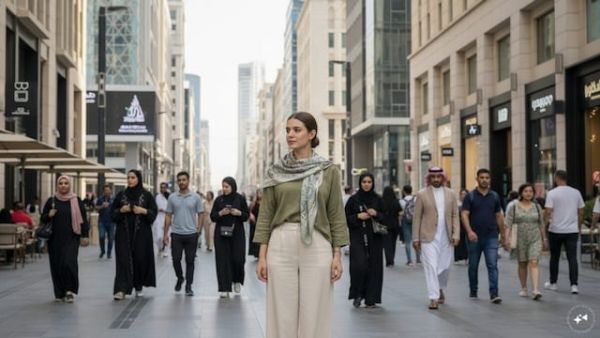
Saudi Arabia, once considered one of the countries with the most conservative and strict laws in the world, has seen unprecedented changes in the rules for tourists during the last few years. This major Gulf nation has rapidly shifted its economy away from oil dependence towards tourism and global investment, due to which many types of restrictions have been eased for foreign tourists. Under the country's Vision 2030, foreign tourists are being welcomed with open hearts to promote the tourism sector. This is the reason why people from all over the world are now turning to Saudi Arabia to see historical and cultural heritage. In such a situation, the biggest question in the minds of women or couples who plan to visit this country for the first time is whether it is legally mandatory to wear burqa or traditional abaya in public or whether western style decent clothes can also be worn. Is it still necessary for women to wear burqa or abaya in Saudi Arabia? The simple and obvious answer to this question is that it is no longer legally mandatory for foreign female tourists to wear the traditional black burqa or abaya in Saudi Arabia. Till a few years ago, it was completely mandatory for all women, local and foreign, to wear a black abaya covering their heads in public and strict action was taken if the rules were violated. But now the rules have been historically relaxed. Nowadays, foreign female tourists are not forced to wear abaya or hijab. By law, women can now move around wearing modest clothes of their choice that respect the local culture and the bounds of decency. However, to show respect for the country's local culture, many tourists and foreign nationals still voluntarily choose to wear light and open dresses or cape-style gowns so that they can feel comfortable in the local environment. New rules of decency and public etiquette, what should tourists pay special attention to? Even though the Saudi government has abolished the requirement of wearing burqa for foreign women, it does not mean that there is complete freedom to wear any kind of modern or indecent clothes. Even today, Saudi Arabia's Public Decency Regulations are very clear and strict, following which is mandatory for every citizen and foreign tourist living within the country. According to these rules, both women and men are instructed to wear clothes that are not too tight, transparent or expose any body parts. For female tourists, it is advisable to opt for loose-fitting clothing such as maxi dresses, wide-leg pants, long skirts or full-sleeve tunics that cover their shoulders, knees and arms. If the attire is outside the scope of decency, objection can be raised by the local administration or police and fine can also be imposed. What rules have to be followed while entering religious places and conservative areas? Not all cities of Saudi Arabia are equally modern or open-minded, so during the journey it is important to pay special attention to which part of the country you are visiting. Metropolises like the capital Riyadh, the modern coastal city Jeddah and the historic tourist destination Al-Ula show a great deal of openness and flexibility towards tourists, where there are no restrictions on traveling without abaya. On the contrary, if you go to more traditional, rural or religiously sensitive areas of the country, the locals still consider traditional attire to be paramount. In such areas, if female tourists do not wear decent and covered clothes, they may have to face uncomfortable glances from people. Furthermore, it is still completely mandatory for all women (be they local or foreign) to completely cover their heads with a headscarf or hijab and wear clothes that completely cover the body when entering the holy Islamic pilgrimage sites like Mecca and Medina or inside any mosque in the country. What strategy should tourists adopt for a safe and comfortable journey? If you are planning to visit Saudi Arabia in the coming days, then it would be the wisest step to keep in mind the cultural environment and weather while packing. Considering the desert climate and scorching sun, give preference to light and airy clothes like cotton and linen in your bag, which are decent in appearance as well as very comfortable to wear. Always carry a light scarf, stole or pashmina shawl with you, which comes in handy to cover your head or shoulders when suddenly entering a mosque or traditional market. If you want to blend into the local environment without any hassle, then you can buy a beautiful and light colored abaya or kimelo from the local markets and wear it, which not only protects you from the sun but also gives a perfect tourist look. Correct understanding of the rules and respect for the local culture will make your historical journey very safe, memorable and enjoyable.
-
Applications open for DU UG and PG semester exams; until when can forms be filled? Check the schedule..

-
Navodaya Vidyalaya: Opportunity for Class 9 admission—who can apply and when will the exam be held? Know the complete process..

-
When will the UPSC Mains result be declared? Essential tasks to complete before the interview..

-
A nomination made with the EPFO prior to marriage is no longer valid; you can update it from the comfort of your home..

-
You can open a Jan Aushadhi Kendra even without a pharmacy degree; the government provides financial assistance—find out the conditions..