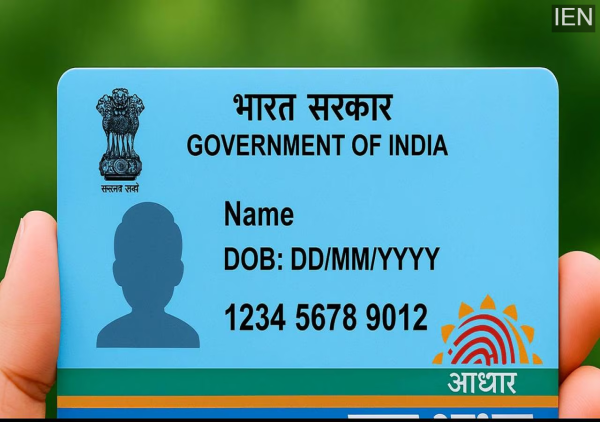
In India, the Aadhaar card is one of the most important identity documents for citizens. Issued by the Unique Identification Authority of India (UIDAI), Aadhaar serves as proof of identity and address and is widely used for government schemes, education, banking, and other essential services. While most people are familiar with the standard white Aadhaar card, many are unaware that children below a certain age are issued a different version known as the Blue Aadhaar Card, officially called Baal Aadhaar.
Here’s a detailed and easy-to-understand explanation of how the blue Aadhaar card differs from the white Aadhaar card, who is eligible for it, and why it exists.
What Is a Blue Aadhaar Card?
The Blue Aadhaar Card, also known as Baal Aadhaar, is a special Aadhaar card issued exclusively for children below the age of five. As the name suggests, this Aadhaar card is printed in a light blue color, making it visually distinct from the regular white Aadhaar card issued to older individuals.
The blue color helps authorities and institutions easily identify that the Aadhaar holder is a minor and that the card does not include biometric details.
Who Is Eligible for a Blue Aadhaar Card?
The Blue Aadhaar Card is issued to children under the age of 5 years. It acts as an initial identity document for young children and helps link them to their parents or guardians in official records.
Once the child turns five years old, the Blue Aadhaar Card becomes temporarily invalid. At this stage, it must be updated and converted into a regular Aadhaar card by submitting the child’s biometric details.
How Is Blue Aadhaar Different From White Aadhaar?
The biggest difference between the Blue Aadhaar and the White Aadhaar lies in biometric data.
-
White Aadhaar Card:
Issued to individuals aged 5 years and above, it contains complete biometric information, including fingerprints of all ten fingers and iris scans. -
Blue Aadhaar Card:
Does not include any biometric data. This is because a child’s fingerprints and iris patterns are not stable at a very young age and change frequently as they grow.
Due to this biological factor, UIDAI does not collect biometric details for children under five, making Blue Aadhaar a non-biometric identity document.
Information Included in Blue Aadhaar Card
Even though biometric data is not recorded, the Blue Aadhaar Card still contains essential identification details, such as:
-
Child’s photograph
-
Child’s date of birth
-
Aadhaar number of either parent
-
Address details (linked through the parent’s Aadhaar)
The child’s Aadhaar is directly linked to one of the parents’ Aadhaar numbers, ensuring authenticity and traceability.
How to Apply for a Blue Aadhaar Card
The application process for a Blue Aadhaar Card is simple and quick. Parents or guardians need to follow these steps:
-
Visit the nearest Aadhaar enrollment center with the child.
-
Carry the child’s birth certificate and Aadhaar card of either parent.
-
The child’s live photograph is captured at the center.
-
Since biometric data is not required, the process is completed faster than regular Aadhaar enrollment.
After successful verification, the Blue Aadhaar Card is issued and delivered as per UIDAI timelines.
When Does Blue Aadhaar Need to Be Updated?
UIDAI has made biometric updates mandatory at specific age milestones to maintain accuracy:
-
First mandatory update: When the child turns 5 years old
-
Second mandatory update: When the child turns 15 years old
During these updates, fingerprints, iris scans, and a fresh photograph are captured. This ensures that Aadhaar data remains accurate as the child grows into adulthood.
Why Is Blue Aadhaar Important?
The Blue Aadhaar Card helps establish a child’s identity from an early age. It is useful for school admissions, government welfare schemes, healthcare services, and other official purposes where identity proof is required. By linking the child’s Aadhaar to the parent’s Aadhaar, UIDAI ensures continuity and security in the identification system.
Final Thoughts
The Blue Aadhaar Card is a thoughtful initiative by UIDAI to include children in India’s identity framework without forcing biometric collection at an early age. While it may look different from the standard white Aadhaar card, it plays an equally important role in a child’s early documentation journey. Parents should ensure timely updates to avoid inconvenience and keep their child’s Aadhaar valid and compliant with UIDAI guidelines.
Understanding the difference between Blue Aadhaar and White Aadhaar can help parents make informed decisions and stay prepared for mandatory updates in the future.
-
Is your WiFi slow? You might have placed your router in the wrong location. Learn the best place to put it in your home.
-
WhatsApp Users Alert! Your Privacy Could Be at Risk If You Don't Turn On These Settings

-
Get up to ₹90,000 in capital without any paperwork! Learn about the new rules of the PM Svanidhi Scheme.

-
Will senior citizens receive separate tax treatment in Budget 2026, or will they continue to bear the burden of the same tax slabs?

-
Is your name missing from the PM Kisan list? Check your status in 2 minutes on your mobile phone!