
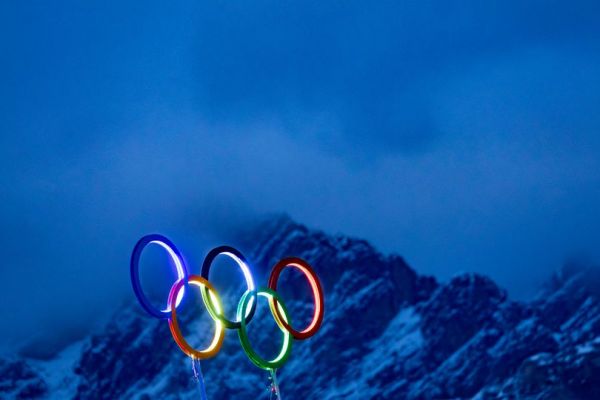
The Olympic rings are among the most recognisable logos in the world, yet not everyone is aware of where they originate from. Playing a starring role in Friday's opening ceremony of the 2026 Winter Olympicsin Italy, the logo,which consists of five interlocked and different-coloured rings, enjoys a long and storied history.
While some have theorised the rings' history dates all the way back to Ancient Greece, the location of the first-ever Summer Games, it is in fact incorrect. The theory is a myth and was consistently sustained in the mid-20th century by American authors Lynn and Gray Poole.
The truth lies behind the work of French Baron Pierre de Coubertin. The educator and historian co-founded the International Olympic Committee in 1894 and served as the second president of the governing body.
Coubertin first created the iconic design in 1913, at a time when the amount of countries competing in the Games were significantly smaller than today. The widely believed notion is that the rings and the five individual colours - blue, black, yellow, green and red - represent five inhabited continents, with the Americas counting as one.
JOIN US ON FACEBOOK!All the best sports news and much more on our dedicated Facebook page
While it's this interpretation that is globally believed, it wasn't Coubertin's initial idea. Instead, the five colours plus the white of the Olympic flag originally represented each colour that was on the flags of the countries competing in the Olympics at that time.
• Your unofficial guide to the Winter Olympics 2026 ON SALE NOW
• Meet Team GB's globetrotting speed skater bidding for Winter Olympic lift-off
The Frenchman's design made sure that each nation held a symbolic place on the flag, representing the central spirit that the Games are known for. Describing his idea in the August 1913 edition of Olympique, Coubertin said: "The six colours [including the flag's white background] combined in this way reproduce the colours of every country without exception.
"The blue and yellow of Sweden, the blue and white of Greece, the tricolour flags of France, United Kingdom, the United States, Germany, Belgium, Italy and Hungary, and the yellow and red of Spain are included, as are the innovative flags of Brazil and Australia, and those of ancient Japan and modern China. This, truly, is an international emblem."
The legendary Olympic rings were first unveiled at the 1920 Summer Games in Antwerp, Belgium. But it wasn't until the lead-up to the 1936 Berlin Olympics that the rings began to gain global recognition as a symbol for the world.
Throughout the decades, perception from the public regarding the ring's colours has changed, with some believing each continent is associated with a specific ring. However, such beliefs have been dismissed by the Olympic Charter, which states no ring represents a particular continent.
While ideas may be exchanged on the meaning behind the five colours, the message of togetherness and unity for sport is one belief that'll live on.
-
Why Aren’t Keyboard Letters in ABCDE Order? The Surprising Truth Behind the QWERTY Layout

-
800 People Missing in 15 Days: Turn On These Phone Settings to Share Location in Emergencies

-
New Aadhaar App Update: Hide Your Real Aadhaar Number and Share Masked Aadhaar Safely

-
New Aadhaar App Changes: How to Update Mobile Number, Address, and Lock Biometrics Easily

-
APAAR ID Download Guide 2026: How to Get It If It’s Not Showing on DigiLocker or ABC Portal