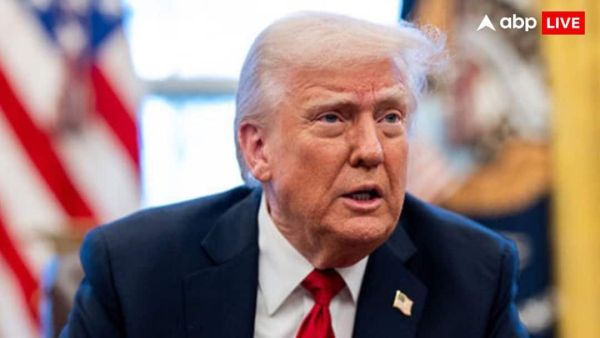
U.S. President Donald Trump claimed on Monday that the United States Navy has destroyed dozens of Iranian warships during the ongoing conflict in the Middle East. Speaking to Republican lawmakers in Washington, D.C., Trump said American naval forces had sunk 46 advanced vessels belonging to Iran’s Revolutionary Guards. The remarks came as fighting between the United States, Israel, and Iran continues to disrupt shipping and energy flows across the region.
Trump Recounts Conversation With Military Officer
During his address, Trump described a conversation with a military officer about the operations against Iran’s naval fleet. According to the president, he asked why the vessels were not seized and repurposed rather than destroyed.
The officer reportedly responded that sinking them was “more fun” and he guesses that it's probably true, as reported by News 18.
He added that military officials later told him destroying the ships was considered the safer option during combat operations.
Conflicting Signals On Duration Of War
Trump’s comments followed earlier statements in which he appeared to suggest that the conflict might soon end.
In an interview with CBS News, he said the war was “pretty much” over, claiming that Iran had lost major components of its military power, including its navy, air force, and communications systems.
However, speaking later to Republican lawmakers, Trump struck a more hardline tone, declaring that the fighting would continue until Iran was “totally and decisively defeated.”
Iran Pushes Back Against US Claims
Iranian officials quickly rejected Trump’s remarks. The Islamic Revolutionary Guard Corps said Iran—not Washington—would determine when the conflict ends. They also warned that energy exports from the region could be halted if U.S. and Israeli strikes continue.
The ongoing conflict has already forced the closure of the Strait of Hormuz, a critical global shipping route for oil and gas. Tanker traffic through the narrow waterway has largely stopped for more than a week, sending shockwaves through international energy markets.
War Spills Into Regional Waters
The current phase of the conflict began after the United States and Israel launched coordinated strikes on Iran on February 28. While Israel has reportedly sought broader political change in Iran, Washington has framed its objective as weakening the country’s missile and nuclear capabilities.
Amid the escalating naval clashes, two Iranian vessels—the IRIS Bushehr and IRIS Lavan—have sought refuge in Sri Lanka and India after coming under attack.
Disputes have also emerged over whether certain vessels targeted in the fighting were armed, adding to the growing tensions in international waters.
-
One and a half lakh kilos of expired food items of Amul brand seized, preparation was made to sell it in the market after erasing the date, bulldozer started

-
The secret of coolness and hydration in summer, try this super cooling raita, your body will remain fresh.

-
Include these 5 types of super parathas in breakfast, along with taste, you will get full energy and health for the whole day:

-
Vietnamese entertainer Huynh Tran Thanh to star alongside Park Bo Gum, Joo Won in South Korean film

-
Mint leaves will neither melt nor wither, just store them like this…