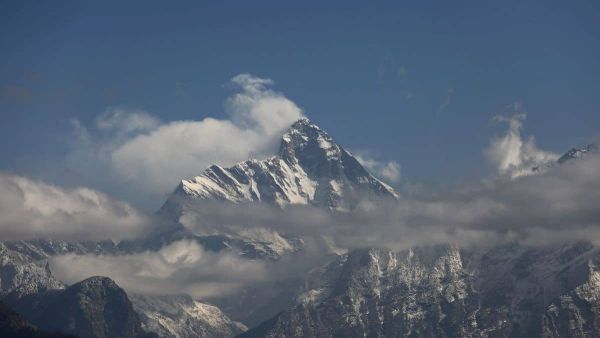
New Delhi: A new study has come to light that has found airborne pathogens carried by desert dust plume from Western India to the top of the Eastern Himalayas, are associated with respiratory and skin diseases, a press release from the Ministry of Science and Technology said on Wednesday.
The Himalayan atmosphere is usually considered to be beneficial for human health. However, vulnerability in these regions is intensified by cold climatic conditions and hypoxia. There has been limited evidence linking airborne microbial exposure to respiratory disease outcomes among high-altitude Himalayan populations, and the microbiological dimension of transboundary dust transport remains poorly understood.
This knowledge gap prompted researchers to undertake the present study.
Desert bacteria rides in the wind to affect health in the Himalayas
— PIB India (@PIB_India) January 28, 2026
The results of this first of its kind study published in the Journal,” Science of the Total Environment”, quantitatively demonstrates the perturbation of atmospheric bacterial community over Himalayas due to… pic.twitter.com/cJTWSQ2up3
Based on more than two years of continuous monitoring of dust storms originating from the arid regions of western India, researchers from the Bose Institute, an autonomous institute under the Department of Science and Technology (DST), found that powerful dust storms can travel hundreds of kilometres, crossing the densely populated and polluted Indo-Gangetic Plain before finally reaching the Himalayan hilltops, the release said.
These dust storms can carry airborne bacteria, including pathogens capable of affecting human health.
Apart from respiratory and skin diseases caused by the transported pathogens, vertical uplift injects locally sourced pathogens into the high-altitude atmosphere, where they mix with travellers arriving from distant regions. Together, they alter the bacterial community present above the Himalayas, which can also lead to gastrointestinal infections.
The findings of this first-of-its-kind study, published in the journal Science of the Total Environment, quantitatively demonstrate the disturbance of the atmospheric bacterial community over the Himalayas due to horizontal long-range dust transport and vertical uplift of foothill air pollution, with direct implications for public health.
The research offers critical insights that can help strengthen national action plans for human health and support the development of health forecasting systems aligned with the vision of Viksit Bharat.
-
Silver Prices Surge Near Record Highs: Key Reasons Behind the Sharp Rise

-
Budget 2026: Historic Milestones That Shaped India’s Budget Journey

-
Budget 2026: 16th Finance Commission Recommendations to Shape Union Budget for FY2027

-
Unregistered Will and Property Division: How Siblings’ Rights Are Decided Under Indian Law

-
Budget 2026–27: What New Tax Regime Taxpayers Expect on TDS Cuts and Faster Refunds